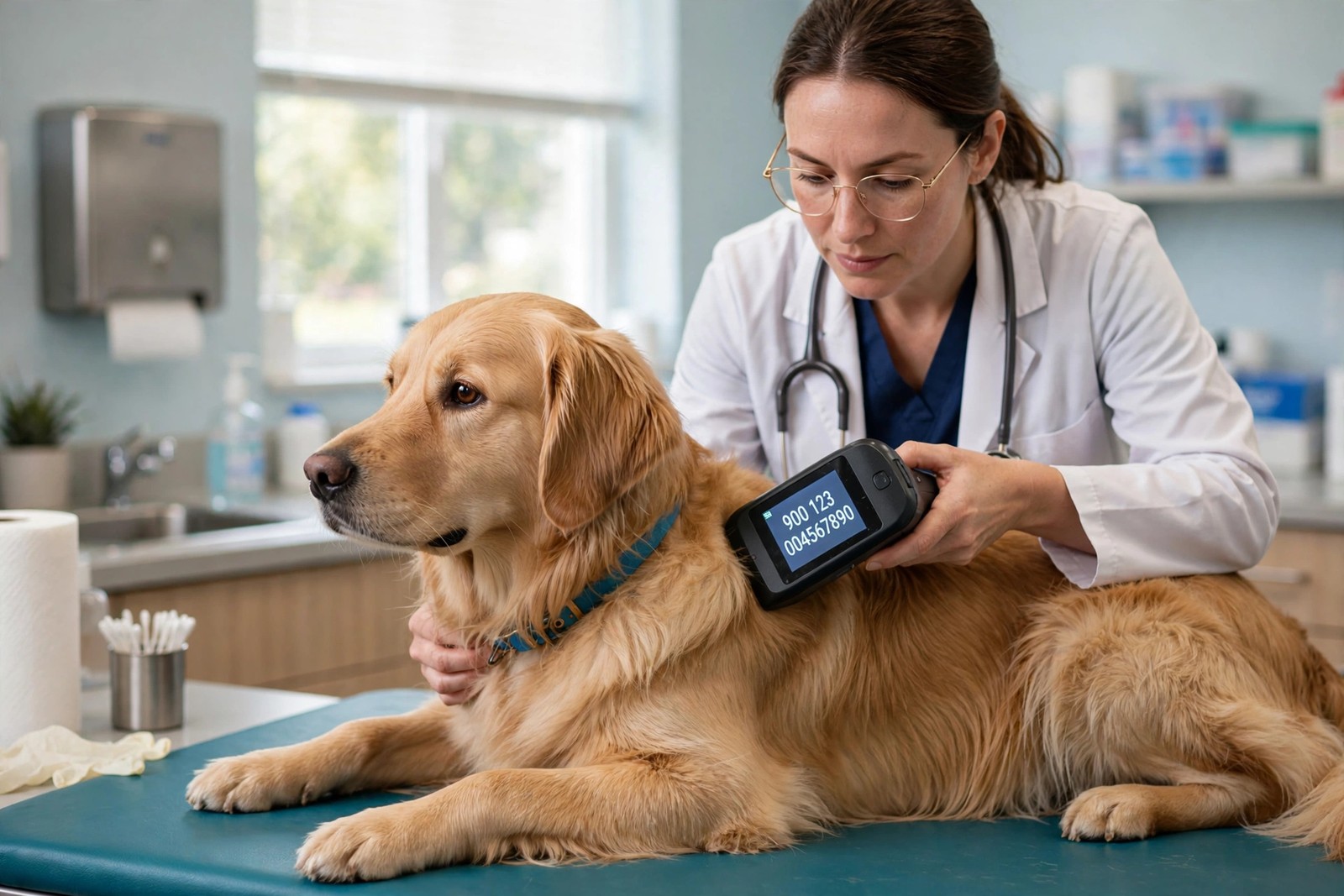
A microchip itself never changes hands — the tiny implant stays in the dog for life. What transfers is the registration record behind the chip number: the name, address, and phone number a vet or shelter finds when the chip is scanned. If that record still points to you after the dog moves, a lost dog gets traced to the wrong home, so treat the transfer as part of the handover, not an afterthought.
Find the Registry and the Chip Number
Start with the paperwork from when the chip was implanted or last updated — it names the registry company and the chip number, usually 9, 10, or 15 digits. If the paperwork is lost, any vet, shelter, or rescue can scan the dog free of charge and tell you the number, and chip lookup services can then identify which registry holds the record. There is no single universal database in many countries, which is exactly why the correct registry matters: updating a different registry, or a free listing site, does nothing to the record a scanner will actually reach.
While you are arranging it, confirm the record currently shows your correct details. A transfer is much harder to complete if the registry has you at an old address with a dead phone number and cannot verify you as the registered keeper.
Run the Transfer With Both Keepers' Details
Contact the registry and request an ownership transfer. You will typically need the chip number, your full details as the current keeper, and the new owner's full name, address, phone number, and email. Many registries now start the process online or by phone: the current keeper authorises the release, the new keeper receives an invitation or reference, confirms their details, and accepts the registration — sometimes for a small administration fee, which it is worth agreeing in advance who pays. Some registries also ask for the date of transfer and the reason, such as rehoming or sale.
Do not consider it done on the strength of a phone call. Ask for written confirmation — an email or updated record — and have the new owner check the record themselves, ideally by having the chip scanned at their own vet within the first week and confirming the scan pulls up their name and number. That scan check catches typos, unfinished transfers, and records sitting in the wrong account before they matter. Keep your copy of the confirmation with the dog's other handover paperwork.
Hand Over the Whole Record, Not Just the Chip
The chip is one line of the dog's identity. The new owner also needs vaccination history, vet details, medication and allergy information, and feeding and routine notes, provided as copies at handover. Agree explicitly who is responsible for the transfer fee and the first vet registration, and if the dog is being rehomed through a rescue, check whether the rescue keeps its own details on the record as a backup contact — many do, deliberately, so a lost dog has two routes home.
Until the registry confirms the change, you remain the contact of record, so keep your phone on and your details current during the handover period. Completing the registry transfer and passing the dog's complete profile to the new owner through KinsLe's Transferrable Profiles gives them the chip number, vet history, and daily care details in one transfer, instead of a scatter of paper and messages.