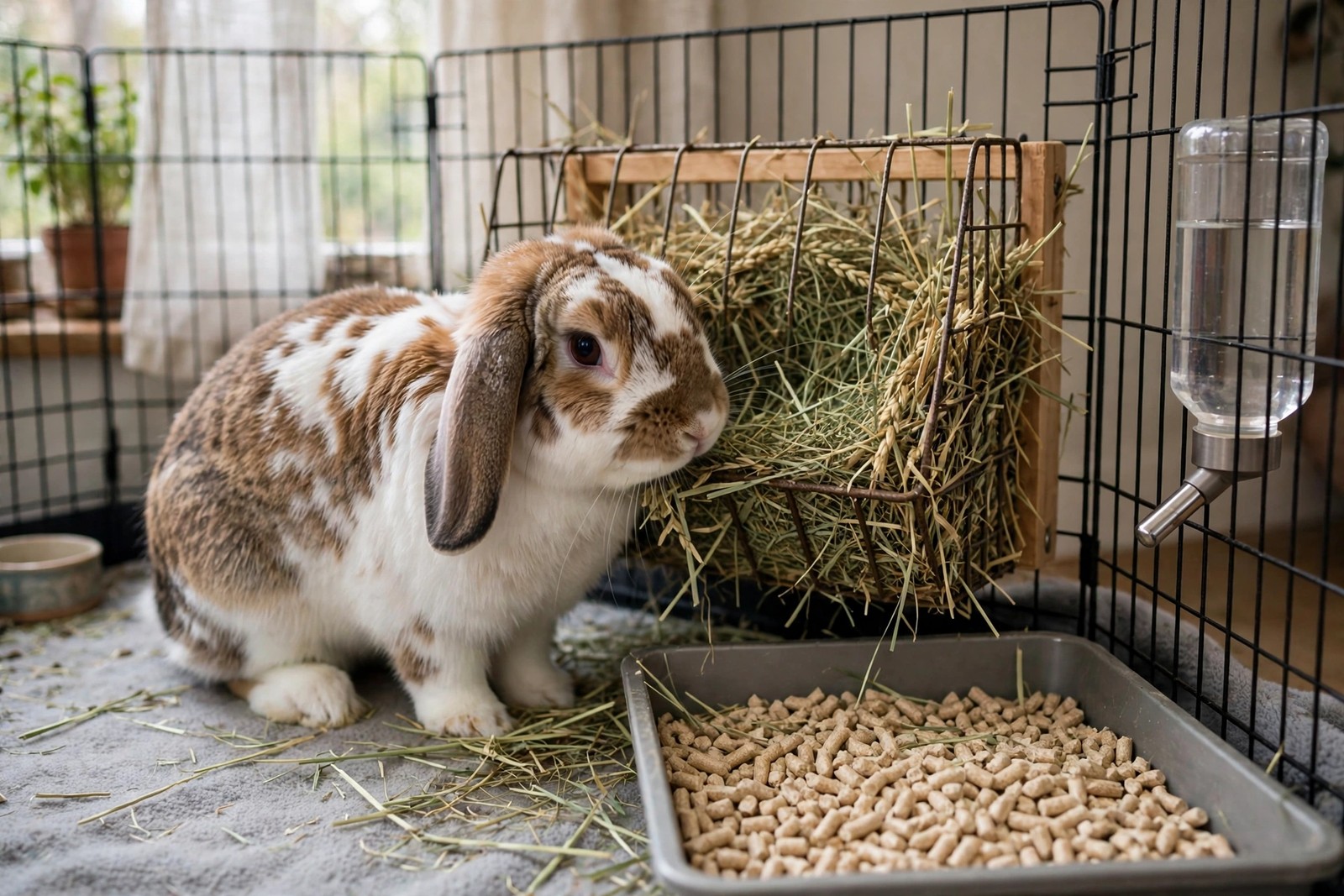
Hay is not a side dish for a rabbit; it is the bulk of the diet, the engine of gut movement, and the main tool for wearing down teeth that never stop growing. That is why changing hay deserves the same care as changing any other food, even though the swap looks simple. Whether you are moving from one grass hay to another, changing cuts, or introducing a richer hay for a young or underweight rabbit, the method is the same: blend, watch, and only move forward when the droppings say you can.
The Shifting-Ratio Method
Start with roughly three parts familiar hay to one part new hay, mixed together in the rack or litter area rather than served in separate piles, because most rabbits simply eat the old pile and ignore the new one when given a choice. Hold that ratio for two to three days. Then move to half and half for a few days, then three parts new to one part old, and finally the new hay alone. The whole change usually takes seven to fourteen days. A fussy rabbit may need longer at the early ratios, and that patience is cheap insurance. Keep hay topped up and unlimited throughout — a transition is never the moment to restrict the pile.
Reading the Droppings Each Day
Droppings are your daily progress report. Healthy output is plentiful, round, and roughly uniform in size, crumbling to dry fibres when broken open. During a hay change, check the litter tray morning and evening. Smaller, fewer, or strung-together droppings tell you the gut is struggling with the new mix: step back to the previous ratio for two or three days before trying again. Also watch appetite directly — a rabbit who rushes to the rack at refill time is coping well. Any rabbit who stops eating entirely, produces no droppings for many hours, or sits hunched and grinding their teeth needs a veterinarian promptly, because a rabbit's gut must keep moving to stay safe.
Making the New Hay More Tempting
Sprinkle a small amount of dried herbs or a few favourite leafy greens through the mixed hay so your rabbit forages through the new strands instead of sorting around them. Serve the blend in several spots — rack, litter tray, and a cardboard box stuffed with hay — because rabbits eat most where they loaf and toilet. Freshen the mix daily, since stale, flattened hay loses its smell and appeal. If you are changing because the old hay was dusty, coarse, or yellowed, check the new bale for a sweet grassy scent and green colour, and store it dry and off the floor so the quality you bought is the quality you feed.
When the Reason for Switching Matters
A young rabbit moving off a rich growth hay onto an adult grass hay benefits from the slowest version of this schedule, while a rabbit changing brands of the same hay type often accepts the swap in a week. Note the start date, each ratio step, and your dropping checks in KinsLe Care Teams, and every family member who refills the rack can see exactly which mix belongs in it today.