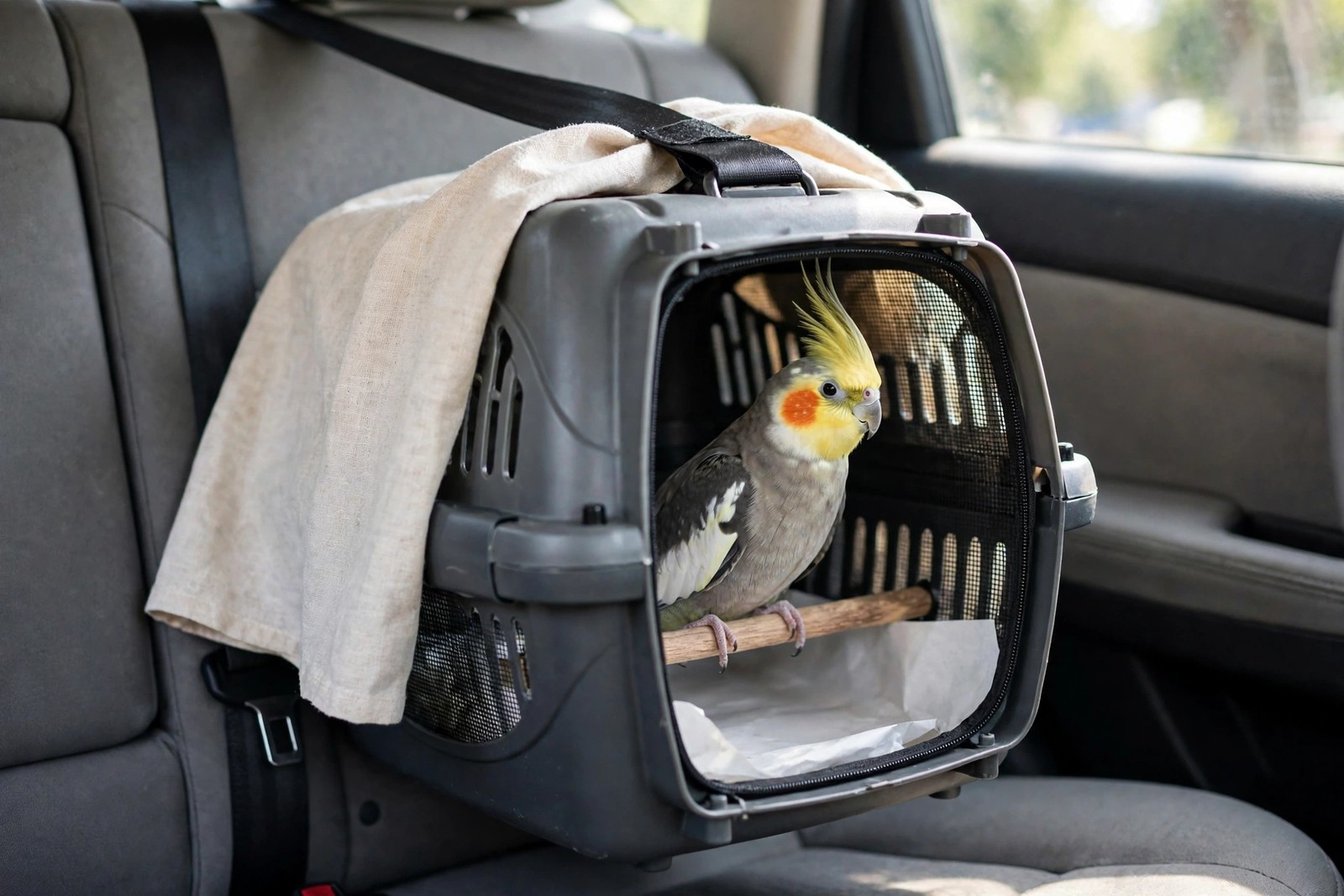
The home cage is the wrong vehicle for a vet trip. It is tall, wide, and full of swinging objects, and a bird sliding around inside it during braking can break a wing or a leg. A small travel carrier or compact cage does the opposite job: it limits movement, feels like a sheltered burrow, and fits safely on a car seat. Preparing that carrier well, the day before rather than in a panic, is most of what safe transport means.
Setting Up the Carrier
Fix one low perch firmly so it cannot rotate or slide, at a height where your bird's tail clears the floor. Line the base with plain white paper or paper towel — droppings are diagnostic, and your veterinarian may want to see their colour, volume, and consistency exactly as produced. Remove swings, bells on loose chains, and hanging toys; add one familiar small toy only if it cannot swing into your bird. Include a small dish of familiar seed or pellets. For trips under an hour, skip the water dish, which mostly spills and soaks the lining, and offer a piece of apple, grape, or cooked sweet potato for moisture instead. A bird who knows the carrier from calm practice sessions at home — perching inside for treats with the door open — travels with far less stress than one who meets it only on frightening days.
Warmth, Cover, and the Drive Itself
Birds lose heat quickly, and stress makes that worse. Keep the car comfortably warm before the carrier goes in, never aim air-conditioning vents or an open window's draft at it, and never leave your bird in a parked car, which overheats or chills in minutes. Drape a light cloth or towel over the carrier: darkness settles most birds, blocks the visual rush of traffic, and keeps loose feathers and seed husks inside. Belt the carrier on a rear seat so it cannot tip or slide, place it away from loud speakers, keep music low or off, and drive smoothly with gentle braking. Talk quietly now and then if your voice normally soothes your bird, and resist opening the carrier mid-journey for a reassuring stroke — an escaped bird in a car is a genuine emergency.
What to Bring and When to Call Ahead
Carry a short written note: your bird's species and age, their normal diet, when symptoms began and how they have changed, any medications or supplements, and a recent photograph of the home cage setup if the problem could involve housing, toys, or a new product. Bring a small sample of the usual food if the clinic may keep your bird in. Call ahead whenever a bird looks seriously unwell — fluffed and sitting on the cage floor, tail bobbing with laboured breathing, bleeding, or unable to perch. The team may ask you to come straight through on arrival, and for a bird in that state, warmth, cover, and speed matter more than any other preparation.
The Journey Home
Ask the clinic team what to watch for overnight, whether the carrier should stay covered and quiet for the first hours home, and when eating and droppings should look normal again. Note the visit details, any findings, and the follow-up date in KinsLe Pet Passport before you leave the car park, and your bird's next trip — routine or urgent — starts with the whole story already in one place.