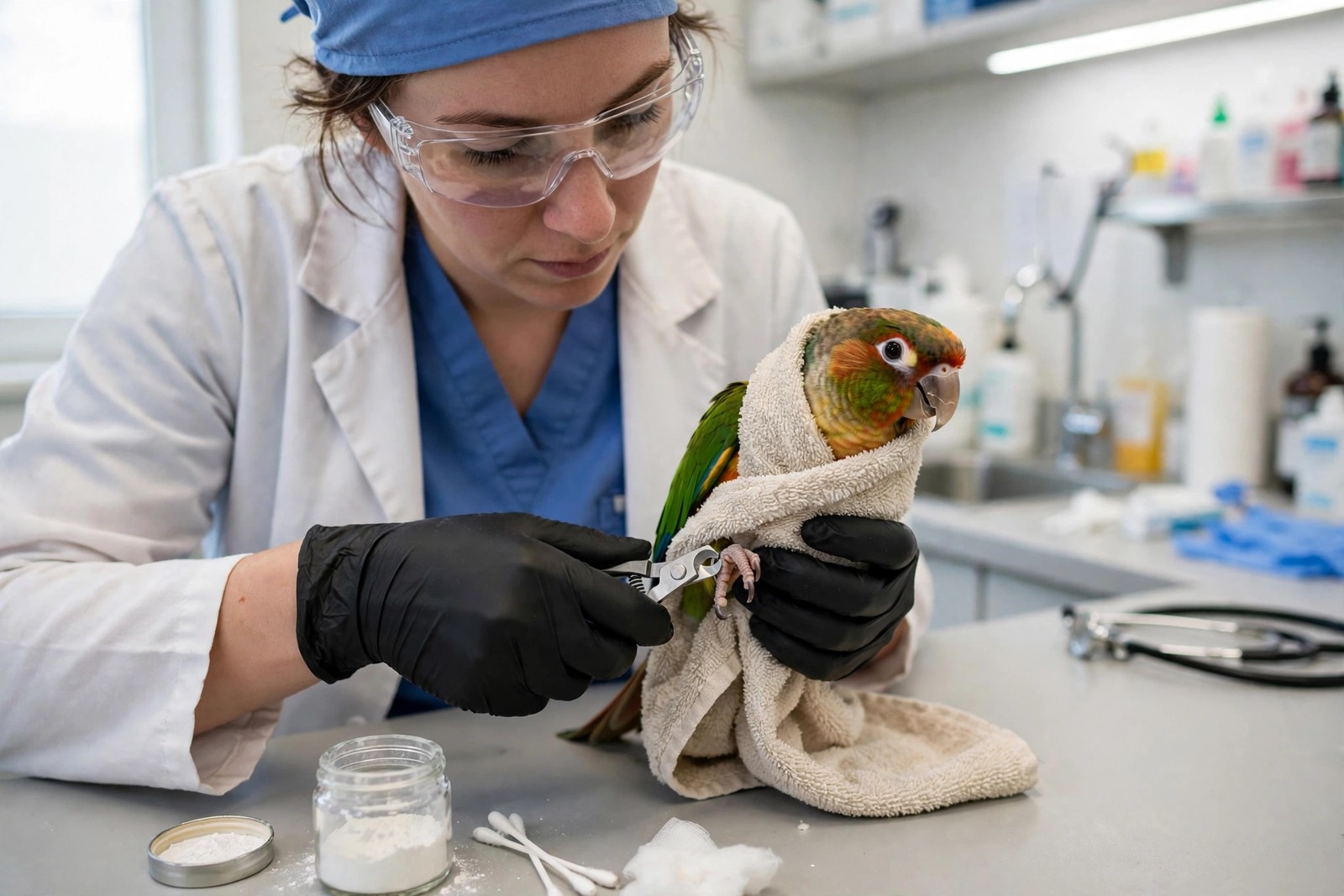
The honest answer to the either-or in this question is: the first time, the veterinarian should — with you watching. Nail trimming looks simple and mostly is, but one demonstration of how to hold the bird, how much tip to take, and how the quick sits inside the nail will prevent the two mistakes that make birds fear this routine for years: cutting into the quick and restraining so clumsily that the bird panics. After that lesson, routine upkeep at home is reasonable for most calm birds and confident owners.
What Overgrown Nails Look Like
Check nails whenever your bird is on your hand. Nails that curl sideways, hook into cage bars or toys, catch on fabric, or push the toe out of its natural line when your bird stands on a flat surface are overdue. A bird perching normally keeps each toe flat with the nail tip just touching down; a long nail lifts or twists the toe. Overgrowth also changes how a bird grips, which matters for older birds and any bird with a weak foot. Small birds such as budgies and finches need lighter, less frequent attention than a large parrot, whose thick nails may need a rotary tool in experienced hands rather than clippers.
The Safe Home Method, Step by Step
Gather everything first: small sharp nail clippers sized for birds, a soft towel, bright light, a favourite treat, and styptic powder opened and within arm's reach — not fetched mid-bleed. Wrap your bird gently in the towel with the head covered loosely, which calms most birds, leaving one foot free at a time. Hold the toe steady, look for the quick — in pale nails it shows as a pink line inside the nail; in dark nails it cannot be seen, so take even less. Snip only the sharp tip, a sliver at a time, at a slight angle following the nail's natural curve. If you are unsure, stop: several tiny trims a week apart beat one brave cut. Reward your bird and finish while things are still going well, even if only two nails got done today.
If a Nail Bleeds
It happens to careful people. Stay calm, press a pinch of styptic powder firmly onto the nail end and hold gentle pressure for a minute or so, then rest your bird quietly in the cage and check that the bleeding has stopped before leaving them. Cornflour pressed on in the same way is a household stand-in while you apply pressure. A nail that keeps bleeding, or a bird who seems faint or distressed, needs veterinary help promptly. Bleeding is also the main reason the decision matters: an owner who cannot stay calm, or a bird who thrashes despite towelling, is a pair who should keep booking the veterinarian.
When the Vet Should Always Do It
Choose the clinic for very overgrown or coiled nails, which sometimes hide a quick that has grown long with the nail; for dark-nailed birds you have never trimmed; for birds on the vet's watch list for any health concern; and for any bird who becomes extremely stressed by handling. Ask at routine visits whether natural wear from varied perch textures is keeping length down between trims. Record each trim, which nails were done, and any bleeding in KinsLe Care Teams, and the shared log tells the next person — family member, sitter, or veterinarian — exactly where the routine stands.