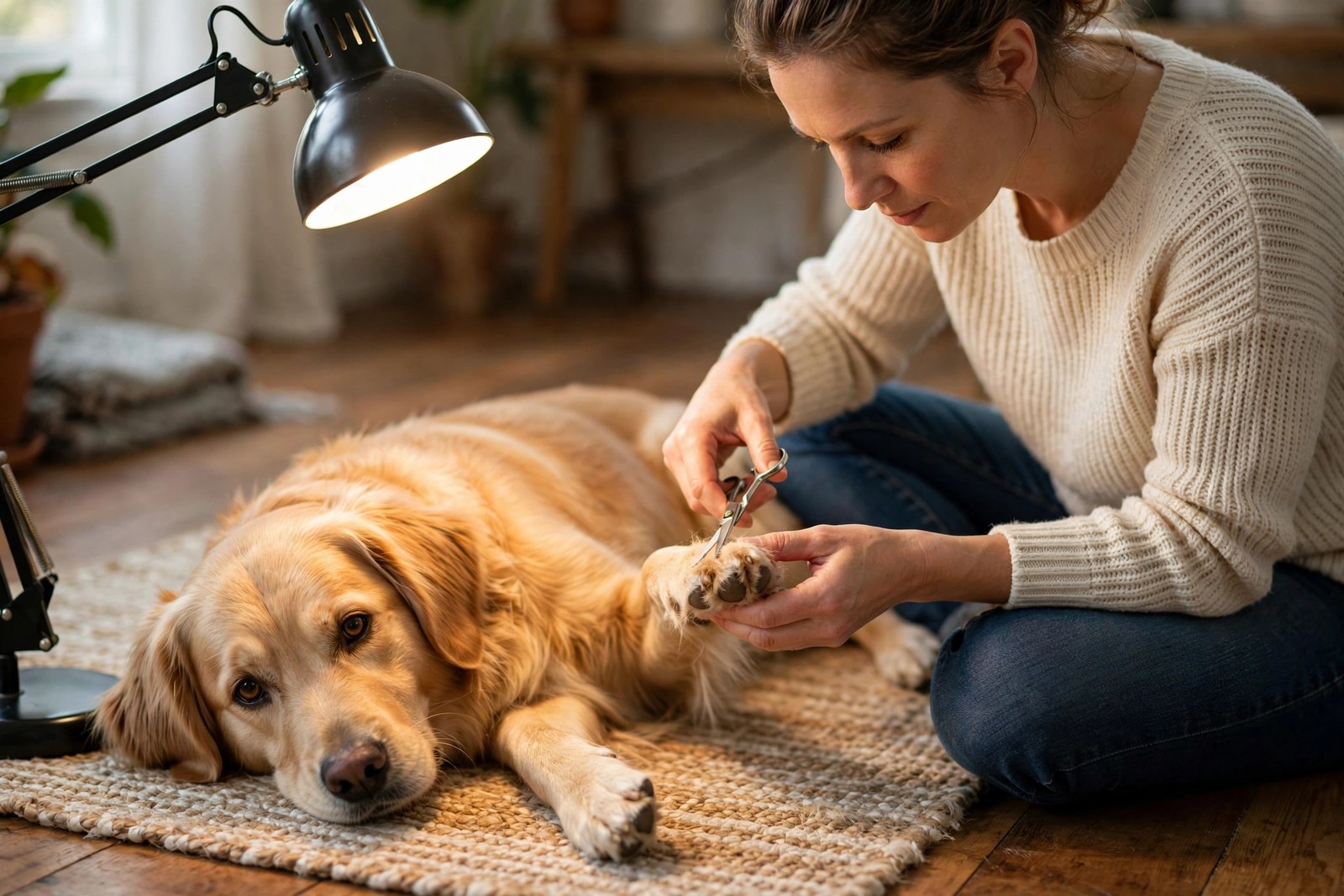
Hair that grows past the pads acts like a sock on polished wood. Her pads should meet the floor directly, giving her grip when she turns, brakes or launches herself toward the door. A careful trim restores that contact without changing the paw itself, and the improvement on wooden floors is usually obvious the moment she walks away from the session.
Gather the Right Setup First
Choose blunt-ended scissors made for delicate work, or small clippers handled carefully, plus a towel, good light and treats. Blunt ends reduce the risk of nicking skin if she twitches, while clippers suit dogs who accept their sound and vibration calmly. Seat yourself at her level with her paw supported rather than dangling, and pick a moment after a walk, when she has wound down, instead of a moment when she expects play.
Spread one paw gently and look at its underside. Identify the pad surface first, then notice the fringe extending past it. That fringe is your entire workload. Hair sitting within the grooves, level with or below the pads, stays where it is; it protects skin and gives you no grip problem worth solving.
Trim to the Pad Line, One Paw at a Time
Comb or brush the fringe outward so stray lengths reveal themselves, hold the paw steadily without squeezing toes apart, and snip small amounts at a time. Check against the pad after every few cuts, stopping as soon as hair sits level with the pad surface. Avoid digging into the grooves between her pads hunting for hidden tufts, and never angle blades toward the webbing or pad edges. Between pads, a fingertip can lift surface hair into view; anything that requires prising or poking should be left alone.
Complete one paw, reward her, and let her move around before deciding whether she will accept another. Young, elderly or ticklish dogs may manage a single paw per sitting, and spreading the job across an evening or two beats pinning her down for a complete set. If she pulls away repeatedly, pause and try again when she is sleepier, or ask a groomer to demonstrate technique on one paw while you watch.
Keep Grip Safe Between Trims
Recheck the fringe every few weeks, since coat growth rates vary and slippery behaviour returns gradually enough to go unnoticed. Watch her on the wooden floor after trimming: confident turns, fewer splayed legs and calmer stops confirm the hair was the culprit. Persistent slipping despite neat paws deserves a vet conversation, because pain, weakness or joint trouble can also alter how a dog moves on smooth surfaces.
Daily habits extend the result. Wipe paws dry after wet walks, keep nails at a sensible length so pads sit flat, and place runners along the routes she uses often if enthusiasm still defeats grip at corners. Mats belong at doorways and food stations rather than scattered randomly, where loose edges create new trip hazards for people and dogs alike.
Adapt the Session to the Dog in Front of You
Long or curly coats grow their fringe back faster, so check those paws sooner than the calendar alone suggests. Puppies may accept two paws happily and fidget through the rest, which argues for splitting the set without treating the split as failure. Senior dogs, and any dog with stiff joints, may prefer lying on one side on a cushioned surface over standing with a leg lifted, while a start with the paw she minds least builds a run of easy wins before the ticklish one. Angle the light until pad edges stand out clearly against surrounding hair, since dark pads under dark hair hide the line you are trimming toward.
A shared grooming note prevents guesswork when KinsLe displays the trim date beside a duty list managed in Care Teams for everyone helping her.