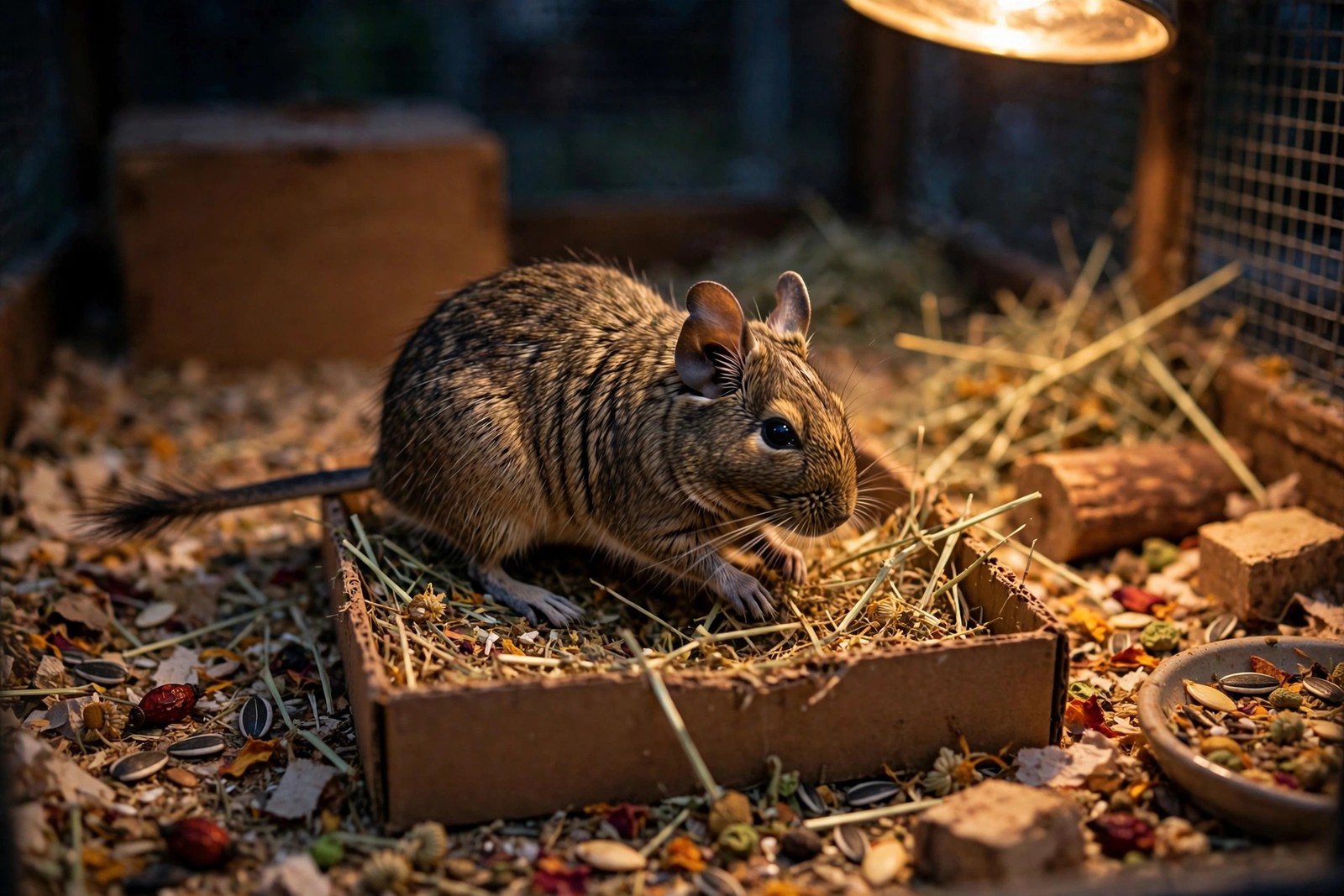
A degu hanging off the cage bars in the evening, teeth working the metal, is usually telling you something about its day rather than misbehaving. Bar-biting is widely read as a boredom and frustration signal: an active, social animal with energy left over and nothing meaningful to spend it on. The fix is not to scold the biting but to make the evening, which is when it happens, full of work the degu would rather do.
Why the Evening Is the Battleground
Degus are busy foragers by nature, built to range, search, dig, and handle food for much of their waking time. A bowl emptied in ten minutes leaves the rest of the evening empty, and the bars are always available. Notice the timing in your own home: if biting starts after the day's activity winds down, or when the household is home but occupied with other things, that pattern supports the boredom reading. Biting that continues through a rich, busy evening deserves a second look, including at the teeth, since overgrown teeth are a possibility a vet can check.
Building the Forage Boxes
A forage box is simple: a shallow box or tray filled with hay, with the day's foods hidden down through it so the degu has to dig, nose, and sort to eat. Tuck pieces at different depths, mix some into the middle layer, and set a few where they can only be reached by pushing hay aside. Use the day's normal food for this, measured as you would have fed it anyway, because the method changes how food is delivered, not how much food the day contains. Degus are sugar-sensitive animals, so sugary foods are avoided entirely, and anything hidden should come from the ordinary diet you already trust.
Scatter Feeding Across the Bedding
Scatter feeding extends the same idea across the whole enclosure. Spread a portion of the day's food through cleaned bedding rather than placing it in a dish, so the degu works the floor of the cage piece by piece. Fresh bedding on forage days keeps the search clean and appealing, and scattering just before the usual biting hour times the activity to the problem. Start the routine shortly before biting typically begins, not after it is underway, because a degu already fixed on the bars is harder to redirect than one whose evening has not yet emptied out. Over the first week, many owners find the search taking longer as the degu learns the game and checks favorite corners with real method.
The Other Outlet, and the Household Part
Foraging spends the mind; a solid-surface wheel spends the legs. A wheel with a solid running surface, offered as an optional extra alongside the forage work, gives a restless degu somewhere to put physical energy that searching does not use up. Consistency is what turns one good evening into a calmer pattern. The evening forage routine in the Care Teams plan on KinsLe names who sets up the boxes on which nights, records whether the degu searched or bit, and keeps the notes where the next person can read them before their turn. A routine that depends on whoever remembers will have gaps exactly on the busy evenings when the degu needs it most.
Judging Whether It Is Working
Give the new evening shape a fair run before deciding. Look for biting starting later, lasting for shorter spells, or being interrupted by trips back to the boxes, since those are the early signs the search is winning. Keep brief notes: the time biting started, how long it lasted, and what the setup was that night. If biting stays intense despite a genuinely richer evening, or the degu is eating less or pawing at its mouth, a vet visit is the next step, with teeth high on the list of possibilities to examine.
The person arriving home first can follow the written forage routine in the Care Teams notes on KinsLe, noting fresh bar-biting or a calmer night for everyone to see.