
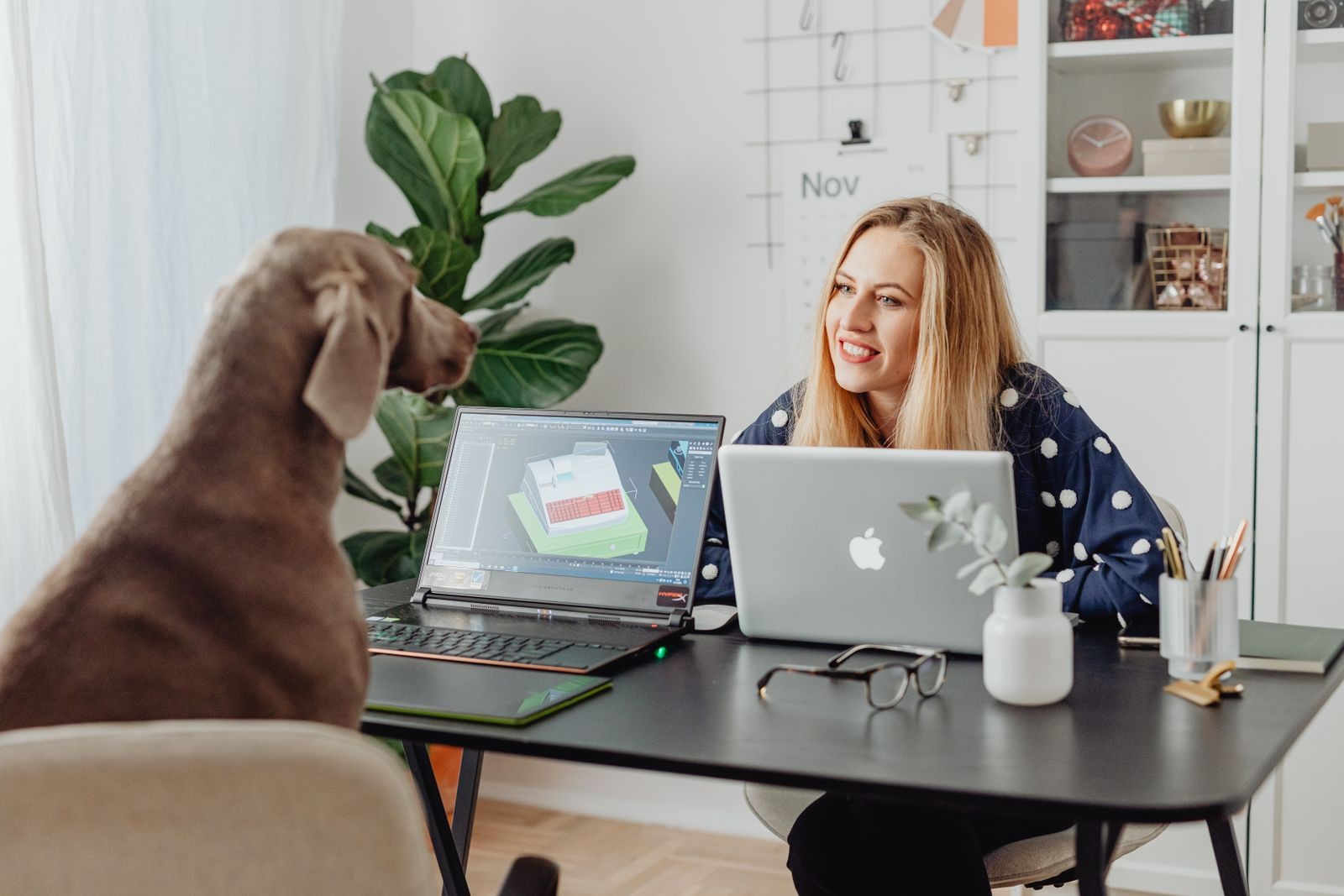
Work from home successfully with a dog by building work blocks into the day: a proper walk before you log on, a chew or puzzle delivered at a desk-side dog bed when you start, and real play breaks at set times instead of random attention all day. Most attention-demanding is not naughtiness — it is a dog who has learned that nudging, barking, or delivering toys eventually works because your schedule is unpredictable. Predictability is the fix: when breaks reliably arrive, patient waiting becomes the smarter strategy.
Front-load the morning
A dog who has walked, sniffed, and played before your first call starts the workday with an empty tank in the best way. Aim for a real outing — twenty to forty minutes for most adult dogs, adjusted for age and breed — that includes sniffing time, not just a march. Follow it with breakfast, ideally from a puzzle feeder or snuffle mat, and your dog will often nap through your first deep-work block. Puppies need a different rhythm: shorter play, a potty trip, then a nap in a pen or crate near you, repeated through the day. Expecting a puppy to settle for three straight hours is setting you both up to fail.
Set up a defined rest station near your desk — a comfortable bed, water, and one or two approved chews. A dog with a place learns to go to the place; a dog without one will choose your lap, your keyboard, or a pacing route.
Reward the calm you want
In the first week or two, deliberately pay for quiet. When your dog settles on the bed, sighs, or lies down with a chew, drop a small treat there without a fuss, several times an hour at first. You are teaching a powerful lesson: boring owner at a laptop predicts good things for patient dogs. Toss the treat onto the bed, not from your hand at the desk, so the bed itself becomes valuable. Gradually space the treats out as settling becomes habit.
Ignore the demands you want to fade — the pawing, whining, and toy-dropping — and meet needs before they become demands. If your dog reliably pesters at 11 a.m., schedule a potty and play break at 10:45. Proactive breaks are not spoiling; they are the routine working as designed.
Protect focus during calls and deep work
For important calls, stack the deck: a potty break just before, a fresh long-lasting chew or frozen toy delivered as the call starts, and a door or gate if your dog is a enthusiastic background guest. Practice settling with a chew at times when you are not on calls, so the skill is solid before it is tested live. If your dog barks at deliveries or hallway noise, position the bed away from the front door and add low background sound. Adolescent dogs — roughly six to eighteen months — are often the hardest work-from-home companions; shorten your expectations, add a midday game, and know that consistency now pays off in an easier adult dog.
Take real breaks, on a schedule
Set two or three genuine breaks: a midday walk or garden play session, a short afternoon training game, and potty breaks that are actual breaks, not phone-in-hand pauses your dog reads as absence. Short play with full attention refills your dog's social tank far better than half-attention all day, and protects your own focus in between.
Asking Kimmy When the Settling Plan Slips
Questions tend to surface mid-workday: your dog settles for an hour, then starts pawing during every call, or the 10:45 break stops buying a quiet afternoon. Put the specific pattern to Kimmy in KinsLe — when it happens, what came just before it, and how long the last break lasted — and get an answer pulled from the KinsLe Answers library on whether to move the break earlier, shorten your work blocks, or add a training game. When a workday settling question comes up, take it to the Kimmy assistant in KinsLe, drawing on KinsLe Answers for the reply.