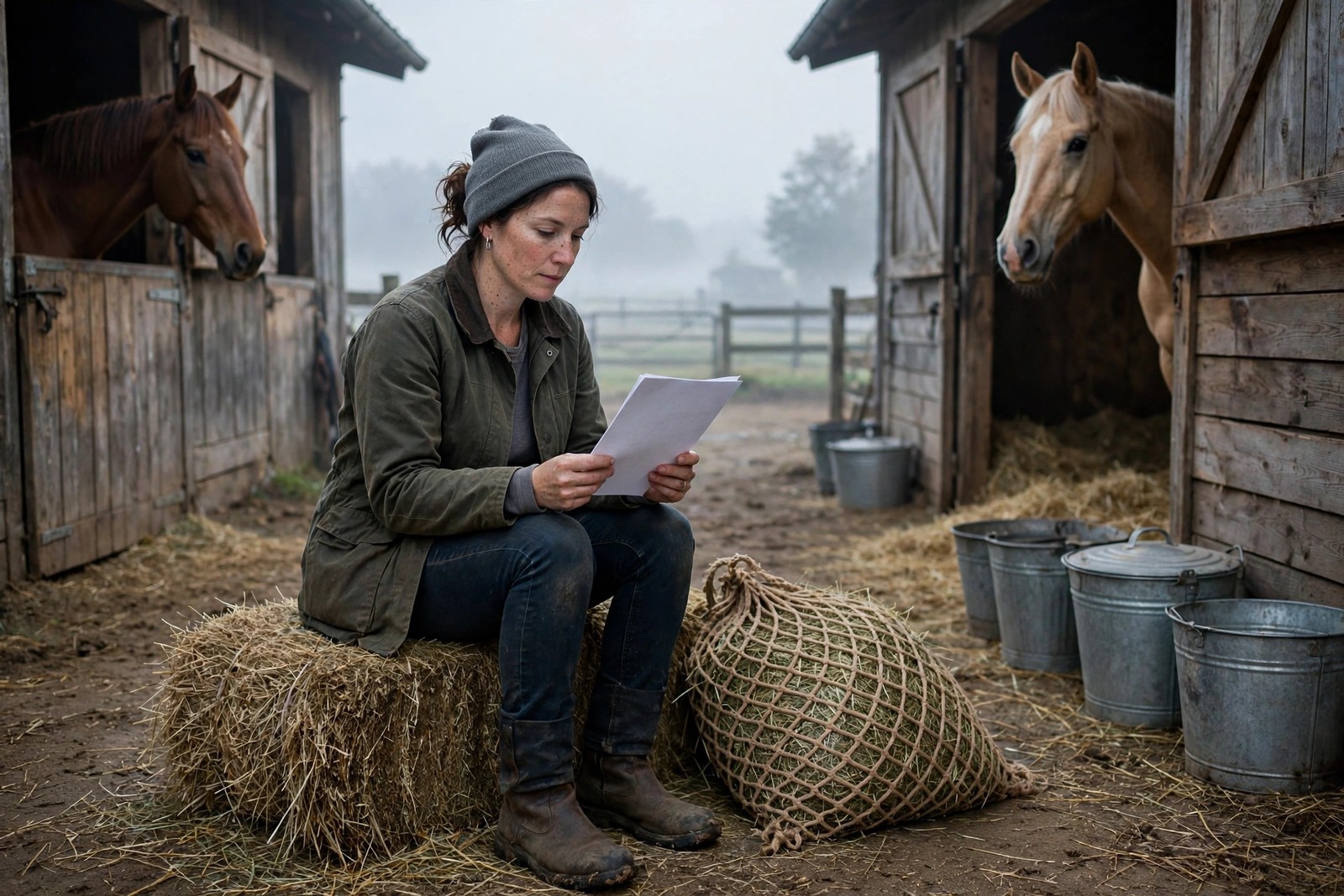
Good farm-sitter instructions have one test: could a competent person who has never fed your animals run the yard for a week from the sheet alone, in the rain, at dusk? Write to that standard — a day in order, quantities measured, and nothing important left as 'the usual.'
Feed, Measured and Located
List every animal or group separately, in the order they are fed, with the feed named, the amount measured the way the sitter will measure it — scoops, flakes of hay, or kilograms, never handfuls or 'some' — and where that feed is stored. If you can, pre-portion hard feeds into labelled bags or bins per day; it removes measuring errors entirely and shows you at a glance on return that every feed was given. Note which animals must be separated to eat, who bullies whom off a hay pile, and any animal on soaked feed, medication in feed, or a strict no-treats rule — especially horses prone to laminitis, for whom a kind neighbour's carrots are a genuine risk. State grazing rules plainly: which field, how many hours, and any muzzle or restricted-grazing routine.
Water, Shelter, and the Daily Checks
Water is the job that cannot slip: troughs checked at least twice a day, scrubbed when slimy, and checked for ice in winter with a stated method for breaking it and a backup water source if a pipe freezes. Cover shelter and bedding briefly — who comes in at night, who lives out, what to do in severe weather — and the perimeter walk: fences, gates shut and latched, and any known weak spot. Include the small daily health checks a sitter can realistically do: every animal up, eating, moving normally, eyes bright, no new cuts or swelling, horses checked for a lost shoe and heat in a leg. Give the baseline for each animal in a line — 'the grey mare is always last to the gate and that is normal for her' — because a sitter cannot spot abnormal without knowing normal.
Individual Quirks and Hard Rules
One short section per animal for temperament and handling: who is head-shy, who must be led with a rope over the nose, who barges at gates, which ewe limps slightly on an old injury. Add the hard safety rules in plain language — never enter the bull's field, never turn out the stallion with others, close every gate even if you found it open. Sitters follow rules they understand are non-negotiable far better than a general plea to be careful.
Emergencies, Written Before They Happen
End with an emergency page that stands alone: your mobile number, a second contact who knows the yard, the vet's number including out-of-hours arrangements, and written authorisation for the sitter to call the vet and agree to emergency treatment up to a limit you set — a colic at midnight cannot wait for you to land. Name the specific emergencies and first actions in a line each: suspected colic (remove feed, call the vet, walk the horse if advised), an animal down and unable to rise (call the vet, keep it warm, do not attempt to lift alone), a break-out (which field to lure into with a bucket, never chase towards a road). Walk the whole yard with the sitter once, sheet in hand, before you go. Leaving that sheet — feeds, water, quirks, and emergencies — in KinsLe's Care Pass hands your sitter the complete routine as one time-limited document they can check at the trough, rather than a thread of texts they have to scroll.