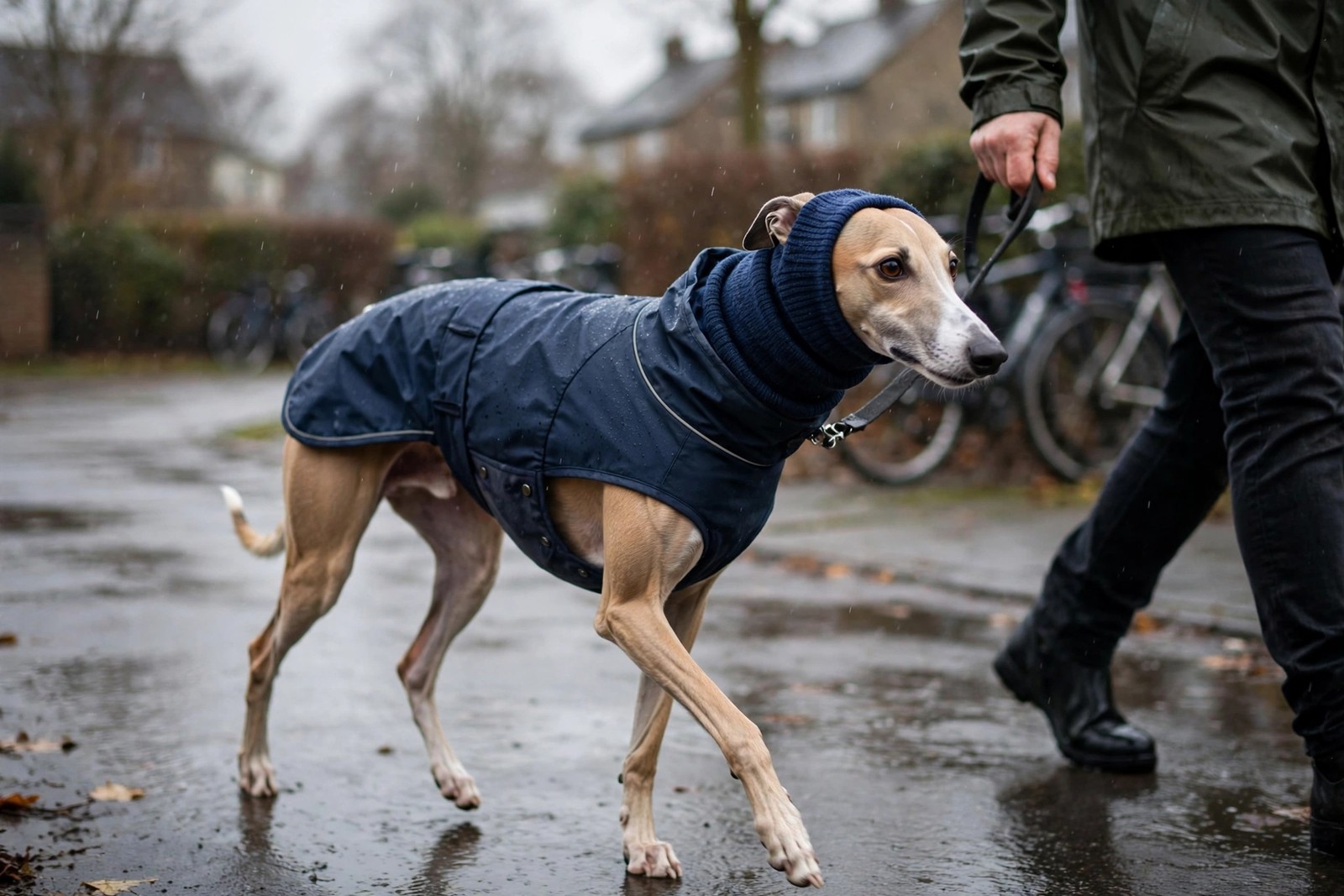
A Whippet in winter rain is not being dramatic. The breed was built for speed, with a single fine coat, a deep chest tapering to a tucked waist, and very little fat under the skin, so body heat escapes quickly and there is no weatherproof topcoat to shed water. Expect shivering, a tucked tail, hunched walking, and a dog who plants her feet at the door when she hears rain; those are signs of a cold dog, not stubbornness.
The Fleece or Jumper for Cold, Dry Days
The first purchase is usually a fleece coat or a fitted knitted jumper, worn on dry days when the air is cold. It covers the chest and back, the two large surfaces where heat is lost, and many Whippets also wear a lighter fleece indoors in an unheated house, because a dog who rests curled tightly all day is spending energy simply staying warm.
Fit matters more than appearance. Measure the length from the base of the neck to the base of the tail, and the depth around the widest part of the chest, and choose a cut shaped for a sighthound rather than a generic dog coat: standard coats that fit the chest tend to hang past the tail on a Whippet, while coats that fit the length gap at the chest. The coat should clear the front legs so the stride stays free, sit clear of the waist so a male dog can urinate without soaking it, and fasten without dangling straps.
The Waterproof Coat With a Belly Panel for Wet Days
The second purchase is a waterproof outer coat, and the detail owners learn to insist on is coverage underneath. A Whippet's chest hangs low and close to wet grass, puddles and road spray, so a coat that only covers the back leaves the deep chest soaked and chilled. A wraparound style with a belly panel keeps that chest dry, and a fleece lining inside the waterproof shell means one garment handles cold, wet days on its own.
In rain, shorten the walk rather than dressing for a long one: brisk and shorter beats slow and long, because a moving dog generates some heat while a dog standing sniffing in drizzle loses it. Head home if the shivering starts despite the coat, and never leave a Whippet sitting in a cold car in winter while you run errands, because a stationary thin-coated dog chills fast.
The Snood, and the Drying Routine at Home
The third purchase, the one sceptical owners buy last and then swear by, is a snood: a soft tube that covers the ears and neck. Whippet ears are thin, exposed and held flat in wind, and a dog who walks with her head turned out of the wind is usually protecting cold ears. A snood also keeps those thin ears covered against wet grass and mud on the sniffy parts of a walk.
At home, dry the chest, belly and feet when you come in, because damp in the fine coat keeps chilling the dog after the walk. Provide a bed with raised sides, off the floor and away from draughts, ideally with a blanket she can burrow under; Whippets nest, and a dog who can get completely under a blanket will regulate her own warmth through the night. Older Whippets, puppies and any dog who is underweight feel the cold sooner and need the coat on at temperatures a healthy adult might tolerate, so judge by the dog in front of you: shivering, seeking radiators, and curling into the tightest possible ball are your gauges.
Buying the three pieces in that order, fleece first, waterproof second, snood third, covers the full range of winter weather for this breed without a wardrobe of novelty outfits. Recording which garment your Whippet wears for dry cold, for rain, and for bitter wind in KinsLe's Care Teams, together with her drying and blanket routine, means a sitter or family member walks her warm rather than learning by her shivering.