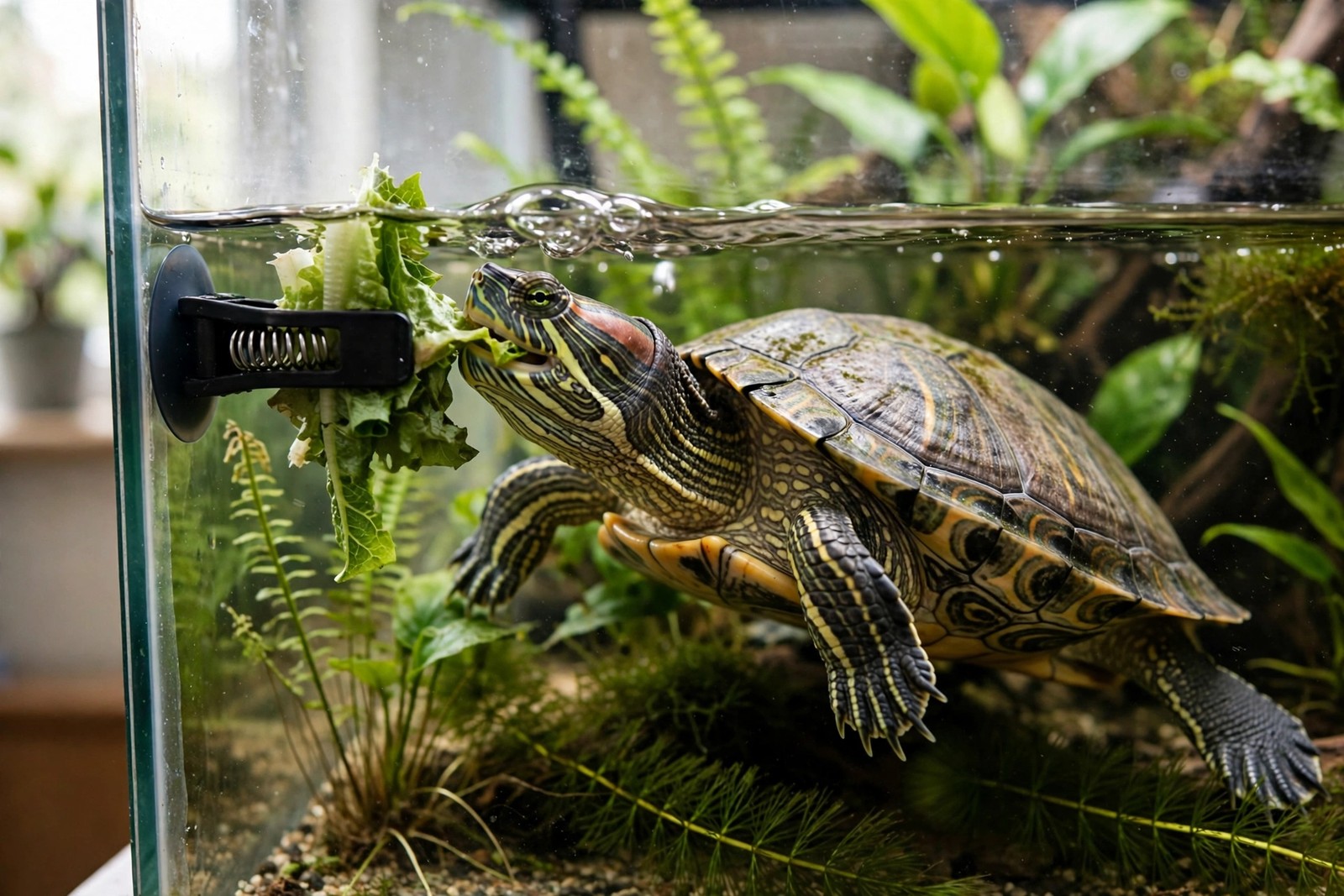
An adult aquatic turtle's diet flips the juvenile balance: where babies thrive on daily protein, most adults do best with pellets only a few times a week and leafy greens and aquatic plants offered daily, because mature turtles shift steadily toward eating more plant matter.
The Shift Happens Gradually, Species by Species
The change is a drift, not a birthday switch. A red-eared slider that hunted every insect as a hatchling will, over its first few years, graze more and hunt less, until plant material makes up the larger share of its diet. Painted turtles and sliders follow this pattern strongly; other species sit at different points on the scale — a snapping turtle or a softshell stays considerably more carnivorous for life, and a cooter leans heavily herbivorous as an adult. That is why identifying your species matters more than following any generic adult feeding chart, and why a middle-aged turtle should transition gradually, mixing more greens in rather than swapping the menu overnight.
What an Adult Plate Actually Looks Like
For a typical adult slider or painted turtle, a week might include:
- Pellets on two or three feeding days, portioned around the size of the turtle's head
- Fresh greens daily or near-daily: romaine, dandelion greens, red or green leaf lettuce, turnip greens
- Aquatic plants such as duckweed, water lettuce, or anacharis floating in the tank to graze between meals
- Protein treats sparingly: an earthworm, shrimp, or feeder insects once a week or so, not daily
- A cuttlebone available for calcium nibbling
Skip iceberg lettuce as a staple — it fills a turtle up with water and little nutrition — and treat fruit as a rare nibble, not a food group.
Why Overfeeding Protein Hurts Adults
An adult metabolism is built for maintenance, not construction. Persistently heavy protein and oversized portions contribute to obesity, strain on internal organs, shell growth deformities in still-growing animals, and chronically dirty water as excess food and waste overwhelm the filter. Adults beg convincingly; a healthy aquatic turtle almost always looks hungry. Judge condition by body and shell, not by enthusiasm at the glass, and weigh your turtle periodically so slow weight creep is visible in numbers rather than guessed.
Managing the Transition Years
During the in-between period, keep offering protein regularly but start measuring success by greens disappearing. Rotate plant foods, serve them in the morning when the turtle is active after basking, and try clipping leaves to a veggie clip near the surface if loose greens get ignored. Patience works: many turtles take weeks to accept a greener menu they will then eat for decades.
Recording the Current Plan With KinsLe
Diets that change by life stage are exactly the instructions that get lost between family members, sitters, and vet visits. KinsLe's Pet Passport is your turtle's records packet — vaccines, medications, allergies, and documents — and it is the natural place to record those life-stage diet changes alongside health records, shareable with vets and sitters so anyone feeding your turtle follows the current adult plan, not the baby menu from three years ago. Pet Passport on KinsLe keeps that adult feeding plan filed beside vaccination and medication notes, so a sitter or vet can retrieve the current menu instead of the juvenile one.