
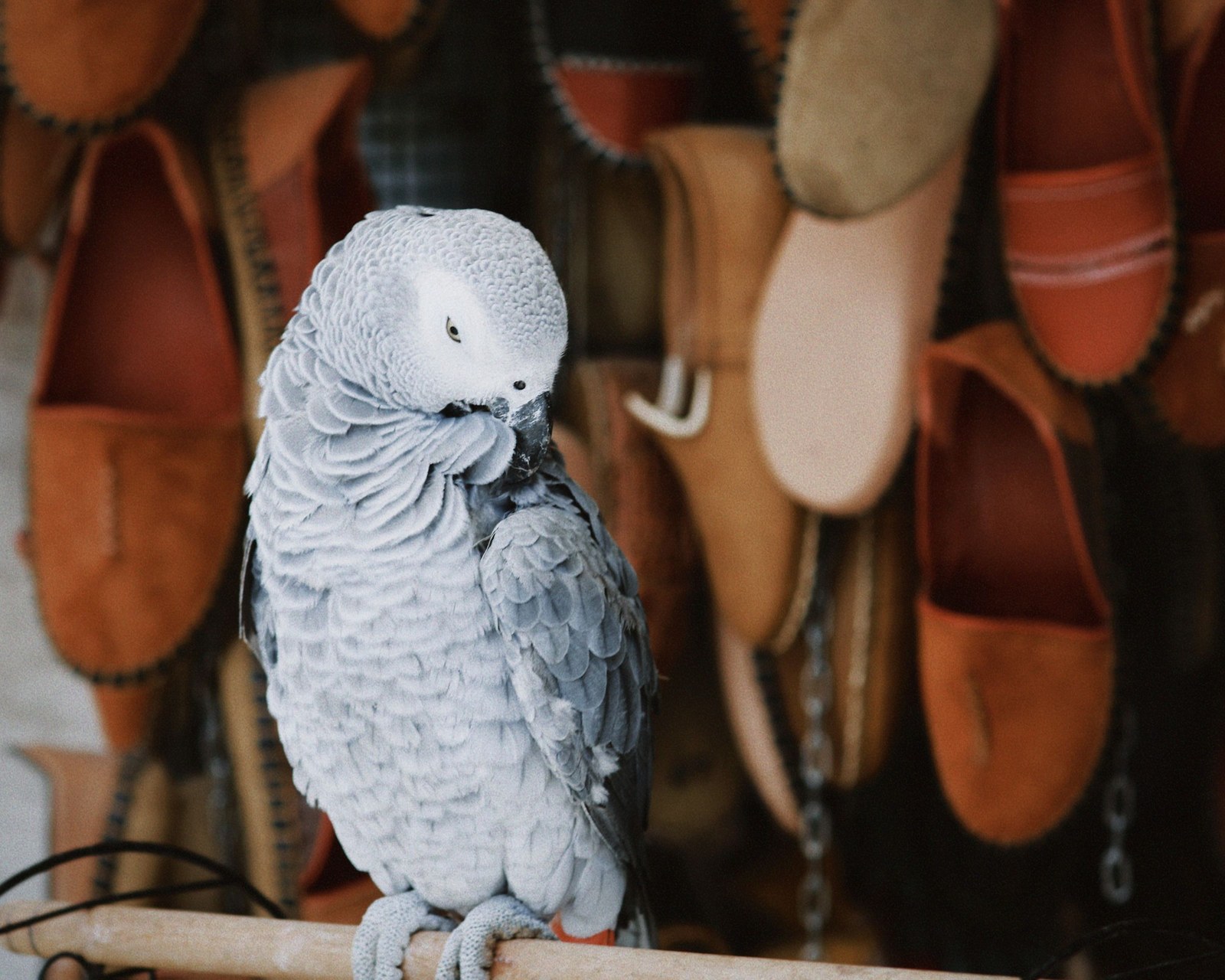
Care changes for an older parrot in gentle, practical ways: expect a slower pace and more naps, offer lower and easier-to-reach perches with softer footing, place food and water where your bird does not have to climb far, and keep routines predictable. Add closer watching of weight and appetite, and lean on your avian vet for age-specific diet and mobility advice tailored to your bird.
What Aging Can Look Like in a Parrot
Parrots age gradually, and the signs are often subtle at first. Your bird may fly less, choose the easy route across the cage, grip a little less confidently, or sleep more deeply between active spells. Feathers and beak condition can change, eyes may look less bright, and a once-bold bird may become more cautious with new toys, new foods, or visitors.
None of these signs alone tells you whether you are seeing normal aging or something that needs attention. That is why patterns matter — and why senior parrots benefit from more frequent vet check-ins, where your vet can track changes over time rather than meeting them all at once.
Rework the Cage for Comfort
Think in terms of effort. Every climb you can remove from the path to food, water, and a favorite resting spot is energy saved for the good parts of the day.
- Lower key perches and add wider, softer-footing options for resting
- Move food and water within easy reach of a favorite perch
- Add ramps, platforms, or ladders where your bird previously hopped or climbed
- Keep the layout familiar — rearrange for access, not for novelty
- Check grip and footing daily, and watch for pressure sores or falls
Change one thing at a time. An older bird who finds the whole cage redesigned overnight may stop exploring altogether, which hides exactly the mobility information you need.
Daily Life, Adjusted
Keep handling gentle and invitations clear — offer a hand and let your bird choose, rather than assuming the old enthusiasm. Shorten out-of-cage sessions if your bird tires, keep the room warm and draft-free for naps, and protect a long, undisturbed sleep period. Enrichment still matters enormously: foraging at ground level, shredding toys within reach, and social time at your bird's pace keep a senior mind engaged without demanding a young bird's athletics.
Watch appetite, droppings, and weight closely, and note changes with dates. Bring those notes to your vet, and never adjust diet or add supplements for an aging bird without their guidance.
When to Check In With Your Vet
Call your avian vet if mobility changes suddenly, your bird falls repeatedly, stops eating normally, loses weight steadily, or becomes withdrawn or unusually quiet. Those changes deserve a professional look rather than a wait-and-see approach, especially in an older bird.
Share the Gentler Routine
KinsLe's Care Teams let family members share those gentler daily duties for an aging bird — assigning feeding, meds, fresh water, and perch checks — with timestamped completions so everyone can see what has been done and nothing rests on one person's memory. Consistent care is a team effort with a senior parrot. Care Teams on KinsLe turns that gentler routine into a written plan — feeding, medication, fresh water, and perch checks assigned by name to family members — with each finished duty timestamped so the whole household can see it was done.