
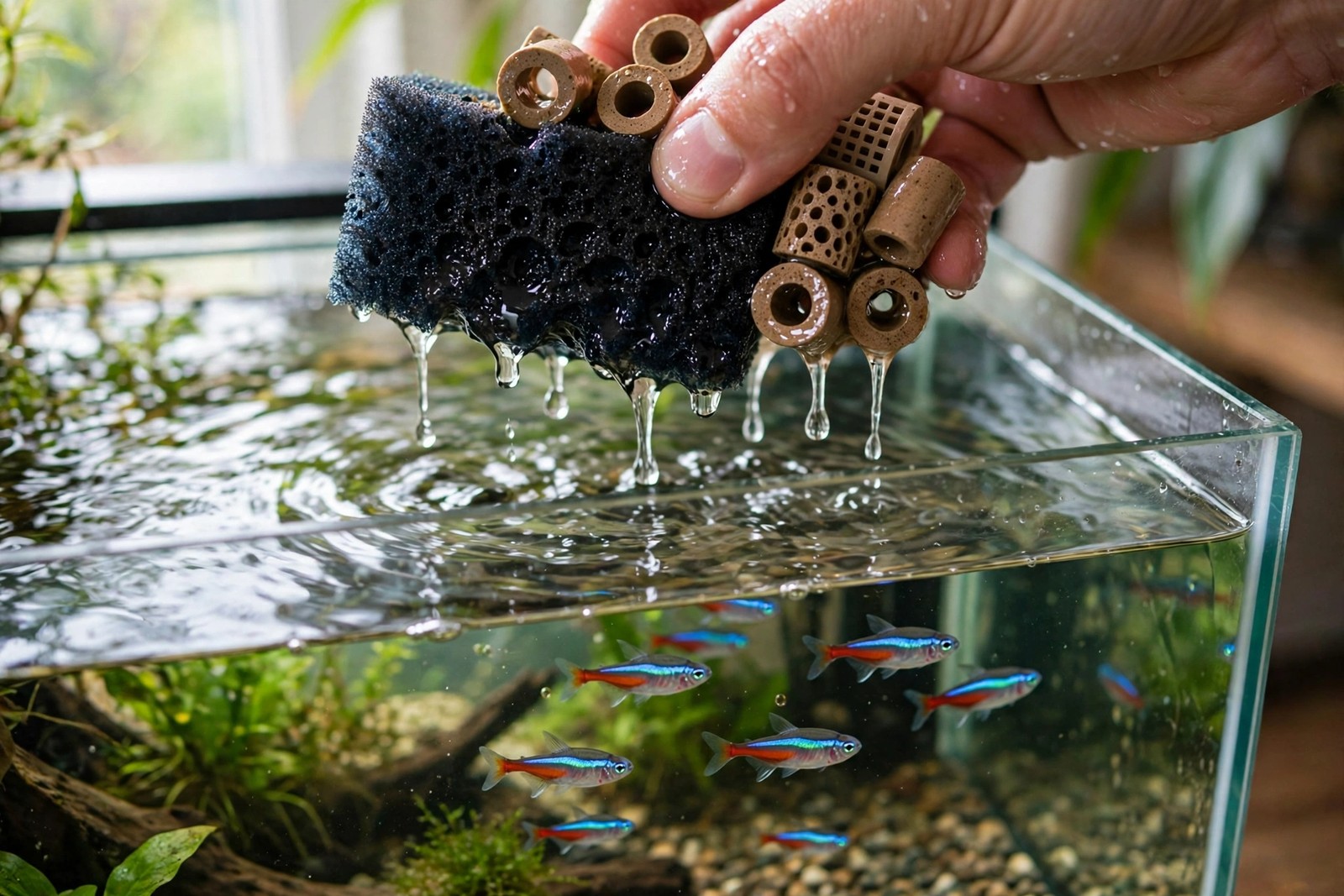
The nitrogen cycle is how your tank turns toxic fish waste into something harmless. Fish constantly produce ammonia — through their gills, urine, and rotting uneaten food — and ammonia burns fish gills even at low levels. Beneficial bacteria living in your filter media and on tank surfaces convert that ammonia into nitrite (still toxic), and then a second group of bacteria converts nitrite into nitrate, which is safe at low levels and removed by weekly water changes and live plants. Building that bacterial colony takes a few weeks, which is why adding a full community of fish on day one so often ends in disaster.
Stage by Stage: What Actually Happens
Stage one starts the moment waste enters the water: ammonia appears. Stage two begins when the first group of nitrifying bacteria (the Nitrosomonas family) colonizes your filter; they consume ammonia and excrete nitrite. Stage three arrives when a second group (the Nitrospira and Nitrobacter families) moves in and converts nitrite into nitrate. These bacteria cling to surfaces — filter sponges, ceramic media, gravel, decorations — which is why filter media is the living heart of your aquarium, not just a mechanical strainer. The cycle never really "finishes." It runs continuously for the life of the tank, matching itself to the amount of waste your fish produce.
How Long Does It Take?
A fishless cycle — running the tank with an ammonia source and no fish — typically takes two to six weeks. You add ammonia (either a fish-food method or pure aquarium ammonia), then test daily and watch the pattern: ammonia rises and falls, nitrite spikes next, and finally both sit at zero while nitrate accumulates. Only then is the tank ready. Fish-in cycling, where hardy fish provide the ammonia, works too but puts those first fish through the dangerous spike phases, so it demands daily testing and frequent partial water changes. Either way, never stock the whole community at once — add a few fish, wait a week or more, and let the bacteria colony grow into the new bioload.
Track Your Cycle in Your Pet Passport
Cycling generates a lot of numbers, and memory is a poor filing system. Your KinsLe Pet Passport — the records packet attached to each pet profile — is the ideal place to log your cycling dates, daily ammonia, nitrite, nitrate, and pH readings, and notes like "nitrite spike day 12." The milestone you're watching for: after dosing ammonia, both ammonia and nitrite read zero within 24 hours, with nitrate present. A dated history like that turns a confusing month into a clear, confident green light — and later, if a problem ever surfaces, those records help you spot exactly what changed. The Pet Passport file on KinsLe stores your dated ammonia, nitrite, and nitrate readings, turning a month of cycling tests into a history a fishkeeper can check at a glance.