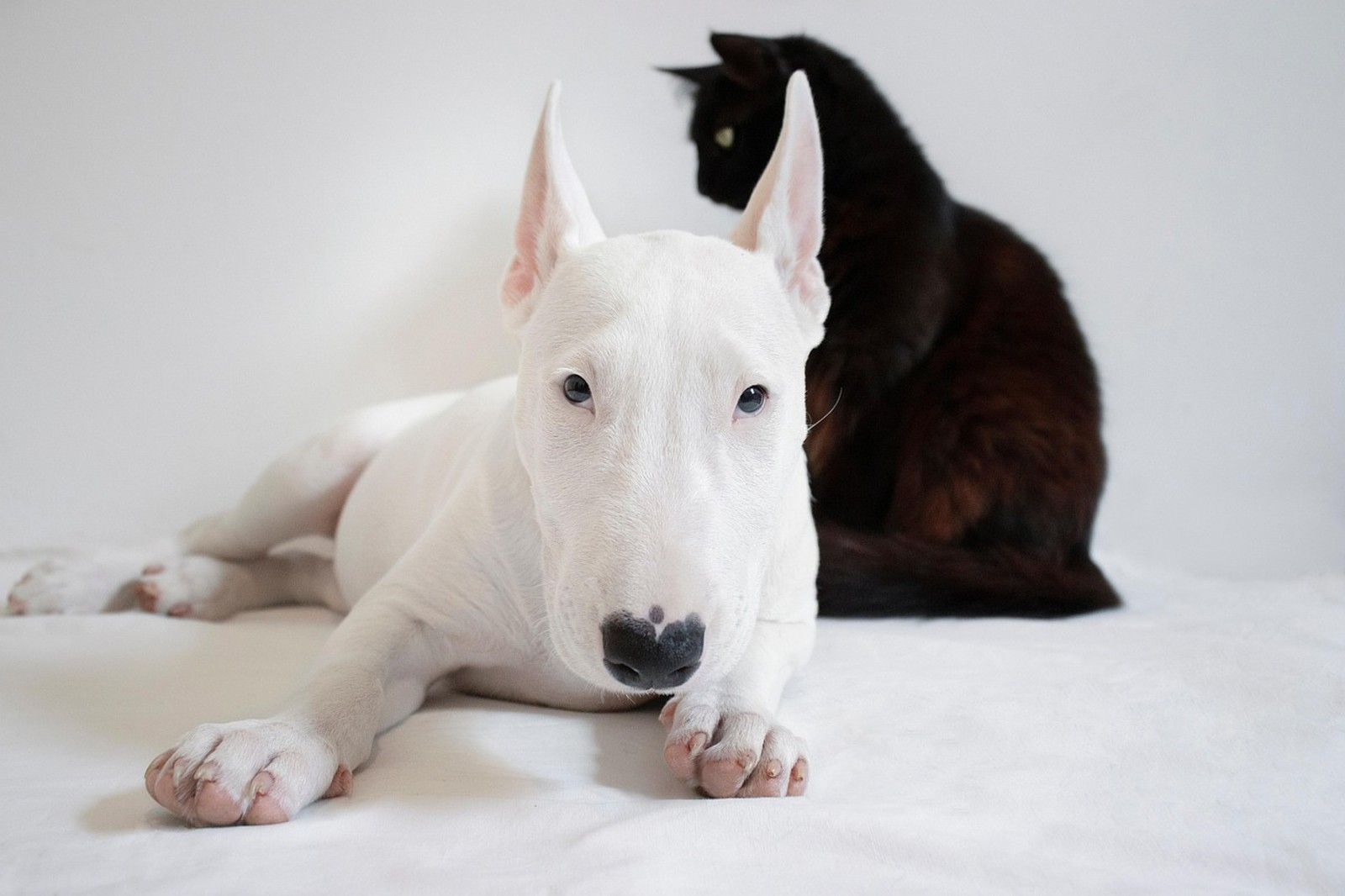
Forget the calendar for a moment: what decides this question is the pattern of behaviour you have actually watched at home. Some pairs are relaxed together within a few weeks, and some should always be separated when nobody is home — and both outcomes are completely normal. Unsupervised time is earned by evidence, not granted by a date, and a household that keeps separating a high-drive dog from an elderly cat forever has not failed at anything.
The Evidence You Are Waiting For
Before even considering it, you want a long run of calm, boring interactions — weeks of them, not a good afternoon. Look for:
- Both animals choosing to relax or nap in the same room, unprompted
- No chasing, ever, including "playful" chasing that the cat did not invite
- Your dog disengaging from the cat easily when called, even mid-interest
- The cat moving around the dog freely rather than slinking, freezing, or fleeing
- Normal eating, litter, and sleep habits on both sides
A young, bouncy spaniel and a confident cat who has lived with dogs before might hit every marker in a month. A rescue dog with an unknown history and a shy cat might take six months of supervised time — or reach a stable arrangement where they share the house in shifts. Both are fine endings.
A Sensible Way to Test It
When the evidence looks strong, build up gradually rather than leaving them together for a full workday. Start with brief absences — you in the garden or next door for fifteen minutes — while the cat retains access to high perches and a dog-proof room with their litter box and water. Lengthen the absences over weeks. Some owners use a pet camera for the first trials, and watching your dog glance at the cat, sigh, and go back to sleep is the most reassuring footage you will ever review. Keep the escape architecture permanent even after they graduate: cats should always have somewhere the dog cannot reach, because a startled cat with no exit is how good relationships get damaged.
Factors That Honestly Slow Things Down
Prey drive is the big one — a dog who fixates on squirrels and outdoor cats needs a much longer proof period indoors, and some never earn unsupervised access, which good owners simply accept. Size differences matter too: a large, clumsy dog can injure a small cat accidentally in boisterous play. Age and health count as well — a frail senior cat cannot afford even one rough encounter. And any regression, such as a new chase habit after a move or a visiting dog, resets the clock without shame.
Sharing Every Interaction With KinsLe
In a multi-person household, the decision gets muddled fast: one person saw a sweet nap together, another saw the dog corner the cat by the stairs, and nobody has the full picture. KinsLe Messenger is the per-pet communications hub, and everyone at home can message through it about how each interaction went — a quick update after a session, a flag when something looked tense, word of the first calm hour. Those shared messages turn "I think they're fine together?" into an actual track record the whole household can judge. When the evidence is genuinely there, you will not have to guess. Your KinsLe Messenger thread on KinsLe holds each dog-and-cat session update in one per-pet conversation, so judgments about leaving them together rest on what the whole household shared.