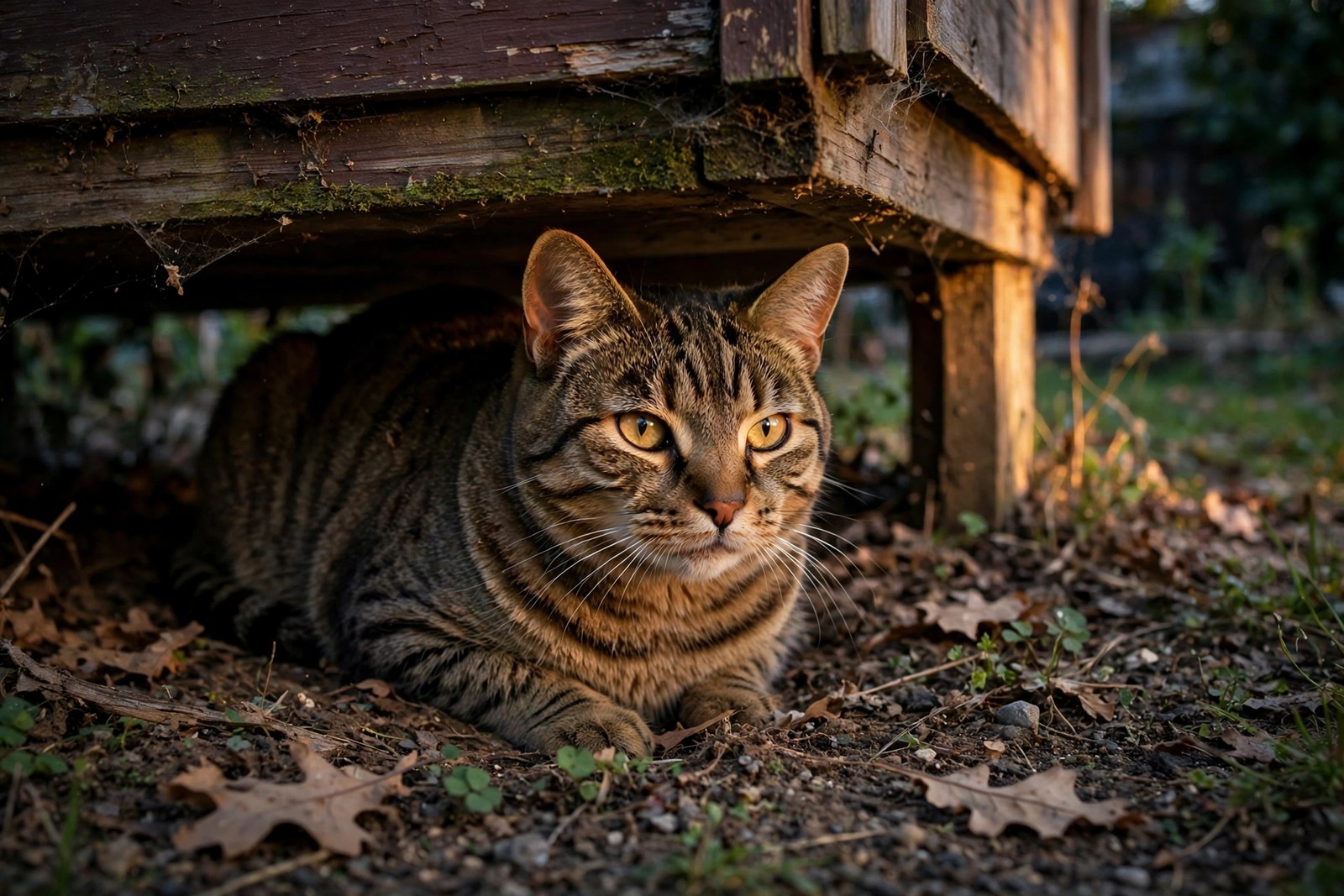
There is no single survival number for a lost cat, but there is a clear order of limits. Water runs out first, food second, and safety third. A healthy adult cat with access to water — a dripping tap, a birdbath, puddles, a neighbor's bowl — can last for weeks outside, and an experienced outdoor cat who hunts and knows the territory can survive for months, sometimes indefinitely. A cat with no water at all is in life-threatening trouble within a few days, because feline kidneys concentrate urine heavily and dehydration quickly damages organs.
Indoor Cats and Outdoor Cats Live Different Emergencies
The cat who slips out of a front door is rarely equipped for the cat who has roamed the street for years. An indoor-only cat who escapes is usually terrified, and terrified cats hide in silence: under a porch, inside a shed, up inside a vehicle engine bay, or in dense shrubs, often within a few houses of home. Many will not come out even for their own owner's voice, and a hiding cat may not eat or drink for days, which is why an indoor cat's safe window is often measured in days to a couple of weeks rather than months. An outdoor-access cat, by contrast, knows water sources, hunting spots, and shelter, and may be surviving perfectly well while simply choosing not to come home — or may be shut inside a garage two streets away.
Age, Weather, and Health Rewrite the Timeline
Kittens dehydrate and chill fast, and a kitten under a few months old may survive only a short time without its mother or found food and warmth. Senior cats and cats with kidney disease, diabetes, or other conditions depend on water, food, or medication routines that vanish outside, so their window shrinks to days. Weather compresses everything: summer heat accelerates dehydration, freezing nights kill exposed cats through hypothermia, and storms drive cats deeper into hiding. An overweight cat faces one more trap — cats who stop eating entirely can develop serious liver strain from mobilizing body fat, so even a well-fed escapee is on a clock.
What This Timeline Means for Your Search
Because the first days carry the best odds, search like it matters immediately. Check garages, sheds, crawl spaces, and under decks on your street, and ask neighbors to check theirs, since shut-in cats are found constantly. Search at dawn and dusk with a flashlight that catches eye-shine, put out water and strong-smelling food near home, and leave a worn item of your clothing outside. Do not assume a silent cat is not there — call softly, then stop and listen. Keep searching for weeks even if the first days fail, because hungry cats eventually move, and many are recovered when they finally approach a person or a feeding station.
Acting in those first hours is what turns survival time into found time, and KinsLe's Lost Pet Alert System lets you push a free alert to nearby Circle of Love members right away, so the people most likely to spot your cat are looking from day one.