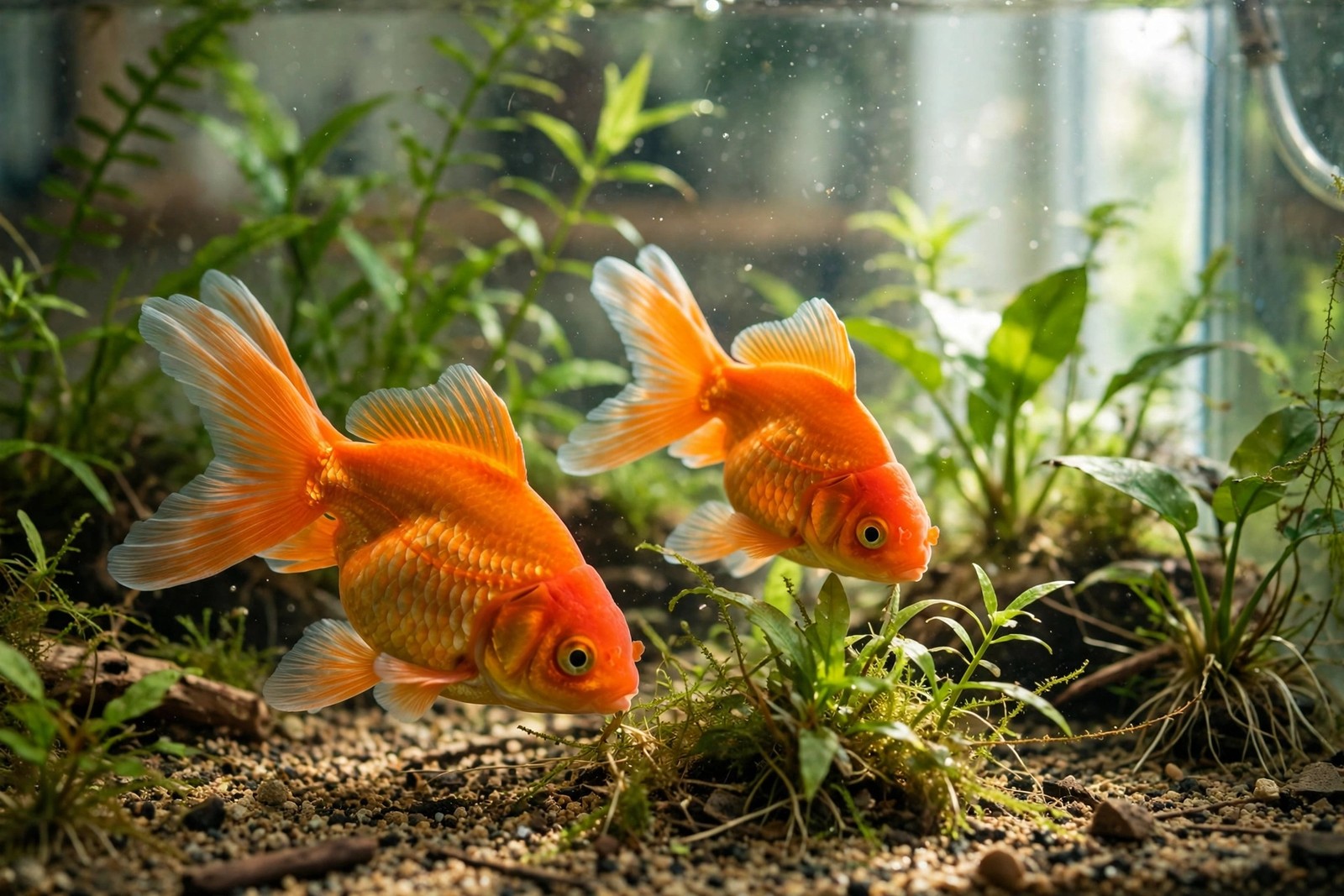
A healthy adult goldfish in a stable, filtered aquarium can typically go seven to ten days without food, with around two weeks as the outer limit rather than a goal. Goldfish are constantly foraging, cold-blooded grazers with slower metabolisms than tropical fish, especially in cooler water, so a well-fed adult in good condition draws on body reserves far better than owners fear. The risk on a trip is usually water quality, not starvation.
Timeframes That Actually Differ
Adult fancy and single-tail goldfish in good body condition sit at the seven-to-ten-day range. Plan cover sooner if your fish are young: juveniles are growing fast, carry few reserves, and should not go more than two to three days without food. Senior fish, fish recovering from illness or treatment, and any fish that already looks thin should be fed daily as normal, so arrange a helper for even a long weekend.
Tank conditions shift the answer too. A mature tank with live plants and surfaces to graze gives goldfish algae and microorganisms to pick at, stretching their comfort. A new, bare, or recently medicated tank offers almost nothing to forage, so the safe gap shrinks. Warmer water speeds metabolism and oxygen use, which also shortens how long you should leave fish unfed and unobserved.
Preparing for a Trip
Two to three days before you leave, do a partial water change, clean the filter media in removed tank water, and check the heater, filter, and air supply are running steadily. Feed normally right up to departure. Never drop in a large extra meal to tide them over: uneaten food rots, ammonia rises, and more goldfish are harmed by pre-holiday overfeeding than by a missed week of meals.
Skip slow-release holiday blocks unless you have tested the exact type in your tank before, because some cloud the water or dissolve far faster than the label suggests. If you use an automatic feeder, run it for several days while you are still home to confirm portion size, since a jammed or generous feeder can foul a tank quickly.
When to Arrange a Feeder
For absences beyond about a week, or for young or delicate fish, have someone come in once or twice. Pre-portion each meal into a labelled container so a willing neighbour cannot overfeed out of kindness, and ask for a simple check: all fish swimming, filter running, water clear. One mid-trip visit covers most two-week holidays well.
On your return, feed a smaller-than-usual meal first, watch that every fish eats, and test the water if anyone looks sluggish, clamped, or off their food. Resume normal feeding over a day or two rather than compensating with a feast.
Keeping that plan straight across family and helpers is easier when the jobs are assigned, not assumed. KinsLe's Care Teams lets you schedule the pre-trip water change, the mid-trip portioned feed, and the return check as named duties for specific people, each marked complete with a timestamp, so your goldfish's empty days are counted and covered rather than left to memory.