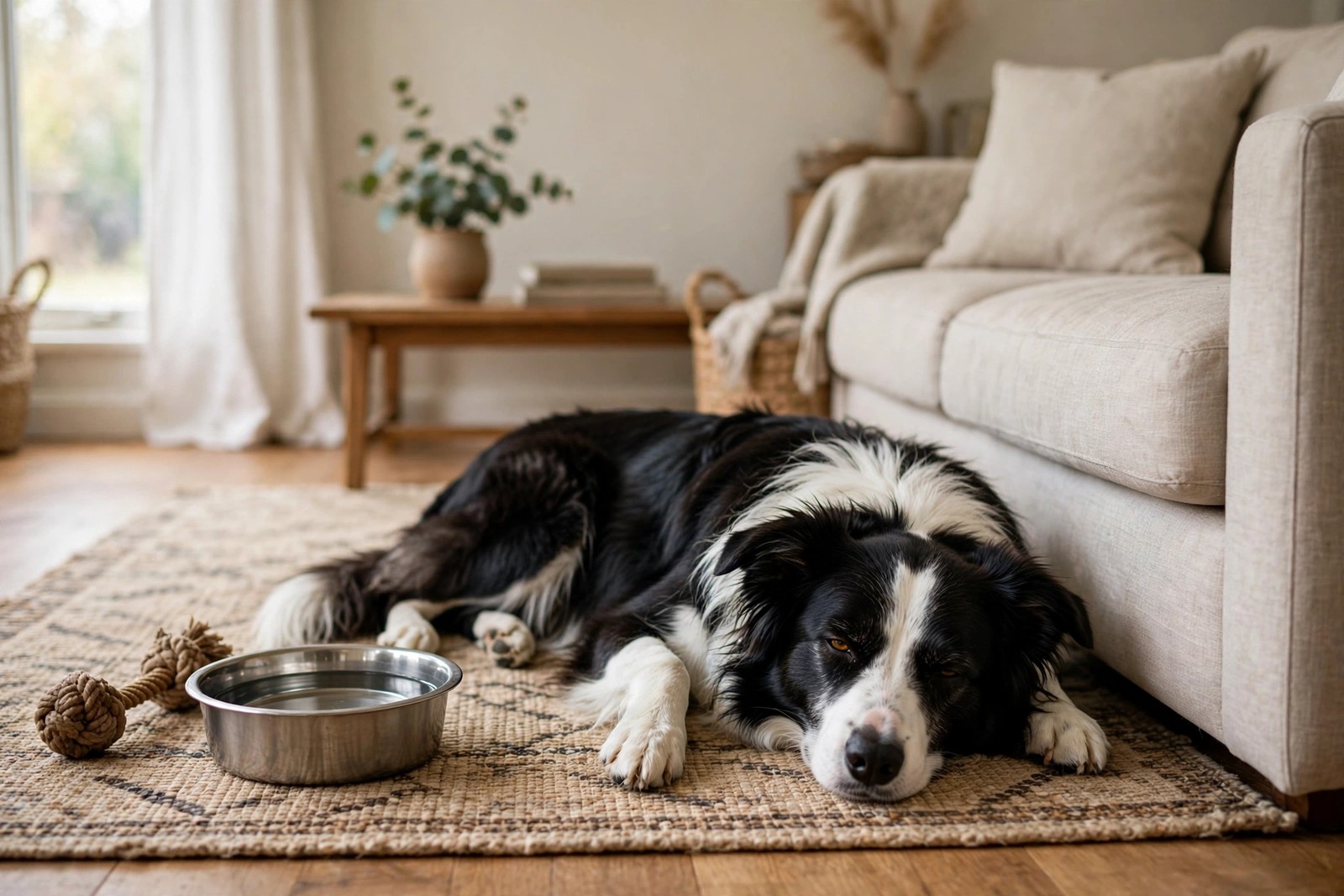
For most healthy adult dogs, six to eight hours is the realistic upper limit alone at home, and four to six hours is the fairer target for an everyday routine. That ceiling is set mainly by the bladder, but boredom, anxiety, and a full day with no company matter just as much. Puppies and seniors sit far below it, so match the number to your dog's life stage, not your schedule.
Puppies: An Hour Per Month of Age
A common working guide is about one hour per month of age for young puppies. A two-month-old typically needs a toilet break every two hours, a four-month-old around every four, and expecting longer invites accidents that are the owner's arithmetic, not the puppy's fault. Puppies also need feeding more often and social time in short bursts, so a full workday alone is not suitable for a pup under six months, even with a lunchtime visit squeezed in.
Extend alone time gradually as bladder control and confidence grow. A puppy who is clean and settled for three hours earns four next week, not eight tomorrow.
Adults and Seniors
A settled adult dog who has been exercised, fed, and given a toilet break before you leave will usually rest through a normal workday stretch, especially with a midday walk breaking anything over six hours. Regularly leaving a dog ten or more hours is too long, whatever their age: expect toilet accidents, restlessness, chewing, barking complaints, and a dog who is frantic rather than pleased when you return.
Seniors often slide back down the scale. Stiff joints, weaker bladders, medication schedules, and cognitive changes can put an older dog back at needing a break every two to four hours. Dogs with separation anxiety are a separate case at any age: their limit is measured in minutes until training improves it, and long absences need a sitter, daycare-style company, or a behaviour plan, not willpower.
Making the Hours Kinder
Exercise before you leave so your dog starts the stretch ready to sleep, and leave water always, plus a safe chew or food puzzle for the first hour. Keep departures and arrivals low-key, practise short absences that end before distress starts, and consider a camera for the first weeks so you see resting rather than pacing. If your dog is destructive, howling, or toileting despite a reasonable stretch, shorten the stretch and talk to your vet or a qualified behaviourist rather than simply pushing through.
For workdays that regularly run long, the honest fixes are a dog walker at midday, a family member popping in, or your dog spending the day with someone. Splitting the stretch in two changes the whole experience for the dog.
Those arrangements only work when everyone knows who is covering which day. The profile itself may be opened to a cousin you designate, courtesy of KinsLe Family Sharing.