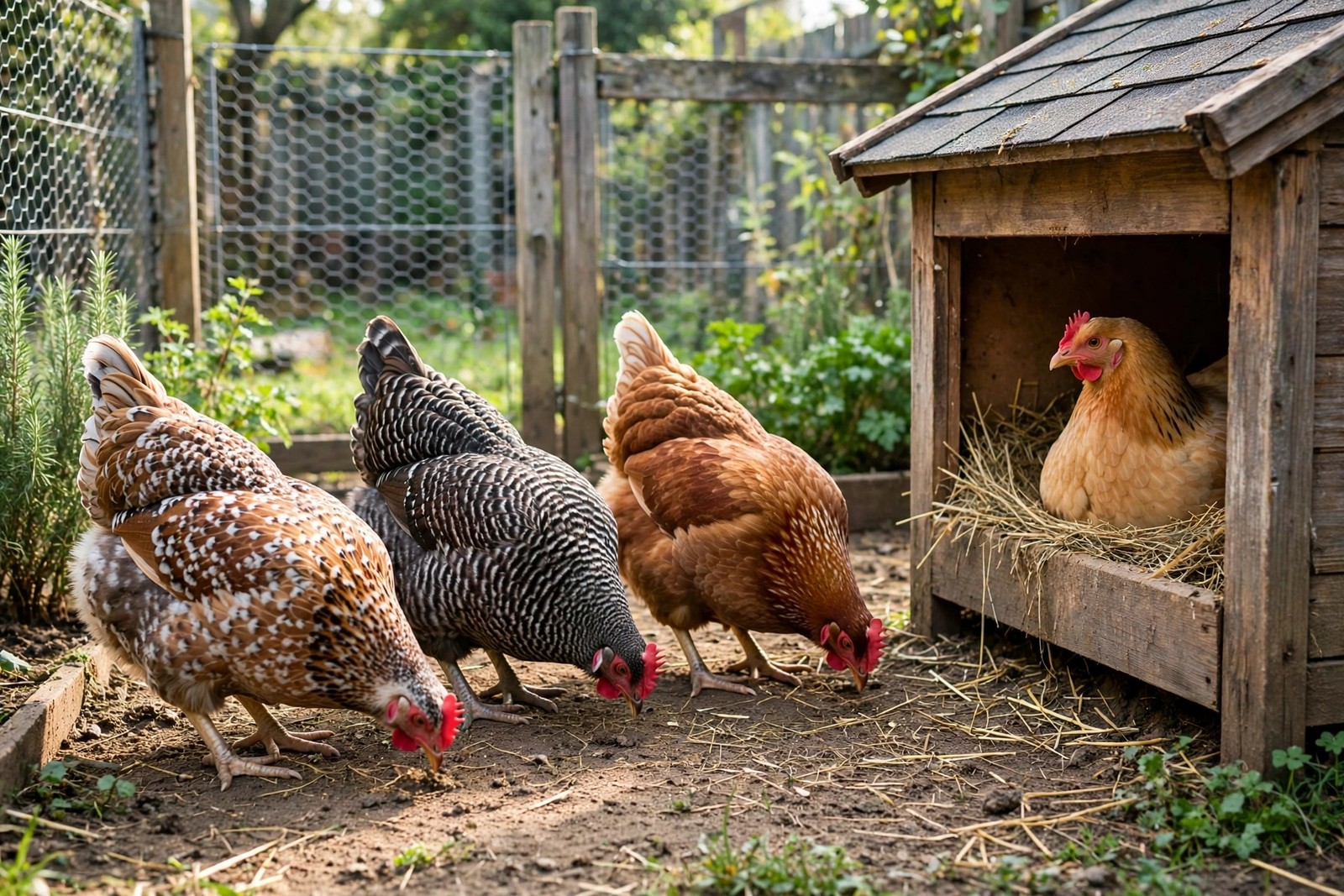
A backyard hen's life and her laying career run on two different clocks. Most chickens kept in a backyard flock live about five to ten years when predators, disease, and poor luck do not intervene, and heritage birds in well-kept flocks sometimes reach the far side of ten. Egg production, though, is front-loaded: nearly all of a hen's best laying happens in her first two to three years, and the keepers who plan around that curve are never surprised by an empty nest box in year five.
The Laying Curve, Year by Year
A pullet typically starts laying at around five to six months old, beginning with small pullet eggs that grow to full size over her first weeks. Her first full year is her peak: a good layer in her prime produces eggs steadily through spring, summer, and fall, pausing for the annual molt and for the short days of winter, when laying slows or stops because egg production is driven by daylight length. In year two she still lays well. From year three onward, the count drops noticeably each year — eggs come less often, though they are often larger — and by five or six many hens lay only in spring bursts or stop altogether while remaining perfectly healthy flock members.
Breed Type Moves Both Numbers
Production hybrids, bred for maximum early output, lay heavily in their first two years and tend to wear out sooner, with shorter lives and a higher rate of reproductive problems as they age. Heritage and dual-purpose breeds start a little later, lay at a steadier, more moderate pace, and often keep producing occasional eggs for more years of a longer life. Bantams lay smaller eggs and fewer of them, but can be long-lived. Knowing which type you keep tells you whether a quiet nest box at age four is normal aging or a problem worth investigating.
What Shortens a Laying Life
Predators, not old age, end most backyard chickens' lives early, so a secure coop and run do more for lifespan than anything you can feed. Within the flock, laying years are protected by layer feed with adequate calcium once hens are laying, constant clean water, and parasite checks. Hens who go broody pause laying while they sit and raise chicks. Extreme heat suppresses laying and can kill older birds, and a hen who stops laying suddenly in her prime, loses weight, or develops a swollen abdomen needs a veterinarian's attention rather than patience.
Planning a Flock Around Two Clocks
Because laying declines years before hens die, keepers who want steady eggs stagger their flock: adding a few pullets every couple of years keeps eggs coming while the older hens live out their retirement as pest patrol and flock elders. Written records are what make that planning possible instead of guesswork, and KinsLe's Pet Passport keeps each hen's hatch date, breed, laying notes, and vet visits in one portable packet, so you can see at a glance which birds are in their prime laying years.