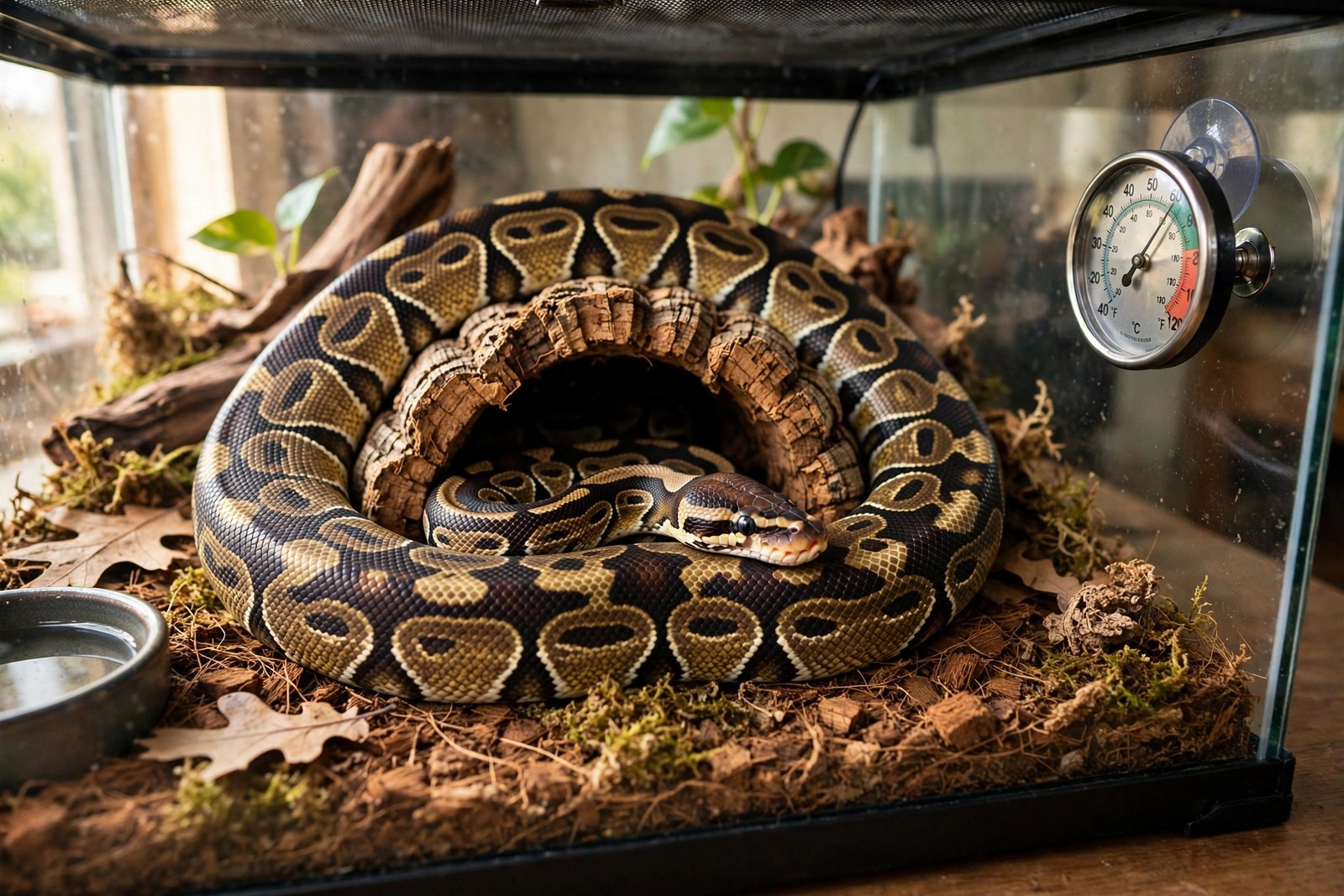
Ball pythons are one of the longest commitments in the reptile hobby. In captivity they commonly live 20 to 30 years, and keepers report well-cared-for individuals reaching their forties. In the wild in West Africa, where predators, drought seasons, and parasites all take their toll, a decade is a more typical span. Anyone buying a hatchling should understand they are signing up for an animal that may still be with them in a different home, a different job, and a different stage of life.
What Decides Where Your Snake Lands in That Range
Ball pythons are ectotherms, so the enclosure's numbers are their physiology. A warm hide around 88 to 92 degrees Fahrenheit (31 to 33 degrees Celsius) and a cooler side near 78 to 80 degrees lets the snake regulate digestion and immune function by moving between the two. Humidity held around 50 to 60 percent, rising a little during shedding, prevents the stuck sheds and respiratory problems that follow chronically dry or damp air. Adults typically reach 3 to 5 feet (roughly 1 to 1.5 metres), females growing larger than males, and growth slows but continues for years.
Feeding: The Longevity Trap Is Obesity
Wild ball pythons eat opportunistically and fast for long stretches, and their bodies are built for scarcity. Captive snakes fed too often and on oversized prey become obese, and fat snakes are the ones that develop fatty liver problems and die young. As a working guide, prey should be about as wide as the widest part of the snake's body, juveniles eat more often than adults, and a healthy adult typically eats every few weeks, not every week. Long voluntary fasts, especially by males in winter, are normal for this species and are not by themselves a health emergency in a snake holding good weight.
The Records a Snake Actually Needs
One thing a ball python never needs is a vaccination schedule — snakes are not vaccinated, and any care plan built around shots is aimed at the wrong species. The records that genuinely protect a long-lived snake are a feeding log noting dates, prey size, and refusals; shed dates and whether each shed came off complete; a weight taken a few times a year; and notes from an exotics veterinarian's checkups, including parasite screening for a new arrival. Those records are how a keeper spots the slow changes — creeping weight gain, lengthening shed cycles — that matter over a 25-year life.
Planning for Decades, Not Years
Because the snake will likely outlive several of your life plans, decide early who would take it if you could no longer keep it, and keep its care routine written down rather than in your head. KinsLe's Transferrable Profiles are built for exactly that handover: if your ball python ever moves to a new keeper, its feeding history, shed records, temperatures, and quirks travel with its profile, so 25 years of accumulated knowledge is never lost.