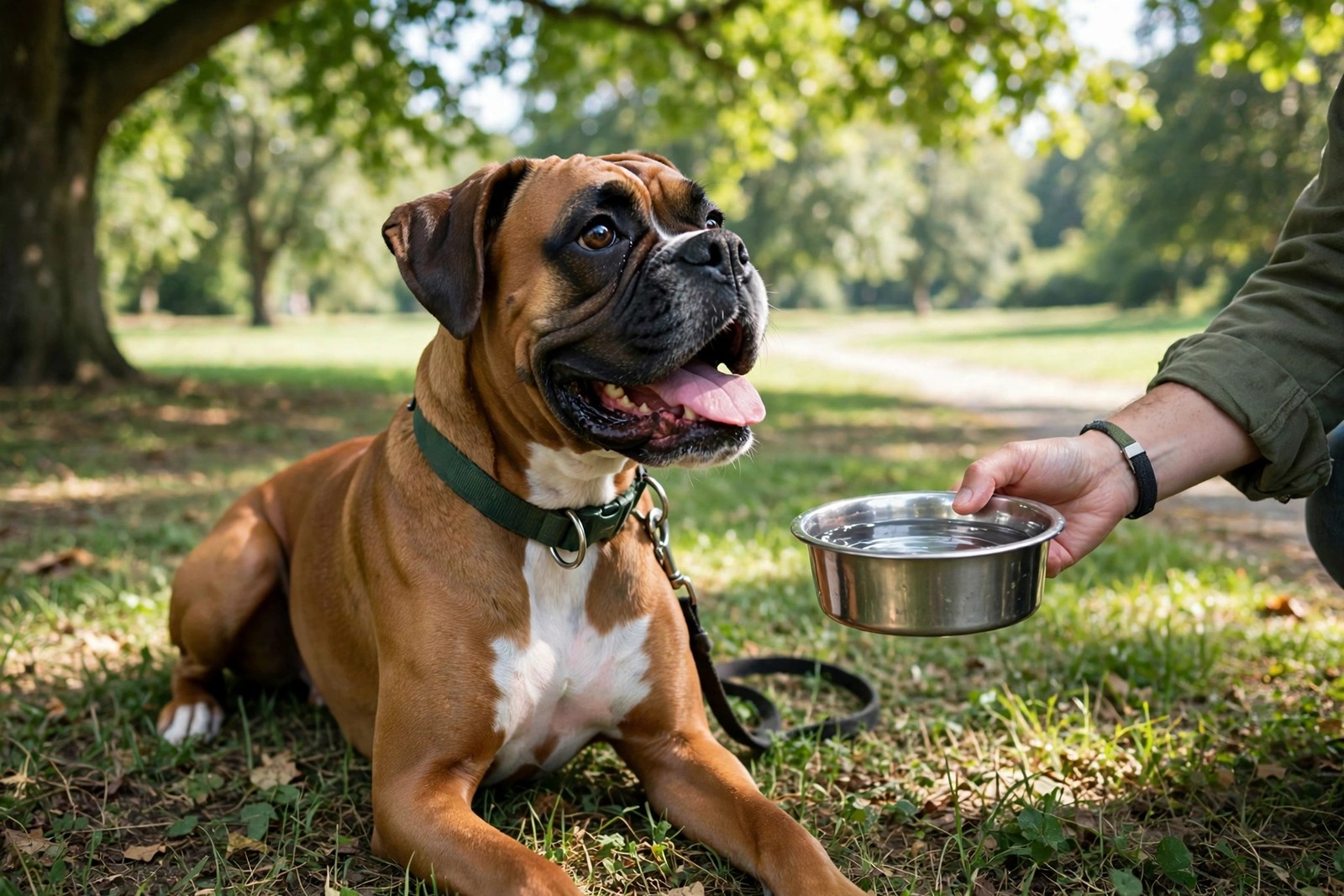
Boxers usually live 10 to 12 years. For a dog of 25 to 32 kilograms with this much energy, that is a comparatively short span, and owners feel it: a Boxer is a boisterous youngster for what seems like a moment, then a grey-muzzled companion. The range is not fixed at birth. Genetics set the starting point, but weight, heart monitoring, joint care and how seriously a household treats heat will shape where your own dog lands within those 10 to 12 years.
Why the Range Sits Where It Does
The Boxer's short muzzle makes breathing less efficient than in longer-nosed breeds, which is why heat and overexertion carry extra risk. A Boxer cannot cool down as effectively on a warm day, so exercise that would suit a Labrador in summer can overwhelm a Boxer. Heart conditions also occur in the breed, sometimes without obvious signs in a young, bouncy dog, which is why vets often suggest discussing heart screening for adult Boxers even when they seem well. Joints, especially hips and knees, carry a powerful, twisting play style for a decade, and extra weight multiplies that load with every jump and skid.
Life Stages to Plan Around
Boxers mature slowly and often stay puppyish in behaviour until about three years old, so training patience matters as much as exercise. The adult years from three to seven are the time to lock in lean weight and a steady routine of vet checks, including heart and joint conversations, while your dog feels invincible. From about eight, regard your Boxer as a senior: shorten midday outings, favour morning and evening walks, watch recovery time after play, and report new lumps, coughing, fainting episodes or unusual tiredness to a vet promptly rather than waiting for the next routine visit. Senior Boxers still love company and gentle games, and keeping them included supports appetite and mood.
Everyday Rules That Protect a Boxer
Never exercise your Boxer hard in heat or humidity, and always carry water and stop at the first sign of laboured breathing, thick drooling or wobbling. Feed measured meals, split across the day if your vet advises it, and resist the pleading face: a lean Boxer breathes, moves and cools better than a heavy one. Build fitness gradually after any rest period instead of returning straight to full-speed play. At home, give your dog a cool resting place away from direct sun, and brief anyone who walks your dog on the same rules, because one hot midday run by a well-meaning helper can undo careful management.
Heat rules and warning signs only protect your Boxer if every person in the household applies them the same way on every walk. KinsLe's Care Teams lets your family assign and share your Boxer's feeding, walking and heat-watch duties in one place, so the person holding the lead always knows the plan.