
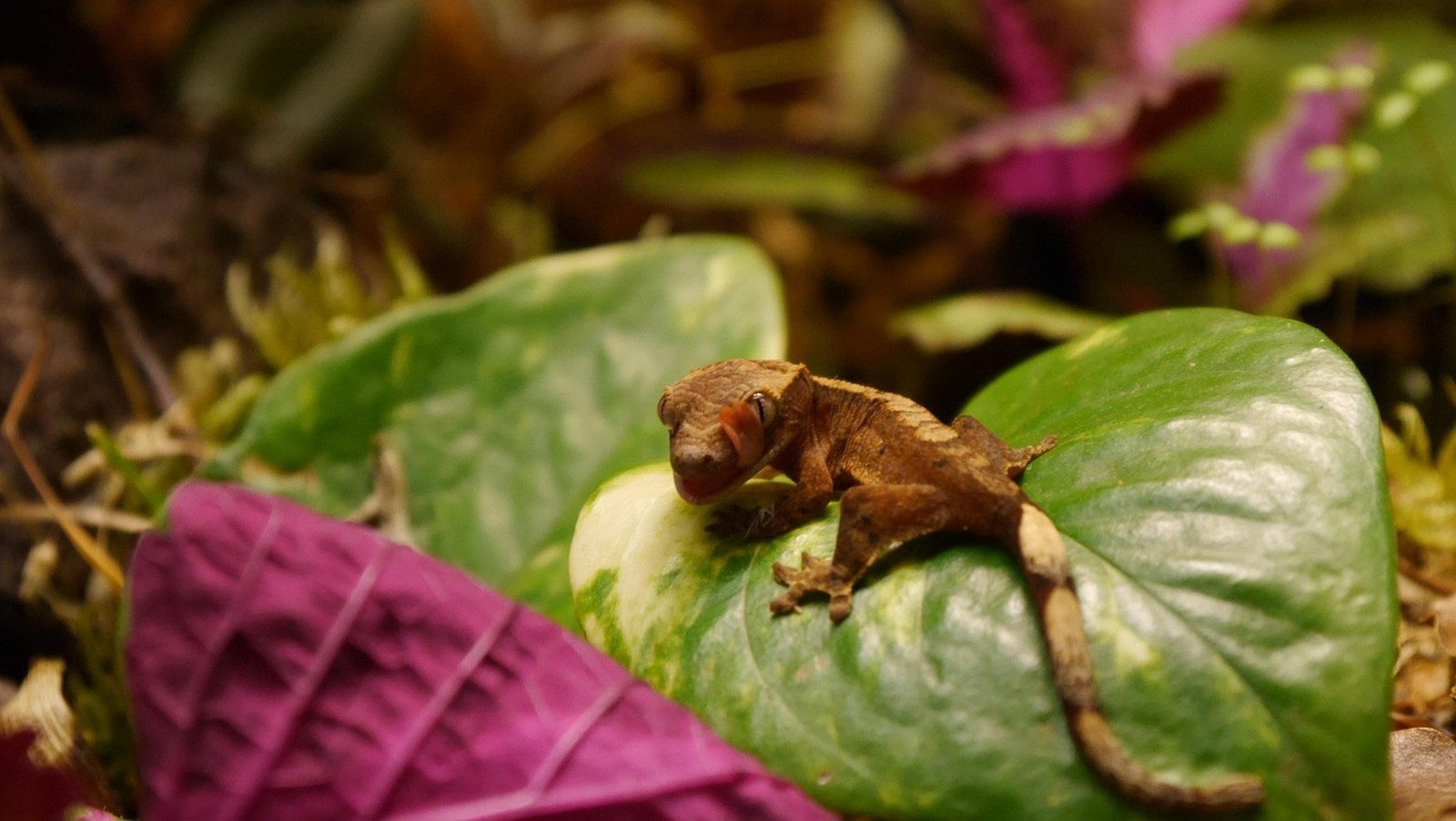
Crested geckos commonly live fifteen to twenty years in captivity, and well-kept individuals can live into their twenties. That lifespan surprises people who met this species as an easy beginner reptile. Easy to keep is fair; short-lived is not. A gecko bought for a teenager may still need care when that teenager has finished college, so the setup, feeding routine, and records you build should be ones you are willing to maintain for two decades.
The Stages of a Long Life
Hatchlings weigh only a gram or two and grow quickly through their first year on frequent small meals, reaching adult size of roughly eight to ten inches including the tail at around eighteen months to two years. Young adults are the athletes of the species: strong jumpers, keen climbers, and enthusiastic hunters of insects offered alongside their powdered diet. Through the middle years a healthy gecko holds a steady weight, sheds regularly, and follows a predictable rhythm of sleeping through the day in foliage and moving about after lights out. Growth has stopped, so any weight change now reflects feeding, breeding condition, or health rather than development, which makes a simple monthly weight note genuinely useful.
What Changes as a Crested Gecko Ages
Older geckos, roughly from ten years onward, slow down in ways that are easy to miss in a nocturnal animal. Jumps get shorter and less frequent, grip on smooth leaves and glass can weaken, and muscle along the back and tail base may thin. Sheds often become less frequent and occasionally less clean, especially around the toes, where stuck skin matters because it can constrict them. Appetite may soften, with an older gecko licking less diet at a sitting and showing less interest in live insects. Some develop a slightly hunched posture or spend more time low in the enclosure rather than at the top. None of these changes alone proves illness, but a sudden change, rapid weight loss, or repeated bad sheds is a reason to see a vet with reptile experience rather than waiting it out.
Adjusting the Enclosure for an Older Gecko
You do not need a new home for an ageing gecko, you need a kinder version of the familiar one. Add broader, lower branches and ledges so climbing routes do not depend on one athletic leap, and place the food ledge where it is easy to reach without a long vertical climb. Keep humidity steady with regular misting so sheds stay clean, and check toes and tail tip after each shed. Maintain the cool room-temperature range this species prefers and avoid heat spikes, which stress older animals most. Offer food in the evening as usual, note how much is gone by morning, and weigh monthly on a small scale so a slow decline shows up in your notes before it shows up in the gecko's shape.
Records That Span Twenty Years
A pet that outlives several phones needs its history kept somewhere durable: hatch date or best estimate, weight trend, shed problems, enclosure changes, and any vet findings. That history is what lets a vet judge whether a change is ageing or illness, and it lets a future keeper continue care without guesswork if the gecko is ever rehomed. Holding that whole long record in KinsLe's Pet Passport means two decades of weight notes, shed notes, and vet visits stay together in one portable packet instead of scattering across old notebooks.