Dachshunds usually live 12 to 16 years. Small breeds often outlive large ones, and the Dachshund is no exception, but this breed pairs its long life with a long back, and that back is the organising fact of Dachshund care. A dog who reaches 15 with a healthy spine can still enjoy walks, sniffing games and family life; a dog whose back is injured early may face years of restricted activity. Protecting the spine is therefore not a senior topic for this breed. It starts in puppyhood and never really ends.
The Back Above Everything
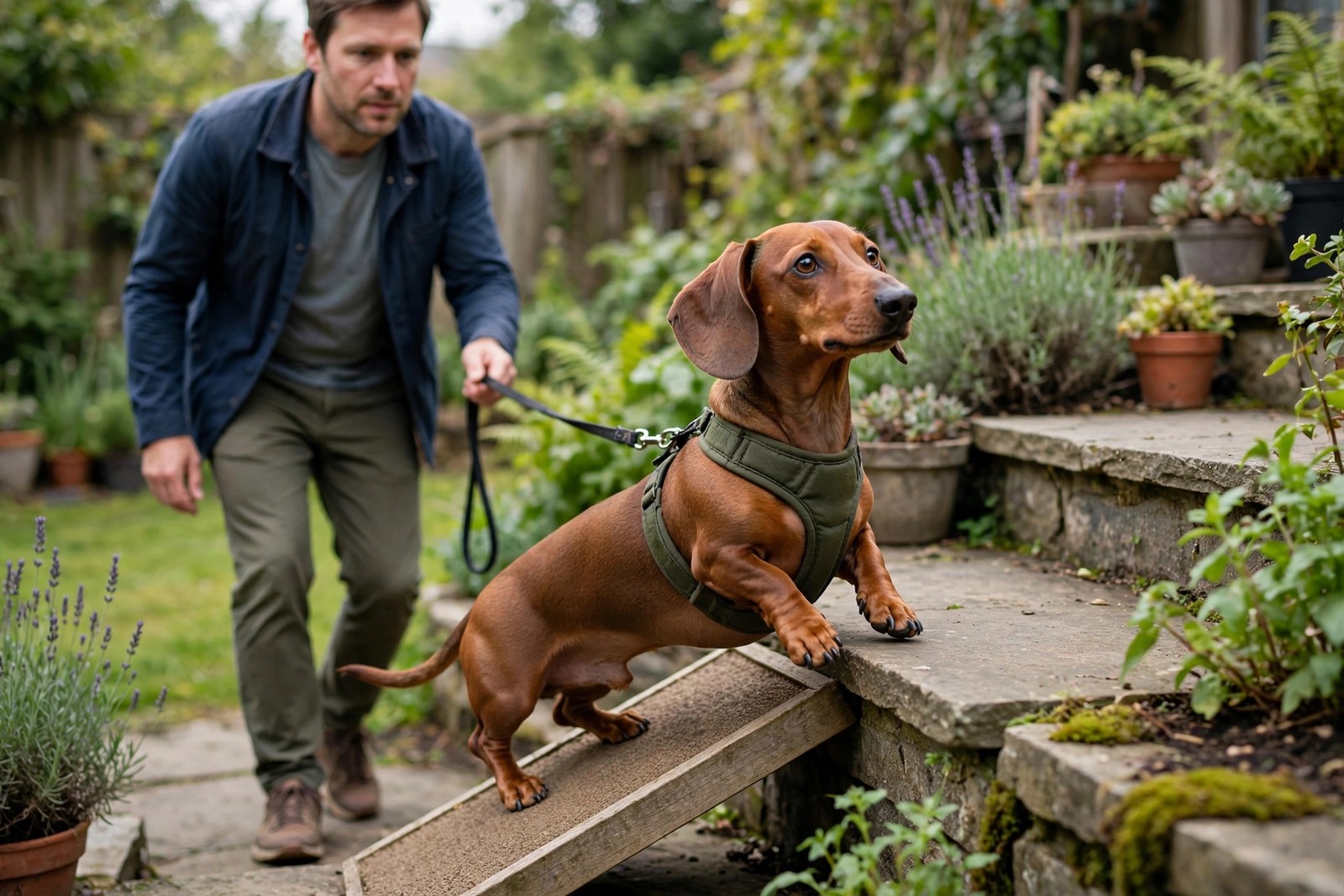
The Dachshund's elongated spine is vulnerable to disc problems, and extra weight, repeated jumping down and twisting landings all add load to those discs. Keep your dog slim enough to feel ribs easily and see a defined waist, and treat food measurement as back care, because for this breed it genuinely is. Fit ramps or steps at the sofa, bed and car, and teach your puppy to use them before jumping becomes a habit. Lift your Dachshund with one hand under the chest and the other supporting the rear, keeping the body level, and brief children and visitors to do the same rather than scooping under the front legs. Discourage races down full flights of stairs where you reasonably can, and provide a harness for walks instead of neck pressure during sudden lunges.
Warning Signs That Need Same-Day Advice
Learn the early signs of a back episode so you can act quickly: reluctance to jump, climb or walk, a hunched posture, crying out when picked up or touched, shivering, a wobbly walk or dragging back feet. Any of these in a Dachshund deserves prompt veterinary attention, ideally the same day, and strict rest while you wait for advice rather than a test walk to see whether things improve. Note when the signs started and what your dog was doing just before, because that timeline helps the vet. Do not offer leftover pain medication from another pet or another episode; what a vet chooses depends on examination findings you cannot replicate at home.
Daily Life for a Long, Low Dog
Dachshunds were bred to hunt, and a healthy adult needs real daily exercise, not a life carried from room to room: steady walks, sniffing time and gentle routes on even ground build the muscle that supports the spine. Keep fitness gradual after any rest period, keep nails trimmed so short legs keep good purchase on smooth floors, and use non-slip mats where your dog lands or turns quickly. Teeth and weight both need routine attention in a small, food-enthusiastic dog, and senior Dachshunds from about nine onward deserve mobility checks at vet visits, with ramps reviewed as strength changes. A dog who hesitates at a familiar ramp is giving you information; take it to the vet rather than coaxing harder.
Back rules fail when one person enforces ramps and lean meals while another lifts carelessly and feeds freely, so consistency across the household is part of the treatment. KinsLe's Care Teams lets your family share your Dachshund's lifting method, ramp rules, feeding amounts and exercise duties in one plan, so the back-protecting routine holds whoever is on duty.