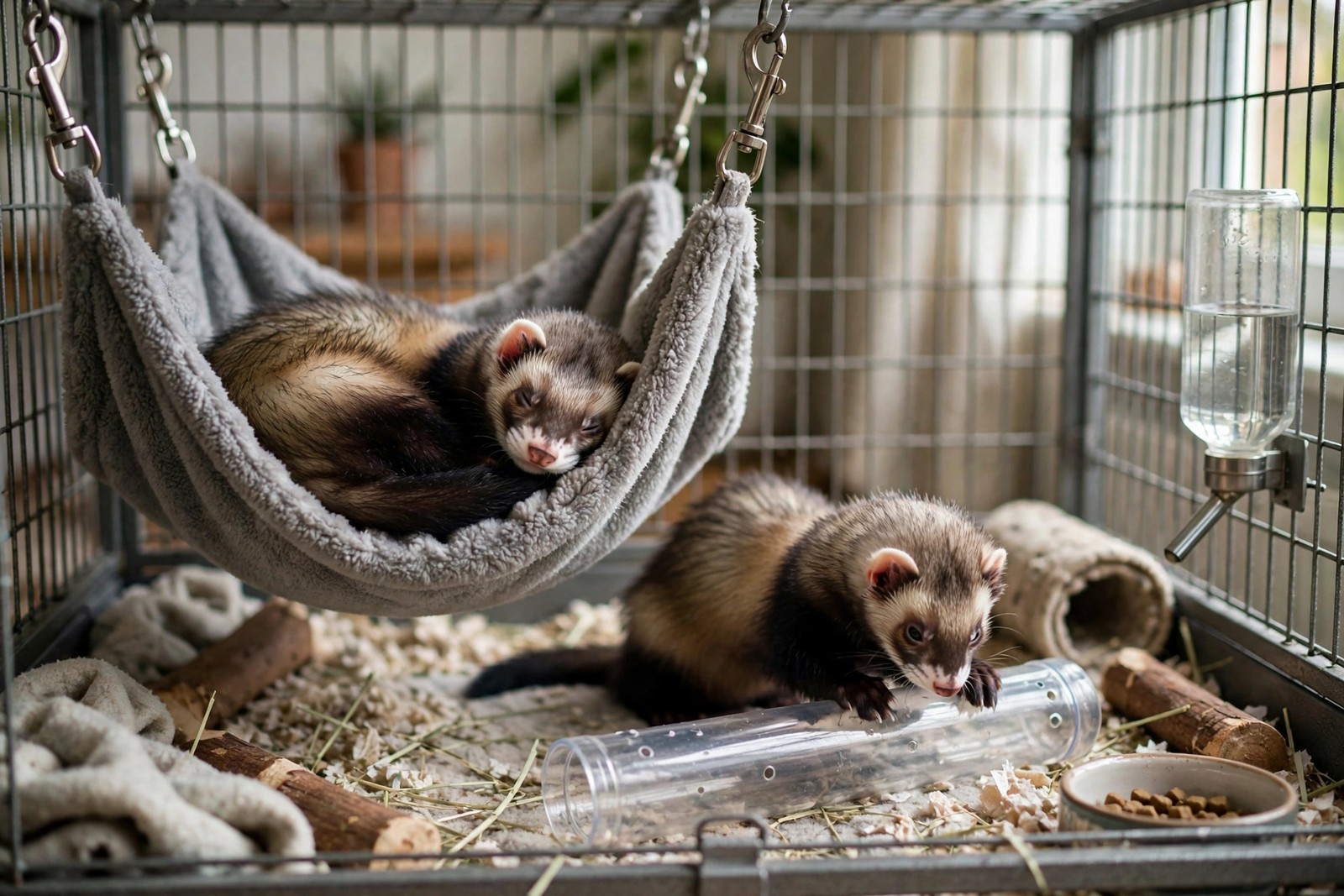
Pet ferrets typically live six to eight years, and a well-kept ferret sometimes reaches ten. That places them in the middle ground of small pets: far longer than a hamster's couple of years, far shorter than a parrot or tortoise. Owners do best when they plan for the whole arc, because a ferret's needs, energy, and health risks change a great deal between a bouncing kit and a sleepy seven-year-old.
What Those Years Look Like
A kit in its first year is famously exhausting: awake in bursts, chewing, digging, and testing every gap in your ferret-proofing. Adults settle into a pattern of deep sleep for much of the day, often fourteen hours or more, broken by one to two hours of intense, joyful play at dawn and dusk. That rhythm is normal and not laziness. From around five years, most ferrets begin a visible slowing: shorter play sessions, more weight carried or lost around the middle, a coat that may thin, and longer, deeper sleeps. Seniors often need ramps or lower hammocks, softer bedding, and help keeping weight on with more frequent, easily eaten meals.
What Shortens or Protects a Ferret's Life
Diet does heavy work in this species. Ferrets are strict meat eaters with short digestive systems, and they do poorly over time on sugary foods or plant-heavy diets, so a suitable high-protein ferret diet fed consistently is one of the strongest lifespan choices an owner controls. Housing matters too: a large cage, daily time out of it, and a ferret-proofed room prevent the blockages and injuries that end lives early, since ferrets swallow small objects and squeeze into appliances and recliners. Ferrets are also prone to certain illnesses in their middle and later years, including adrenal and pancreatic conditions, so twice-yearly vet checks from about age four are commonly suggested, because problems caught early are far more manageable. Any ferret that stops eating, becomes weak or wobbly, or loses weight quickly needs a vet promptly, not watchful waiting.
Planning for the Senior Years From Day One
Because six to eight years passes quickly, build habits early that pay off late. Keep a simple record of weight every month or two so a slow decline is visible. Handle paws, ears, and mouth gently from kit age so an older ferret tolerates the checks and vet visits it will need more often. Save for veterinary costs or arrange cover while your ferret is young and healthy, since the expensive years cluster at the end of life. If you keep more than one ferret, expect companions of the same age to become old together, and plan how you will support a survivor that has lost its cage mate.
Care That Stays Consistent for Years
A ferret's routine is daily and detailed: fresh food and water, a cleaned litter area, play and supervision out of the cage, and checks that the room is still escape-proof. Across six to eight years, and across holidays, busy weeks, and different helpers, that routine slips unless everyone shares the same list. Using KinsLe's Care Teams to assign those feeding, play, and cleaning duties, with each finished task marked by a timestamp, keeps a ferret's care steady from the wild kit months through to the slower senior years.