Owners often give up on a joint supplement after ten days, or credit it after three, and both verdicts come too early. Supplements for ageing joints are not painkillers; they supply building blocks and supportive nutrients that the body uses slowly, so any genuine benefit builds over weeks. The widely used rule of a fair trial is about four to six weeks of consistent daily use, judged against notes you kept from before the supplement started — not against how your dog seemed on one good or bad day.
What to Measure During the Trial
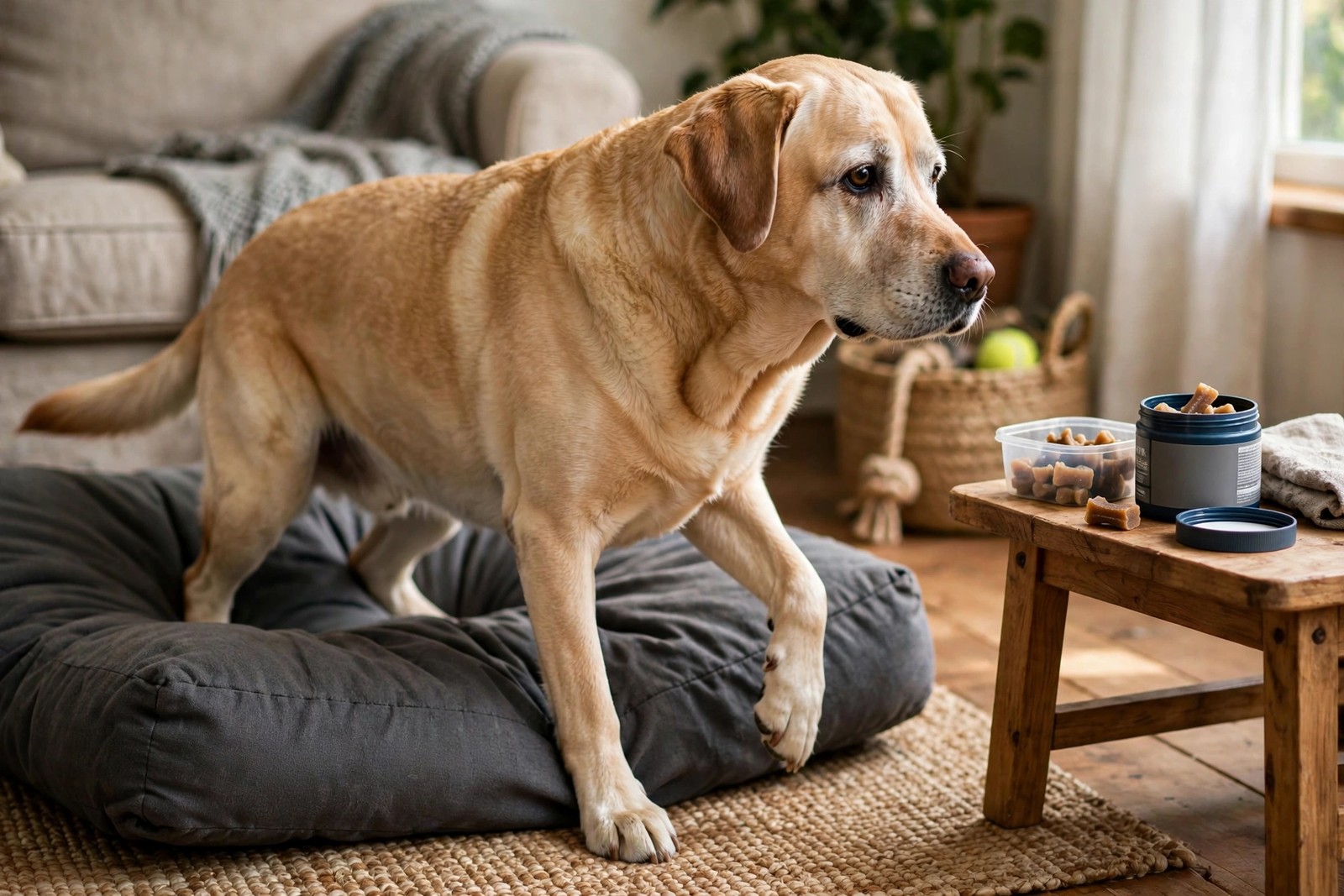
Choose three or four observable things that stiffness actually affects in your dog's life, and score them briefly each evening. Ease of rising from a lying position is usually the first to change. Stiffness in the first minutes after rest, willingness to climb the stairs or jump into the car, length of walk before lagging, and interest in play are all fair measures. Weather, an unusually long walk the day before, and a missed dose all muddy the picture, which is exactly why written notes beat memory. Film ten seconds of your dog rising and walking on the first day and again at week four; side-by-side video shows changes that daily familiarity hides.
Why a Vet Check Comes First
A supplement trial should never be the first response to new slowing down. Sudden reluctance to move, yelping, a limp that appears or worsens, or one leg being favoured can signal injury, neurological trouble, or pain that needs proper veterinary assessment rather than a supplement and patience. Even with ordinary age-related stiffness, tell your veterinarian what you plan to give: some supplements do not sit well alongside particular conditions or medicines, and your vet can confirm the product suits your dog. This article deliberately gives no doses — the right product and amount depend on your dog's size, health, and other medications, and that decision belongs in the clinic, not in a general guide.
Supporting the Joints Beyond the Supplement
The trial works better alongside the measures with the strongest everyday payoff. Weight is the first: every extra kilo is load multiplied across sore joints, and many senior dogs improve more from reaching a healthy weight than from anything in a tub. Keep exercise daily but moderated — several shorter walks on forgiving ground beat one weekend marathon — and maintain muscle, because muscle is what holds ageing joints steady. At home, add rugs over slippery floors, a ramp for the car or sofa if jumping has become a strain, and a supportive bed in a warm, draft-free spot away from cold floors.
Judging the Result at Six Weeks
Compare your diary and videos with week one. A fair success looks like easier mornings, longer comfortable walks, or renewed interest in a favourite route — modest, real gains rather than a puppy restored. No change after six consistent weeks means the product has had its trial; talk to your veterinarian about other options for keeping your dog comfortable instead of stacking a second and third supplement hopefully. Record the product, its start date, and your week-by-week mobility notes in KinsLe Pet Passport, and the review conversation with your vet starts from evidence instead of impressions.