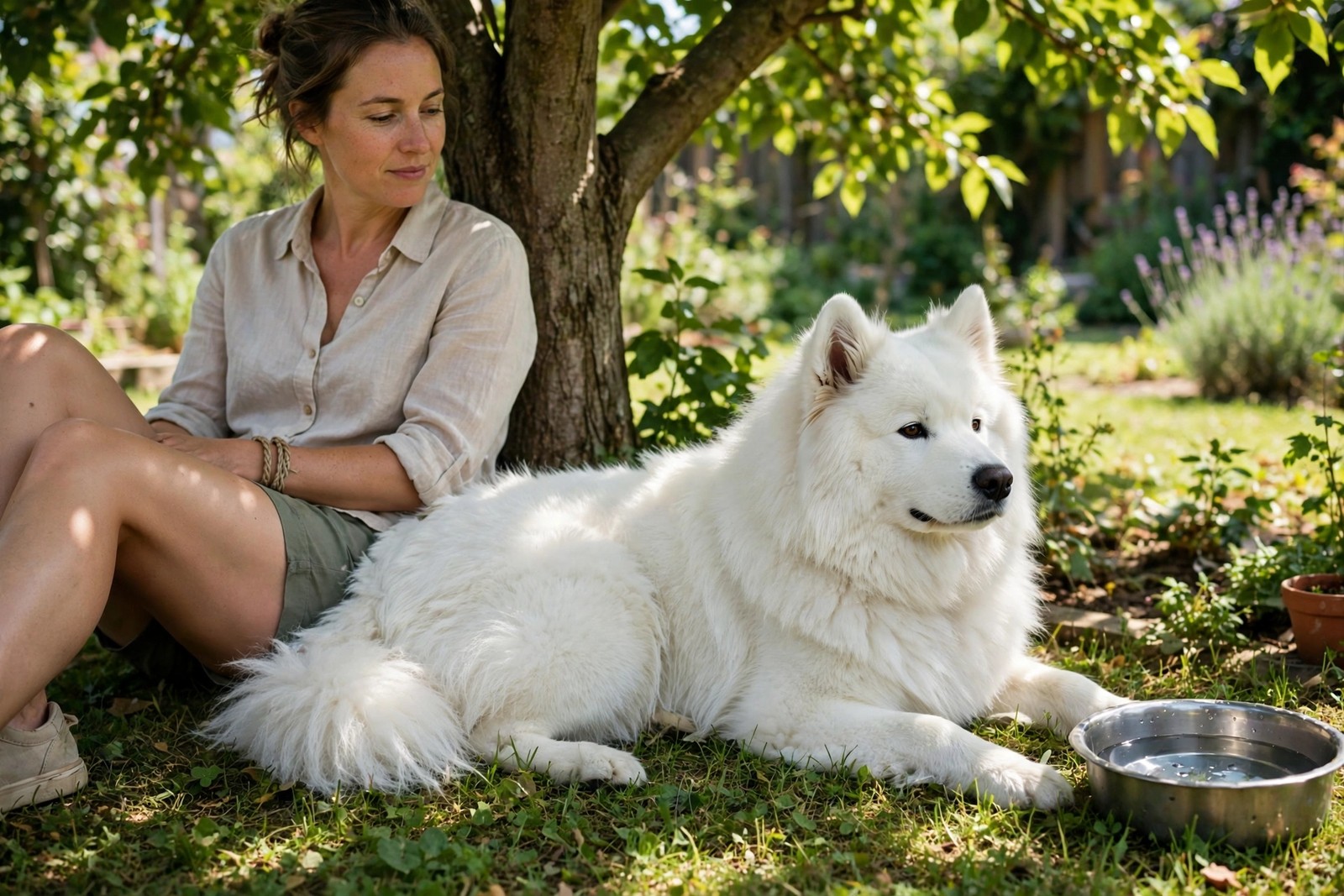
Samoyeds usually live 12 to 14 years, a good span for a medium-to-large breed, earned through a hardy Arctic heritage. Bred to herd reindeer, pull sledges and share tents in Siberia, the Samoyed is a sturdy, sociable dog with a dense double coat and the upturned mouth corners owners call the Sammy smile. The same heritage sets the care agenda for a long life: sound hips, clear eyes, a lean body hidden under a lot of hair and serious respect for warm weather, which this breed was never built for.
Hips, Eyes and the Checks That Matter
Hip health is the breed's main structural watchpoint, so ask any breeder about hip screening of the parents, keep a growing puppy lean and avoid repetitive jumping while the skeleton develops. In adulthood, the signs to report are stiffness after rest, reluctance to climb stairs and a narrowing stance at the back end. Eyes belong on the routine list too: mention cloudiness, excessive tearing or pawing at the face at vet checks, and keep the hair around the eyes clean, because tear staining on a white face is easy to see and a change from your dog's normal pattern is worth noting. Blood-sugar awareness comes up in breed health conversations, so report heavier drinking, weight loss despite a good appetite or unusual tiredness promptly rather than assuming the coat or the weather explains it. None of these checks is complicated; their value lies in happening every year, not only when something looks wrong.
Living With an Arctic Coat in a Temperate Home
The double coat sheds heavily, typically with two major coat blows a year, and needs brushing through to the skin several times a week to stop the undercoat felting into mats, especially behind the ears, in the armpits and around the tail. Never shave a Samoyed down for summer: the coat insulates in both directions and protects the skin, and a clipped double coat may regrow unevenly. Heat management is about scheduling instead. Walk early and late on warm days, choose shaded and waterside routes, carry water, and treat heavy panting, drooling or wobbliness as a stop-everything signal to cool the dog and call a vet. Indoors, offer a cool floor and airflow; many Samoyeds choose tiles over beds in summer by instinct. Central heating dries the coat and skin in winter, so keep grooming steady rather than easing off when the weather turns.
A Working Breed That Talks and Digs
Samoyeds were workers, and the habits remain. Expect a vocal dog that comments on visitors, neighbourhood noises and its own feelings; training a reliable quiet cue early, and rewarding calm watching, protects neighbourly relations for fourteen years. Expect digging too, especially in warm weather when the dog excavates a cool pit, so give the garden a permitted digging spot if you can. Harness sports at a modest level (scootering, backpacking walks and similar steady pulling work) suit the breed's build and mind in cool weather, provided your vet is happy with the dog's hips and the work is built up gradually.
Company, Exercise and the Older Samoyed
Samoyeds are people dogs who were bred to live closely with families, and loneliness is a real risk to their wellbeing; a dog left alone for long stretches may bark, dig and chew from frustration. Plan daily exercise of around an hour to an hour and a half of walking, play and training, adjusted for heat and age, and keep the dog's social needs in the plan. From about eight onwards, watch weight carefully, because a Samoyed's appetite often outlasts its activity level, and extra kilos load ageing hips. A life spanning twelve to fourteen years will usually cross house moves and clinic changes. KinsLe's Pet Passport keeps your Samoyed's screening results, weight history and vet notes in one shareable record, so every new vet starts with the full picture.