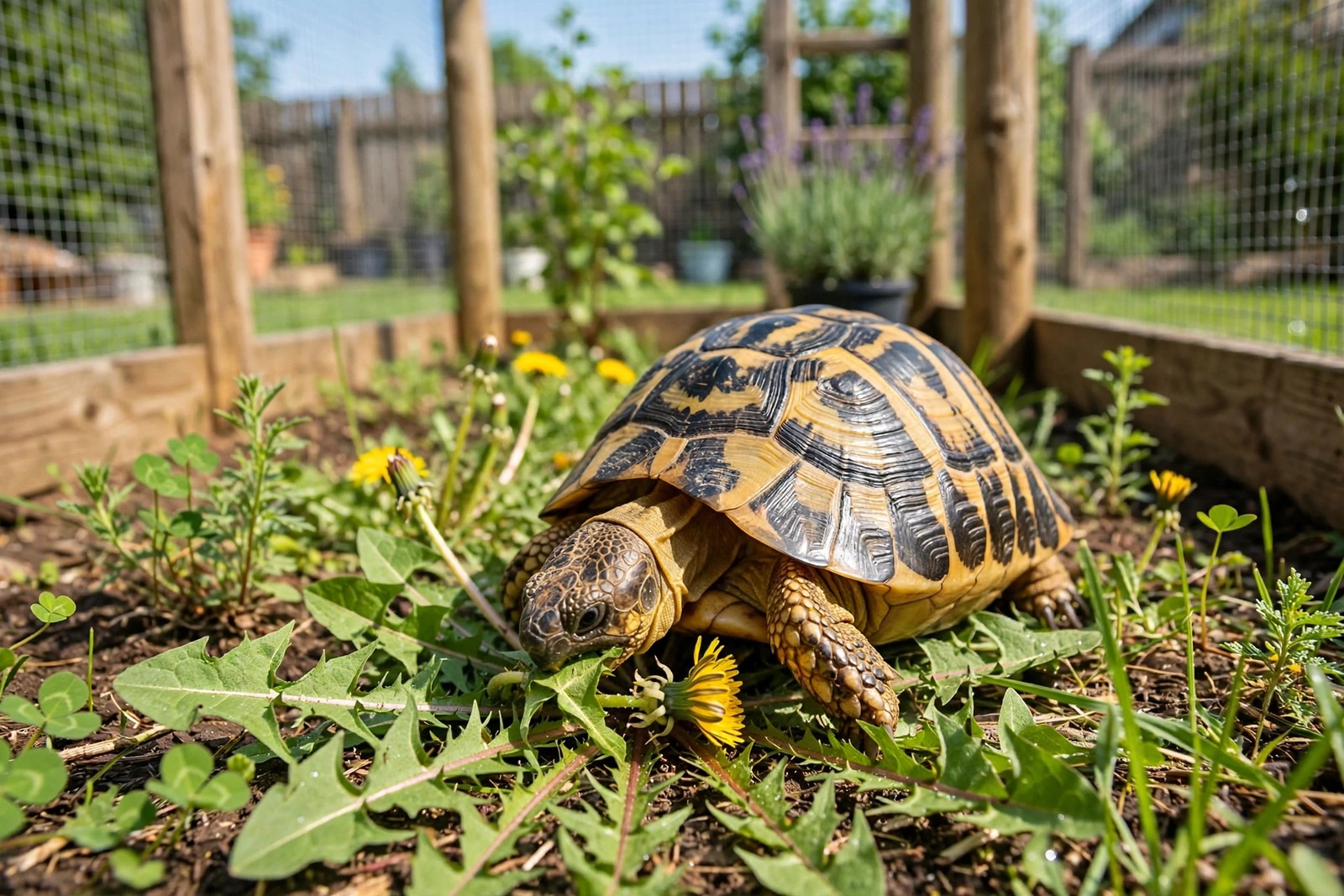
Fifty years is the floor for most pet tortoises, not the ceiling. Mediterranean species such as Hermann's and Greek tortoises commonly live 50 years and beyond in good care. Leopard tortoises reach several decades. The giants of the pet trade, sulcatas, can live 70 to 100 years or more — and grow into animals weighing well over 100 pounds (45 kilograms). Anyone acquiring a tortoise should plan on the animal outliving them unless they are very young, and treat that as the central fact of the species rather than a curiosity.
What Builds a Fifty-Year Life
Tortoises grow slowly and steadily, and their longevity is manufactured daily out of light, heat, and diet. They need strong ultraviolet-B light, from sun outdoors or a proper lamp indoors replaced on the maker's schedule because output fades before the bulb fails, to process calcium into shell and bone; without it, shells soften and deform. Grazing species — most of the common pet kinds — are built for grasses, weeds, and leafy greens, and rich diets of fruit and soft vegetables produce the raised, bumpy shell growth called pyramiding along with kidney and liver strain. Calcium available in the enclosure, a warm basking spot, and a cooler retreat complete the setup that lets a tortoise thrive for decades rather than survive for years.
The Commitment Nobody Sees in the Shop
The tortoise in the shop is two inches long and fits in a palm. The same animal in twenty years may need a heated outdoor enclosure, reinforced fencing — tortoises are strong, determined diggers and pushers — and a winter plan suited to its species, since some species brumate and others must be kept warm and feeding all year. Lifetime costs and space, not the purchase price, are the real commitment, and large species should only be taken on by keepers who already know where a 100-pound tortoise will live in their own older age.
Planning the Handover
A responsible tortoise keeper writes a succession plan: which family member or experienced keeper takes the animal, what it eats, how its enclosure runs in each season, and where its records live. That plan should be updated as the tortoise grows and your circumstances change, and the future keeper should meet and handle the animal long before any emergency. A brief annual vet check with a reptile-experienced veterinarian, even for an apparently thriving tortoise, builds the paper trail that future keepers will rely on.
This is precisely the record-keeping problem KinsLe's Family Sharing is meant to solve for tortoises: your tortoise's profile, species-specific diet, lighting and brumation notes, and decades of vet history can be shared with the family members who help now and who will take over one day, so fifty years of care knowledge is never held by just one person.