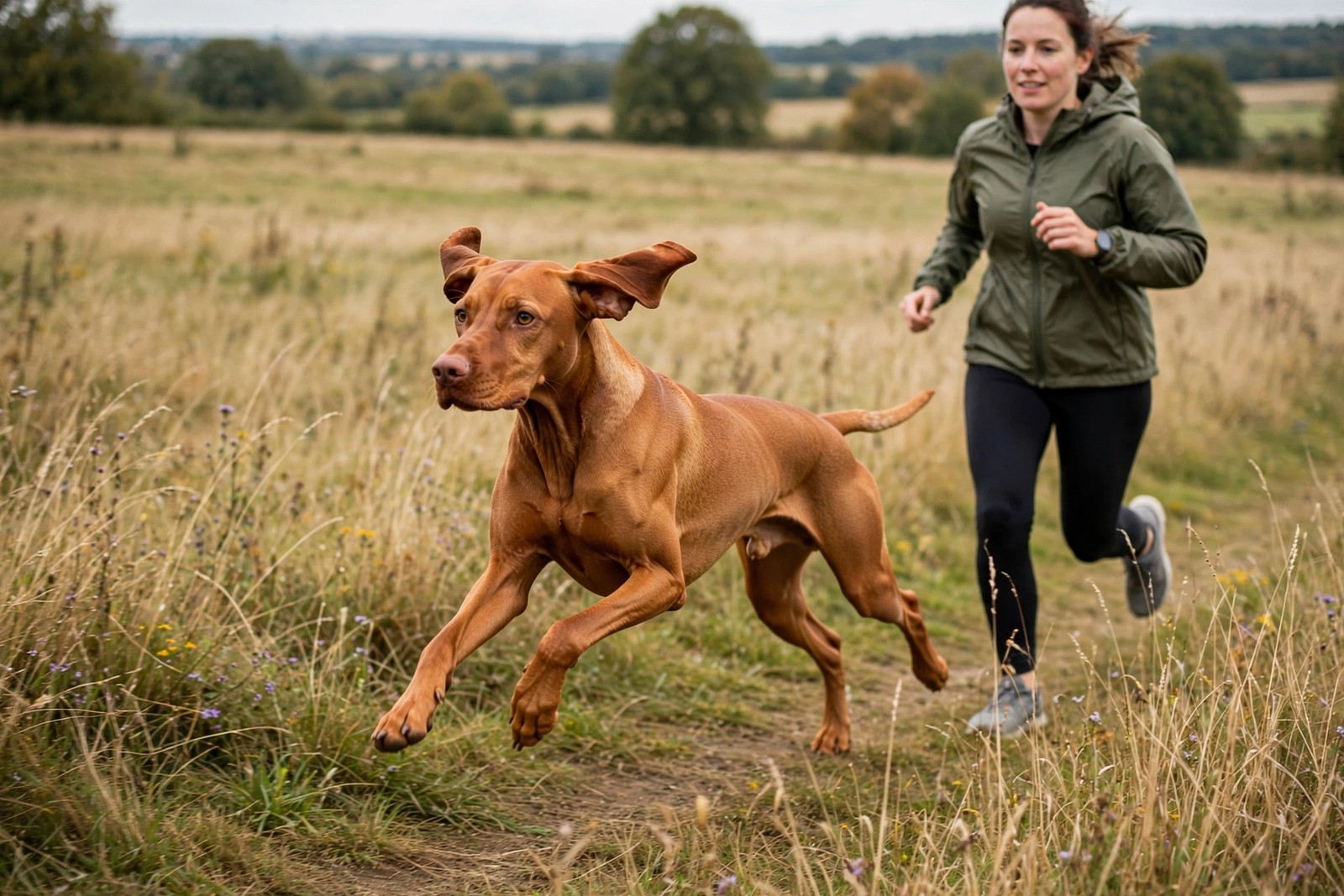
Vizslas usually live 12 to 14 years, a solid span for a medium-sized sporting dog. The breed was shaped in Hungary as a close-working pointer and retriever: lean, rust-gold, short-coated and famously attached to its people. A Vizsla in hard condition looks almost exaggeratedly athletic, with visible muscle over the ribs and a tucked waist, and that natural build is the owner's best guide. The years go well when joints are protected during growth, eyes and general health are checked routinely, exercise is a daily habit rather than a weekend event and the dog's need for company is treated as a real requirement, not a quirk.
Hips, Eyes and Honest Conditioning
Hip health is the main structural watchpoint. Ask a breeder about hip screening of the parents, grow puppies lean and avoid repetitive high-impact exercise, including long runs on hard ground and constant stair work, until the skeleton matures at around 18 months. In adults, build fitness gradually over weeks: a Vizsla gains and loses condition quickly, and a soft dog pushed into a long run risks strains and sore joints that a conditioned dog handles easily. Watch for stiffness after rest, a bunny-hopping gallop or reluctance to jump into the car, and raise them at vet checks. Eyes belong on the routine list as well; mention cloudiness, discharge or any change in how confidently the dog moves in dim light. Skin and ears deserve a quick weekly look too, because a dog that swims, hunts through cover and shakes water everywhere picks up grass seeds and ear irritation along the way.
The Velcro Dog Problem Is a Health Issue
Vizslas earned the nickname of a clinging, follow-you-everywhere breed honestly. They were bred to work within sight of their handler and live in the house, and many find long hours alone genuinely distressing. Chronic stress is not a lifespan footnote: it drives destructive chewing, excessive barking, escape attempts and digestive upsets, and it is the reason Vizslas are handed into rescue by owners who underestimated the breed. Plan the dog's day around company, shared activities and gradual alone-training from puppyhood, teaching the dog that departures are boring and returns are calm. An adult Vizsla typically needs one and a half to two hours of activity a day, mixing free running, training and sniffing, and a dog that gets it is usually placid at home. Mental work matters as much as miles; ten minutes of gundog-style retrieving games or scent work settles this breed in a way an extra lead walk does not.
Feeding and Rest for an Athlete
A lean breed tempts owners to overfeed, because a fit Vizsla shows rib and muscle definition that would look thin on another dog. Feed to condition rather than to the packet's upper guide, weigh the dog monthly and let your hands confirm what your eyes see: ribs felt easily under a thin cover, a clear waist from above and behind. Rest days matter as much as run days for a dog that would happily go daily; alternate hard running with lead walks, sniffing and training, and watch sleep quality, because a young Vizsla that cannot settle even when genuinely exercised may be over-tired rather than under-worked.
Senior Years on a Lean Frame
From around nine, expect the engine to idle a little lower. Keep daily exercise but shorten the longest runs, warm up with walking before any fast work and watch recovery time the next day; a dog still stiff two days after an outing is telling you the dose was too big. Keep weight athletic, because extra kilos on ageing hips undo years of careful conditioning, and ask your vet about twice-yearly checks covering joints, eyes, lumps and heart. In active households the runs, feeds and vet trips are usually shared, and details get lost between people. KinsLe's Care Teams assigns your Vizsla's exercise, feeding and health tasks to named family members and records each one as done, so the dog's routine holds together whoever is home.