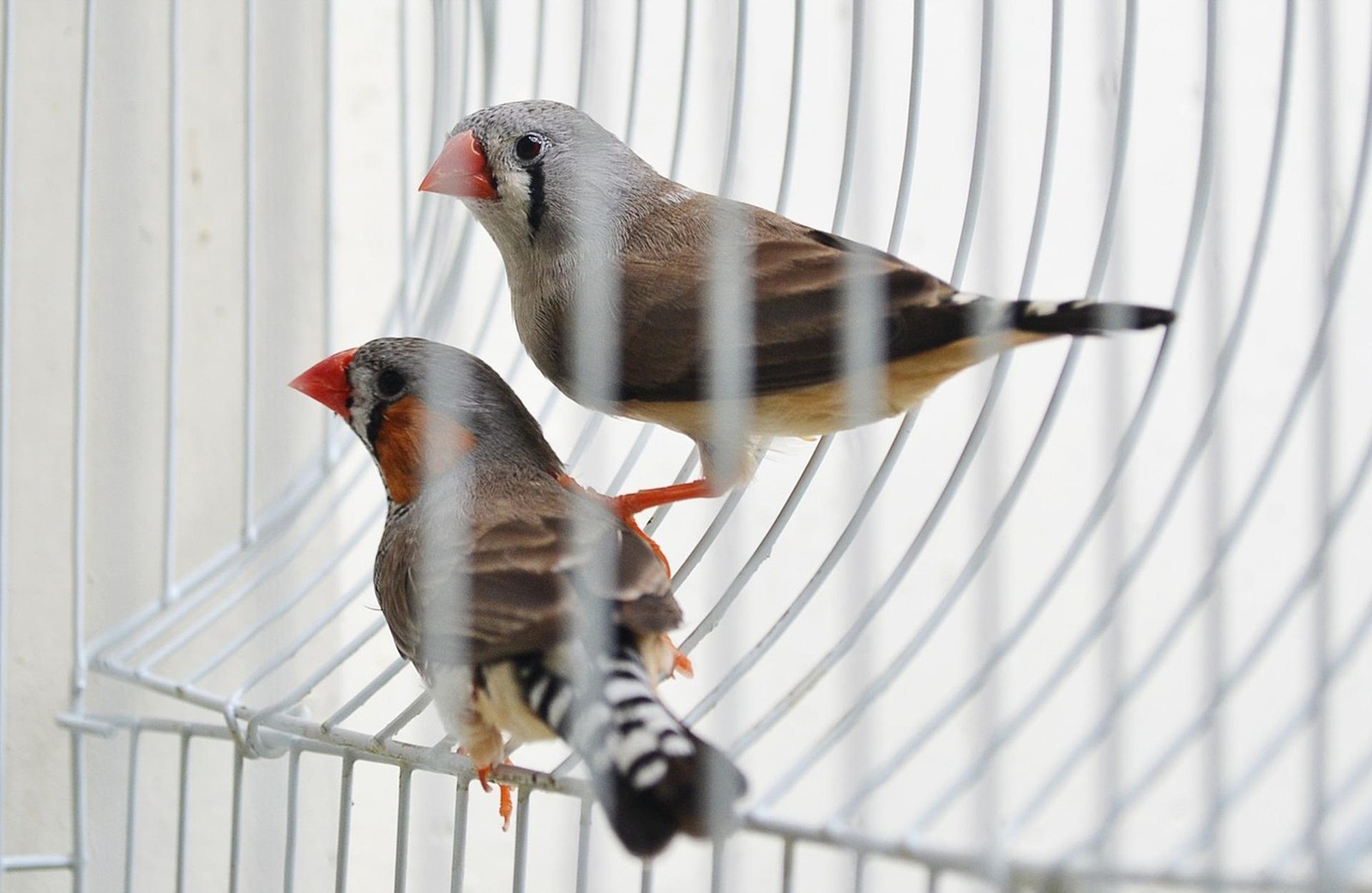
In captivity, a zebra finch's lifespan is typically about five years, and well-kept birds may reach seven or beyond. In the wild most live far shorter lives, so a cage or aviary done well genuinely extends this little Australian finch's span. Owners planning around a finch should still expect a fast, intense life rather than a long one: everything about this species, from fledging to breeding to ageing, happens at speed.
A Life Lived Quickly
Zebra finches mature remarkably fast, reaching breeding condition at around three months, and a healthy pair can raise several clutches in a year if given nests. Adults stay busy all day: short flights, hopping, bathing, calling to each other in soft beeps, and constant social sorting within the flock. From about three years, signs of age creep in quietly. An older finch may fly less, sit fluffed for longer in the morning, lose a little condition despite eating, and fall lower in the flock's pecking order. Because finches are flock animals that hide weakness, a bird that is visibly unwell, sitting apart, silent, or on the cage floor is usually seriously ill and needs an avian vet the same day, not a wait-and-see approach.
What Decides Whether a Finch Reaches Five or Seven
Flight space is the first factor. Finches are built to fly horizontally all day, and a long flight cage that allows real wingbeats keeps heart, muscle, and weight healthy in a way a tall narrow cage cannot. Diet is the second. An all-seed life is incomplete for finches; keepers who add leafy greens, small amounts of egg food especially around breeding and moulting, and access to calcium and grit alternatives appropriate for finches see stronger birds than seed alone produces. Cleanliness is the third: fresh water daily, including a bath the birds will use eagerly, and regular cleaning, because small birds inhale and ingest problems quickly at their size. Finally, stress shortens finch lives: overcrowding, constant chasing by bolder flock mates, draughts, and a cage in a noisy, sleepless room all chip away at a bird with very little reserve.
Breeding and the Hen's Shorter Margin
Breeding deserves its own warning because it is the fastest way to shorten a hen's life. Laying eggs draws heavily on calcium and energy, and hens allowed to clutch after clutch without rest can become egg-bound or simply worn out within a couple of years. Owners who do not intend to breed should remove nests and eggs promptly, and owners who do breed should rest pairs between clutches and support hens with appropriate nutrition. Chicks also change flock math: a cage that suited one pair becomes crowded within a single successful clutch, so a breeding plan needs a plan for the young birds too.
Many Small Tasks, Several Keepers
A finch setup runs on small daily jobs: seed and greens refreshed, water and bath changed, paper checked, and a quick headcount and behavior scan of every bird. When care is shared across a family, one missed morning matters to animals this small. The owner can share a KinsLe profile for the finches with chosen family members under Family Sharing.