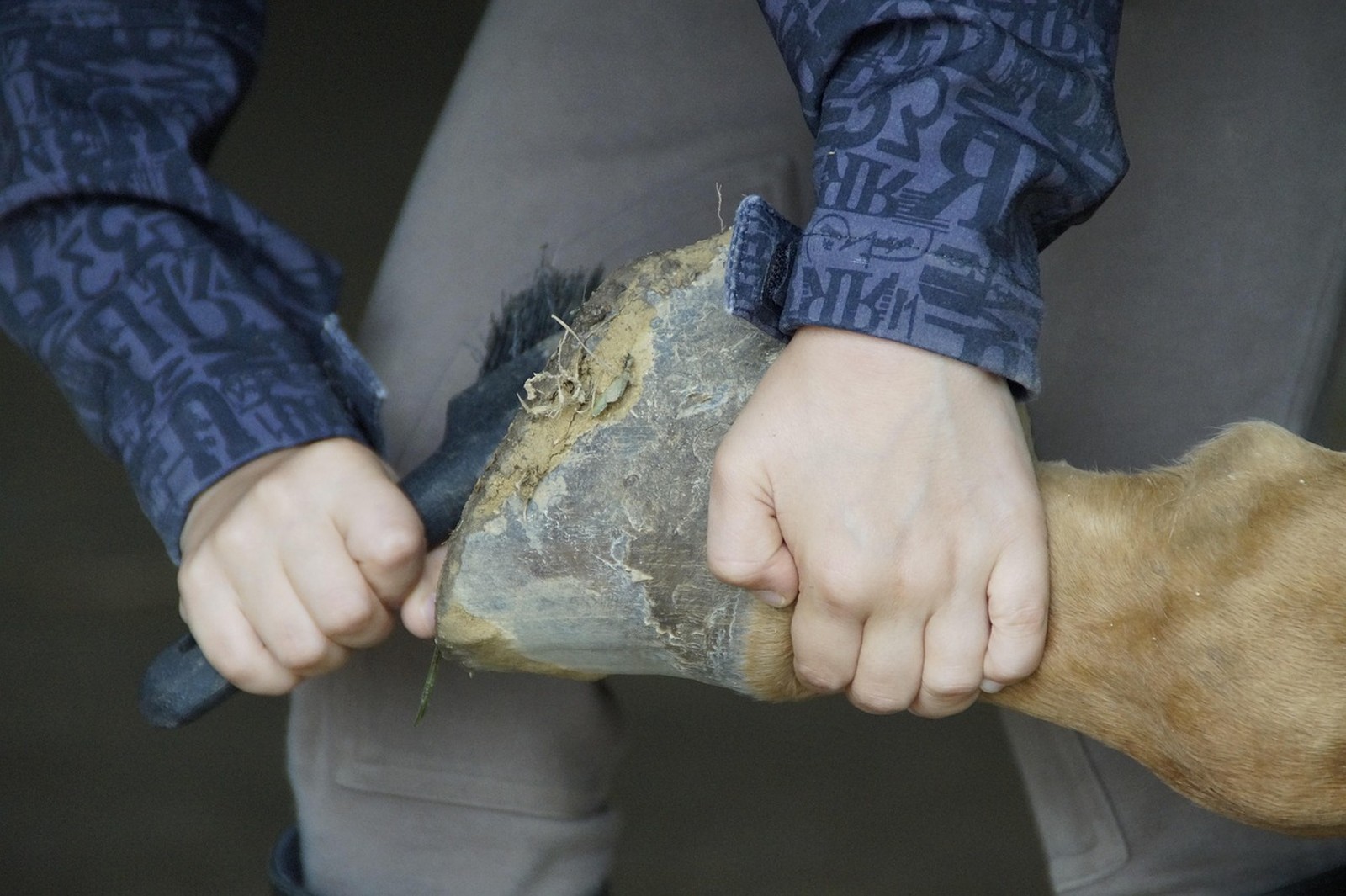
Feed changes improve hooves at the speed hoof grows, and hoof grows slowly. New wall is produced at the coronary band and travels down at roughly a quarter to a third of an inch a month. That single fact sets the whole timeline: nutrition can only change the horn being made now, at the top. It cannot repair the wall already on the ground. Owners who judge a ration change after a fortnight are judging horn that was built months before the new feed arrived.
Reading the Timeline on the Hoof Itself
Within about six to eight weeks of a balanced ration change, look just below the coronary band. A new band of smoother, tighter growth, sometimes called a growth ring boundary, should appear, and over following months that better wall moves steadily downward. The quarters replace themselves faster than the toe, while a full new toe wall takes around nine to twelve months. Existing cracks, flares, and shelly sections will not knit back together; they improve only as they reach the ground and your farrier trims them away across a normal shoeing or trimming cycle of roughly six to eight weeks. The sole and frog, which renew faster than wall, may look healthier sooner, and a horse that was deficient may also show earlier changes in coat shine and energy, but wall quality is the slow prize.
What the Feed Change Has to Get Right
Hoof horn is built from protein, energy, and a set of minerals and vitamins working together, so the fixes that help are about the whole ration, not one magic ingredient. A forage-first diet matched to your horse's workload and body condition is the foundation, with any gaps in the hay or grazing covered by a balanced source of protein, essential amino acids, and trace minerals in the proportions horses need. Throwing extra single supplements at a ration that was never analyzed often disappoints, because an excess of one mineral can block uptake of another. If hooves are crumbling despite a sensible ration, involve your vet and farrier together: problems like chronic laminitis, infection in the white line, or a metabolic condition will defeat any feed change until the underlying issue is addressed, and sudden lameness always needs a vet rather than a diet tweak.
How to Judge Progress Without Fooling Yourself
Photograph each hoof from the front and side on the same surface, in similar light, on the day you change the ration, then repeat monthly and at every farrier visit. Photos catch the descending band of new growth that daily familiarity hides. Note the trimming date, any shoes lost, and how the wall behaves when the farrier works on it, since a farrier's report on horn quality is often the most honest measure you will get. Resist changing the ration again mid-wait. Each new change restarts your ability to judge the last one, and the hoof in front of you is always reporting on feed from months ago, so patience is part of the method, not a lack of action.
Keeping a Months-Long Plan on Track
A nine to twelve month improvement plan outlasts memory. Feeding must stay consistent through yard changes, helpers, and seasons, trims must not drift late, and the photo record has to actually happen. Recording the ration, the trim dates, and each hoof-check duty in KinsLe's Care Teams, where assigned tasks are marked complete with a timestamp, keeps everyone feeding and checking to the same plan until the new wall reaches the ground.