
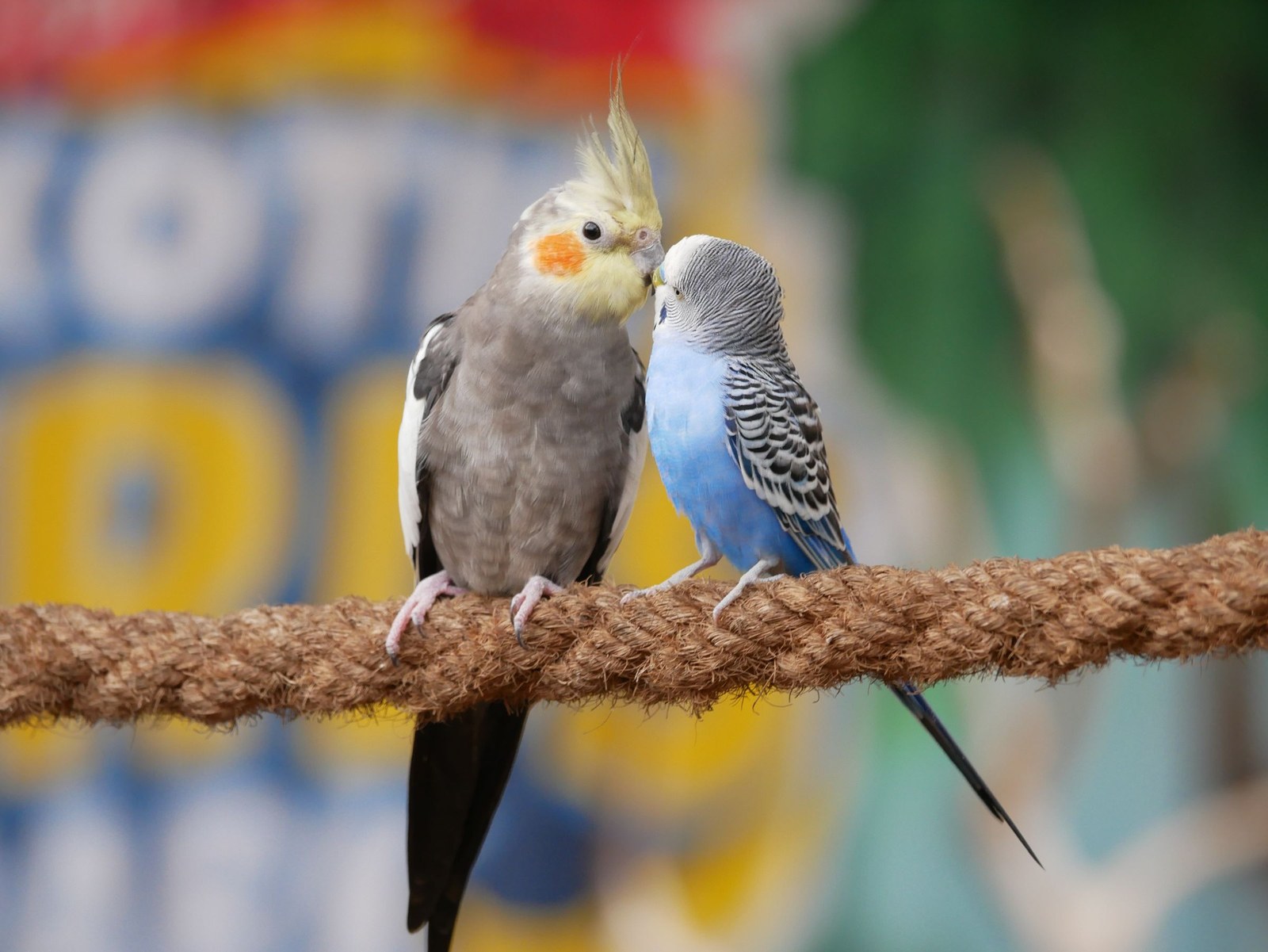
Yes, your neighbors might hear your parrot — it depends entirely on the species. Budgies chatter softly enough for most apartments, cockatiels whistle at a moderate volume that carries within a home, and some larger parrots produce contact calls that pass through walls and can be heard down the street. Noise is one of the top reasons parrots are rehomed, so this question deserves an honest answer before you buy, not after.
The Quiet End of the Scale
Budgies make near-constant, low-volume chatter — pleasant background sound for most people, roughly like a lively conversation in another room. Lovebirds and parrotlets are small but can be surprisingly shrill in short bursts. Finches and canaries, though not parrots, are quieter still. If you live in an apartment with thin walls and close neighbors, this end of the scale is where to shop. A pair of budgies will be heard by you far more than by anyone next door.
The Moderate Middle
Cockatiels whistle, flock-call in the morning and evening, and can repeat an admired sound — a kettle, a ringtone — at enthusiastic volume. Conures are the surprise of this group: green-cheeked conures are relatively mellow, but sun conures are famously piercing for their size. African greys are not constant screamers, yet their voices, whistles, and perfect imitations of alarms carry clearly. In a house, these species are usually fine. In an apartment, they depend on your building, your schedule, and your neighbors.
The Genuinely Loud Species
Large cockatoos and macaws evolved to call across forests, and captivity does not turn that volume down. A cockatoo's scream can exceed what most people expect from any household pet, and unhappy or under-stimulated large parrots may call for long stretches. Eclectus and Amazona parrots sit just below that level — capable of real volume, especially at dawn and dusk. If the honest answer matters: in an apartment, a large cockatoo is a complaint waiting to happen.
What Influences Noise Day to Day
- Time of day: Most parrots call at sunrise and before roosting. Expect it; schedule around it.
- Boredom: A bird with foraging toys, out-of-cage time, and interaction calls less than a bird with nothing to do.
- Reinforcement: Running to the cage every time your bird screams teaches that screaming works. Reward quiet behaviour instead.
- Sleep and routine: A well-rested bird on a predictable routine is usually a calmer, quieter bird.
Visit the species in person, ideally in a home or rescue setting rather than a shop, and listen for at least twenty minutes — including a moment when the bird gets excited.
Hearing It From People Who Live It on KinsLe
Descriptions only go so far, which is why KinsLe's Circle of Love matters for a decision like this. The Circle of Love is KinsLe's community network of pet lovers — Pet Lovers can join free — and bird owners there can tell you plainly what a sun conure at 7 a.m. actually sounds like through a shared wall, or how a cockatiel fits a night-shift schedule. Ask before you adopt, and you will make a choice both you and your neighbors can live with. Before you commit, ask apartment keepers in the Circle of Love on KinsLe how a dawn chorus from their conure or cockatiel carried through shared walls, because that lived detail settles the neighbor question faster than any decibel chart.