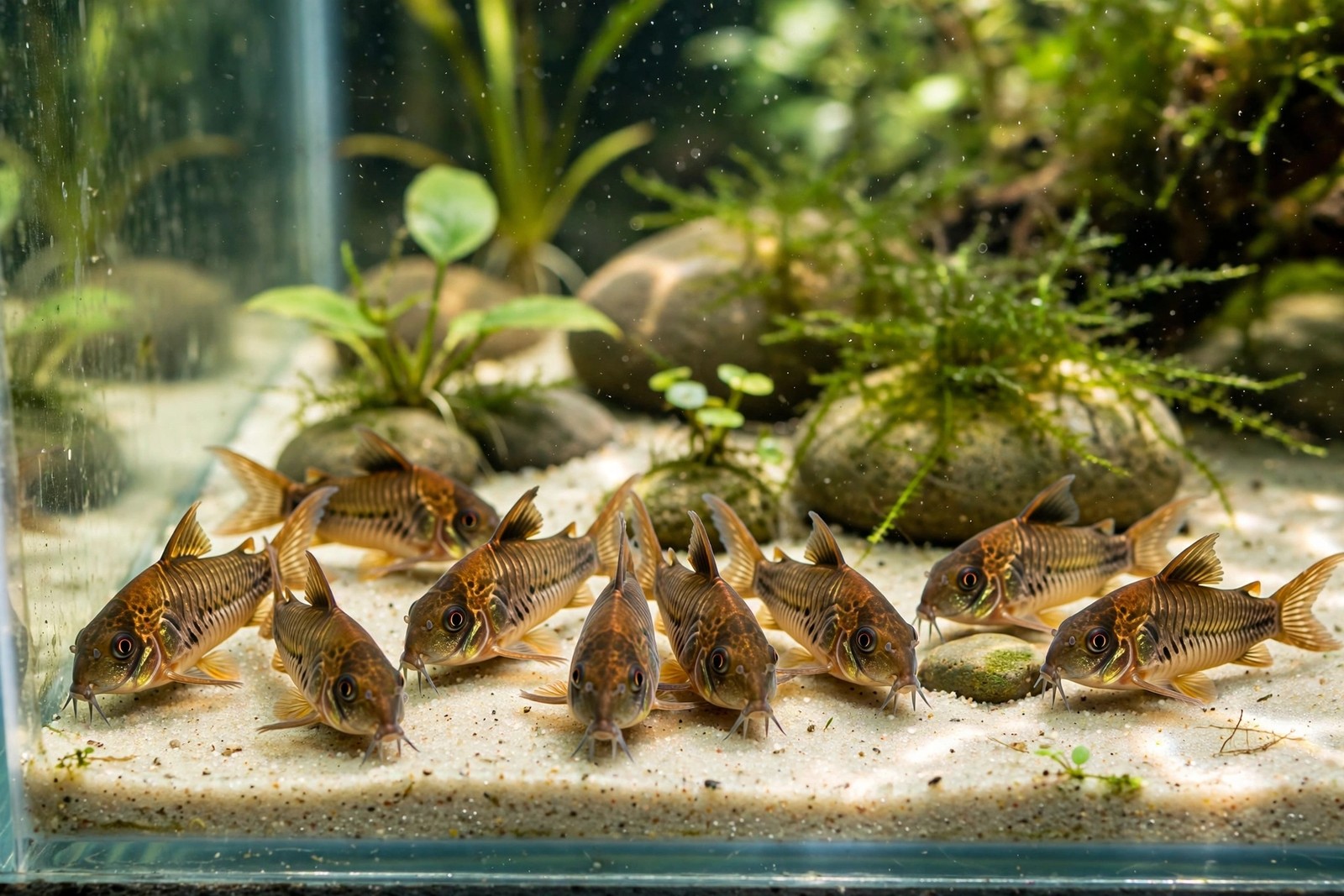
Corydoras are not fish that cope well alone. In the wild they gather in loose shoals over soft river bottoms, nosing through the substrate side by side, and that social habit comes home with them. A corydoras kept singly or in a pair usually spends the day tucked under a plant or a piece of wood, comes out reluctantly, and startles at movement outside the glass. The same fish in a proper group rests in the open, forages in daylight and behaves like a different animal entirely.
The number: at least six of one species
Keep at least six corydoras, and make the six the same species. Six is the smallest group that settles and shoals with confidence, and eight to twelve is better still where your tank gives them the floor space to spread out. The same-species part of the rule matters as much as the number. Corydoras species are social within their own kind first: two bronze, two peppered and two panda corydoras may look like a group of six to you, but each pair is effectively on its own, and the tank stays full of nervous fish. One simple exception exists: colour forms of a single species, such as bronze and albino forms of the same corydoras, are the same species underneath and do shoal together happily. If you are choosing a species, match it to your water and tank temperature as well, because the group will only thrive if the conditions suit that particular kind.
Floor space matters more than water volume
Corydoras live on the bottom, so judge your tank by its footprint rather than by how many litres it holds. A long, low tank suits a group far better than a tall, narrow one with the same volume, because the fish need room to forage, rest together and take their short dashes to the surface. Give the group a soft substrate: fine sand is ideal, since corydoras push their sensitive barbels, the whisker-like feelers around the mouth, into the bottom as they feed, and sharp gravel can wear those barbels down. Add cover in the form of plants, smooth stones and wood so the group can rest in shade, but leave open patches of substrate where the whole shoal can gather and feed together. A group of six of a smaller species fits a modest community tank comfortably; larger species need a correspondingly larger floor, so check the adult size of the exact species before you buy the group.
Feeding and settling a new group
Buy the group together when you can, so the fish arrive already settled with each other, and acclimate them slowly to your water before release. Corydoras are often underfed in community tanks because faster fish finish floating food before anything reaches the bottom, so feed them deliberately: sinking wafers or pellets and small frozen or live foods, offered after the main feed or toward the evening, when the group can work over them in peace. Watch the barbels and the belly shape over the first weeks. Barbels should stay long and clean, bellies gently rounded, and the whole group should be active along the bottom in the evening. If one fish isolates itself, stops feeding or shows worn barbels, check the substrate and the water quality first, and ask an aquatic vet or an experienced fish shop for help if the fish does not recover once conditions are corrected.
Keeping the household on the same plan
A shoal is easy to undo by accident: a well-meant gift of two extra corydoras of a different species, or a replacement bought singly after a loss, quietly breaks the same-species group you built. Recording the exact species and the group size in KinsLe Family Sharing means everyone who helps with the tank can see the stocking plan before anyone adds a fish, and the group you chose stays the group you actually keep.