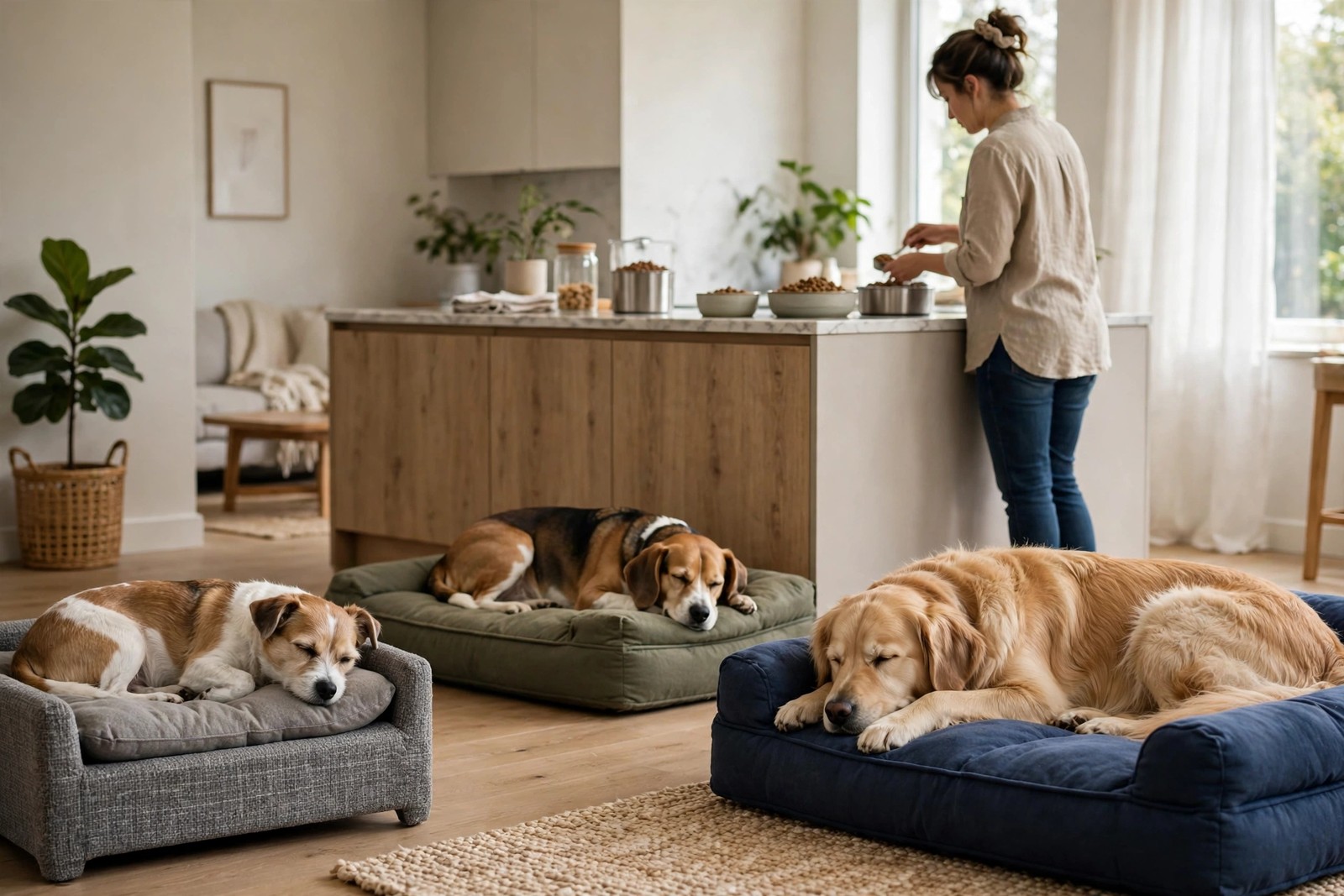
The sensible range for most households is two to three dogs, and the honest test is not how many fit in the house but how many you can care for individually, every day, for the next ten to fifteen years. Each added dog multiplies food, vet bills, insurance, grooming, boarding, and time, while dividing your attention. A home that gives one dog an excellent life and two dogs a stretched one has already found its limit.
Start With One, Add Slowly
One dog is the right beginning, especially for first-time owners. A single dog bonds closely, is simplest to train, and shows you your real capacity: your walking time in bad weather, your budget in a vet-emergency month, and your patience at 6 a.m. in February. Most behaviour problems owners blame on a dog needing a friend are actually under-exercise or under-training, which a second dog copies rather than cures.
Add a second dog only when the first is an adult, trained, and settled, because a puppy learns the household from the resident dog. Two dogs are often the sweet spot: they give each other company and play, walks can be shared, and each still gets real individual time. Choose the second dog for compatibility of size, age, and energy rather than appearance, and introduce them on neutral ground.
Where Three and Four Change the Maths
Three dogs can work well in an experienced home with space, a vehicle that fits everyone, and a grooming and vet budget planned for three. But group dynamics shift: pairs form, one dog can be left out, and some dogs who were fine one-to-one become reactive in a pack on walks. From three upward, individual training sessions, solo walks for the dog who needs them, and separate resting spaces stop being optional.
Four or more is a lifestyle, not a pet arrangement. Feeding, medication, muddy paws, and holiday care become logistics. Boarding four dogs can cost more than the holiday. Check your local ordinances, tenancy agreement, or homeowner rules before reaching these numbers, because many set legal limits, and a complaint from neighbours about barking or waste carries more weight against a large group.
The Questions That Set Your Number
Can you afford a worst month, two dogs needing treatment at once? Can every dog be walked enough on your busiest workday, not your best one? Does each dog get time alone with you for training, grooming, and noticing small health changes? Do you have a plan for holidays and emergencies that covers every dog? If any answer is no, your sensible number is the one you already have.
Numbers also need revisiting as dogs age. Three young dogs are one workload; three seniors with medication, ramps, and night-time toilet trips are another, and they often arrive at that stage together if you adopted them close in age.
Keeping standards from slipping as the pack grows takes shared visibility, not good intentions. A daughter or son in the household, once chosen by the owner, gains a route into each dog's page on KinsLe, an option called Family Sharing.