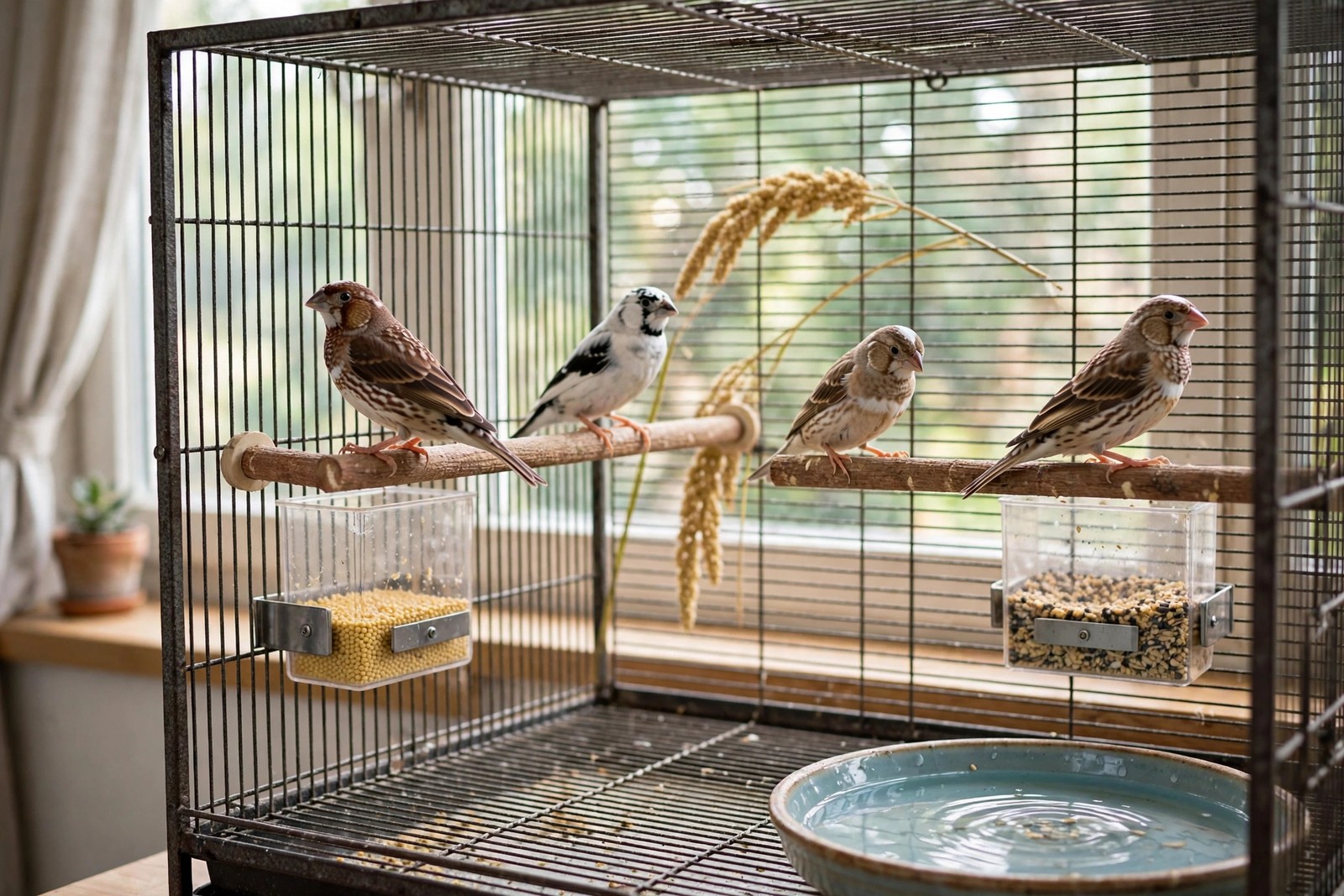
Finches are stocked by space per pair, not by how many small birds physically fit on a perch. A cage that looks generous to us can be a battleground to them, because each pair needs room to fly, feed, bathe, and retreat without crossing a rival's defended corner. Get the numbers and the dimensions right and finch keeping is peaceful; get them wrong and the first signs are chasing, plucked feathers, and a bird that stops coming down to eat.
Start With Flight Length
Finches fly horizontally, so the long side of the cage decides its real capacity. A flight cage around thirty inches long and eighteen inches deep and high is a sensible minimum for one pair of zebra or society finches, giving each bird an actual wingbeat path rather than a hop. Step up to a cage around forty inches or longer before considering a second pair, and treat anything beyond two pairs as aviary territory: a large flight or indoor aviary where subordinate birds can put real distance and obstacles between themselves and a dominant pair. Height alone adds almost nothing for finches, and a tall narrow cage that would suit a climbing parakeet is a poor trade for this family. Bar spacing must suit small birds, and the cage should sit somewhere calm, at about eye level, with one side against a wall so the flock never feels exposed from every direction.
Pairs, Odd Numbers, and Species Mix
Keep finches in pairs and in even numbers. A single finch is a lonely, stressed finch in this highly social family, and three is the worst combination of all, because a bonded pair commonly turns on the spare bird. Two pairs in a modest cage is the classic beginner mistake with zebra finches in particular: they are charming, pushy birds, and two breeding pairs in thirty inches of cage will fight over corners, nests, and food. Society finches are gentler and tolerate groups better, and mixed collections work best in aviaries where peaceful species are chosen carefully and more aggressive ones are avoided. If you plan to breed, every pair effectively claims more space, and growing youngsters quickly turn a legal headcount into overcrowding, so a breeding cage plan includes where the young birds go.
Furnish for the Number You Keep
As numbers rise, duplicate everything a bird can be excluded from. Two or more feeding stations at opposite ends stop one dominant bird guarding the only seed pot. Offer several perches at the same height, since the top perch is prime property, plus a bath wide enough for more than one bird. Visual breaks, such as a cluster of safe foliage or a divider of branches at one end, let a chased bird disappear from a pursuer's view, which ends most squabbles. Nests are a trigger: provide none if you are not breeding, or more nests than pairs if you are, so no pair has to evict another to claim one.
Watch the Flock, Not the Label
Whatever number you choose, the birds grade your decision daily. A settled flock feeds together, bathes, calls softly, and spreads around the cage. Persistent chasing, a bird perched apart and fluffed, feathers on the cage floor, or one bird thin while others are round means the stocking is wrong for that cage regardless of any chart, and the fix is more space, fewer birds, or a divided setup. Family Sharing in KinsLe covers a narrower job: a relative picked by the owner receives access to the profile kept for the flock.