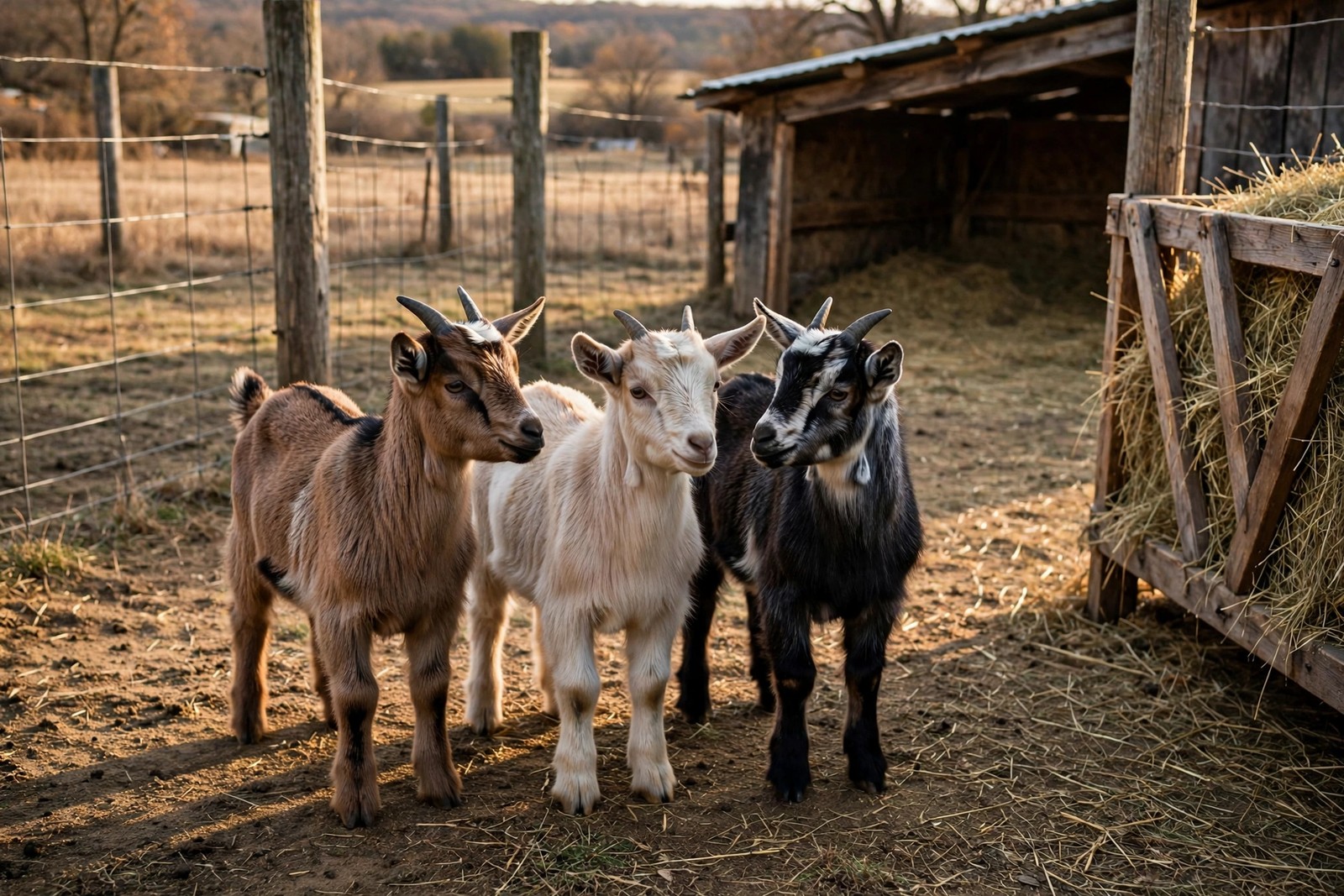
Start with two or three goats. One goat is never the right number: goats are true herd animals, and a lone goat will call constantly, test every fence, and pine in ways that create the behaviour problems new owners then struggle to fix. A bonded pair is the working minimum, and three is often the smarter start, because if one goat is sick, kidded separately, or dies, the others still have company and the herd does not collapse into panic.
Choosing Your First Two or Three
For a first herd, wethers, castrated males, are the calmest, cheapest teachers: no breeding decisions, no milking schedule, and generally steady temperaments. If your goal is milk or fibre, start with two or three does of that breed instead, but learn on them for a full season before adding a buck, because a buck changes fencing, handling, and smell for the entire property.
Buy goats of similar size and age so no small youngster is bullied off the hay rack, and buy from one herd where you can, ideally animals already bonded. Ask for the herd's deworming approach, hoof-trimming history, and any disease testing the seller does; a reputable breeder expects those questions. Quarantine newcomers away from any existing stock for a few weeks and check hooves, eyes, and body condition before mixing.
What Two or Three Goats Actually Need
Space and fencing decide success more than headcount. Goats need secure fencing they cannot climb, squeeze through, or push under; many owners learn this from the first escape rather than the last. Provide dry shelter from wind and rain, a hay rack that keeps feed off the ground, clean water, loose minerals formulated for goats, and enough browse or hay to keep rumens working. Learn hoof trimming, typically every four to eight weeks depending on ground, and learn to check eyelid colour and body condition as your early warning for parasites, the biggest health threat in most pet and smallholding herds.
Budget per goat, not per herd: fencing, shelter, hay through winter, minerals, hoof kit, and a vet relationship established before an emergency. Three goats bought with fencing money still in the bank do better than six bought by spending it.
Growing From a Sensible Start
Live with your two or three for a full year of seasons before expanding. A winter of mud, frozen water, and hay bills, plus a spring of parasite pressure, will tell you your true capacity far better than a summer month will. If you expand, add in pairs, quarantine properly, and remember that herd dynamics reshuffle with every arrival.
Keep individual records from day one: birth or purchase details, weights, deworming, hoof trims, illnesses, and breeding if it comes. Those notes are what make a goat saleable, rehomable, and properly cared for by anyone covering for you.
That record-keeping is exactly where KinsLe's Transferrable Profiles earns its place for farm animals: each goat's profile, with its health history and routines, can transfer intact to a new owner, so a doe sold or rehomed in year three carries her hoof, parasite, and kidding history with her instead of leaving it behind in your memory.