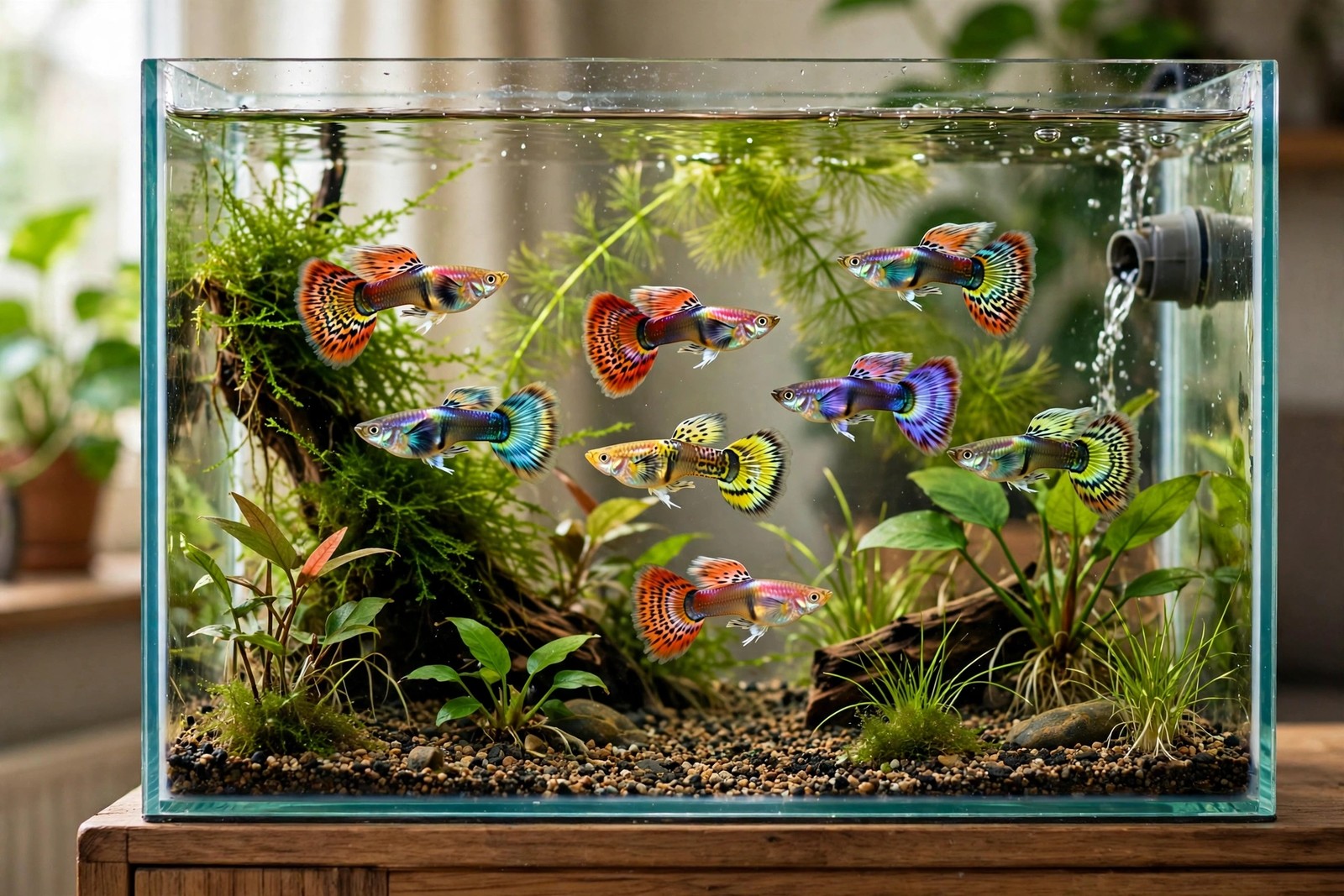
A filtered, cycled 10-gallon tank can comfortably hold about eight to ten adult guppies, and starting with six to eight is the wiser move. Guppies are small but active, constantly grazing fish that produce steady waste for their size, so the limit is set by filtration and water changes rather than swimming space alone. Stocked at eight to ten with a weekly partial water change, a 10-gallon stays stable; pushed to fifteen or twenty, it needs constant intervention and the fish show it in clamped fins and fading colour.
The Sex Ratio Decides Everything
The number above assumes you control breeding, and with guppies that is a real decision, not a detail. An all-male group of five to eight is the simplest display: males are the colourful ones, they cannot reproduce, and your stocking number stays exactly where you put it, though you should watch for fin-nipping squabbles in smaller groups.
A mixed group breeds relentlessly. Females give birth to live fry roughly every month and can store sperm, so even one mated female can produce several batches. If you mix sexes, keep at least two females per male to spread his constant attention, start with just one male and two or three females, and have a genuine plan for fry: growing them on, giving them away, or accepting that most will be eaten. Many regretful 10-gallon owners did not overstock their tank; their tank overstocked itself by spring.
Setting Up for the Number You Choose
Cycle the tank fully before any guppies arrive, then add fish three or four at a time, a week apart, so the bacterial colony grows with the load. A gentle filter with the intake covered protects fry and long fins, live or silk plants give females and youngsters cover from attention, and a lid matters because guppies jump. Feed small amounts once or twice a day, only what disappears in about a minute; in a small tank, overfeeding fouls water faster than the fish themselves do.
Watch the tank, not the rule. Ammonia or nitrite showing on a test, fish gasping at the surface, or constant hiding means you are over the limit for your maintenance routine, whatever the headcount. Drop numbers or increase water changes until tests stay clean for weeks at a time.
Keeping a Small Tank Stable
A 10-gallon has little buffer, so consistency beats intensity: the same small water change weekly, the same light feeding daily, the filter media rinsed in removed tank water, never under the tap. Note births, deaths, and test results briefly, because in a breeding tank the population can double while the routine that suited eight fish quietly stops suiting twenty.
Shared tanks drift when several people feed generously in secret. KinsLe's Care Teams lets you assign the day's single feed, the weekly water change, and fry counts to named people, each task timestamped when done, so your eight-to-ten guppies are fed once, counted honestly, and never slowly multiplied by kindness into an overcrowded tank.