
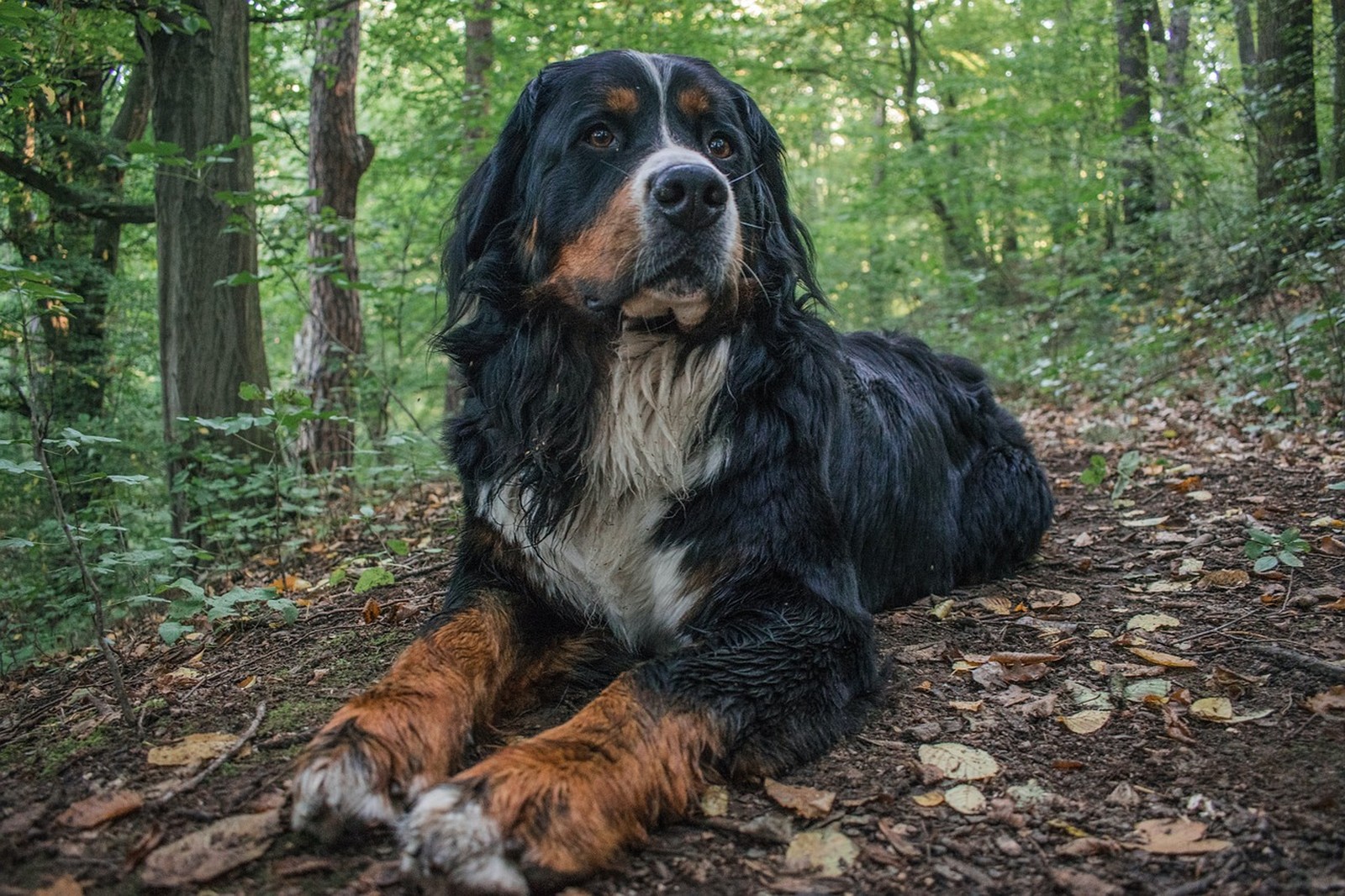
How often a Bernese Mountain Dog eats is a safety question as much as a nutrition one, because a giant, deep-chested dog handles a day's food very differently from a small breed. The adult pattern is simple; what needs care is portion size at each sitting, the calm around mealtimes, and the slower, leaner growth a young Berner needs.
Two meals, never one mountain of food
A Bernese Mountain Dog carries a large ration because of his sheer size, and serving the whole day's food in one sitting loads a big, deep-chested stomach in a way owners of this breed are wise to avoid. Two meals — morning and evening — halve that load, ease digestion, and spread energy across the day for a dog whose natural pace is steady rather than frantic. Splitting also matters for bloat awareness: Berners are among the large, deep-chested breeds where a twisted, gas-filled stomach is a known emergency, and smaller meals, eaten calmly rather than bolted, are part of sensible daily risk reduction alongside avoiding hard exercise around mealtimes.
Bernese puppies: more meals, carefully paced growth
Bernese puppies should eat three to four smaller meals a day at first, moving to three and then two as they mature, but the count matters less than the pace of growth behind it. Giant breeds pay for growing too fast with joint and bone problems, so a large-breed growth diet, weighed portions, and a lean body condition — ribs felt without digging — matter more than a constantly full bowl. Your veterinarian will track his growth curve at puppy visits and can tell you when his frame is ready for the adult two-meal pattern and adult food. Resist the urge to feed up a puppy who looks leggy; Berners fill out late, and lean youngsters become sounder adults.
Calm mealtimes for a dog who eats with enthusiasm
Many Berners eat fast and then look for the next opportunity, so build calm into the routine: feed in a quiet spot away from other pets, consider a slow-feeder bowl if he inhales his food, and keep the hour after meals for rest and a gentle lead walk rather than garden wrestling with the children. In hot weather this heavy-coated breed may prefer eating in the cooler parts of the day and eat a little less overall, which is normal as long as body condition holds steady. Fresh water with meals and through the day matters for a dog of this size, especially after eating dry food.
Seniors and sensitive stomachs in this breed
Older Bernese, and the many Berners with somewhat sensitive digestion, often do better keeping two meals but making the evening one a little smaller, or splitting into three modest meals if a veterinarian suggests it for a medical reason. Watch for the signs that deserve prompt attention in any large breed — restlessness, drooling, retching without bringing food up, or a visibly swollen belly are an emergency, not a wait-and-see — and keep your vet's number where every feeder in the house can find it. Appetite loss in a Berner who loves food is also worth a prompt call.
For a breed where meal size and calm genuinely matter, KinsLe Care Teams keeps your Berner's two feeding duties, amounts, and quiet after-meal routine written down for every helper, with each meal timestamped once served.