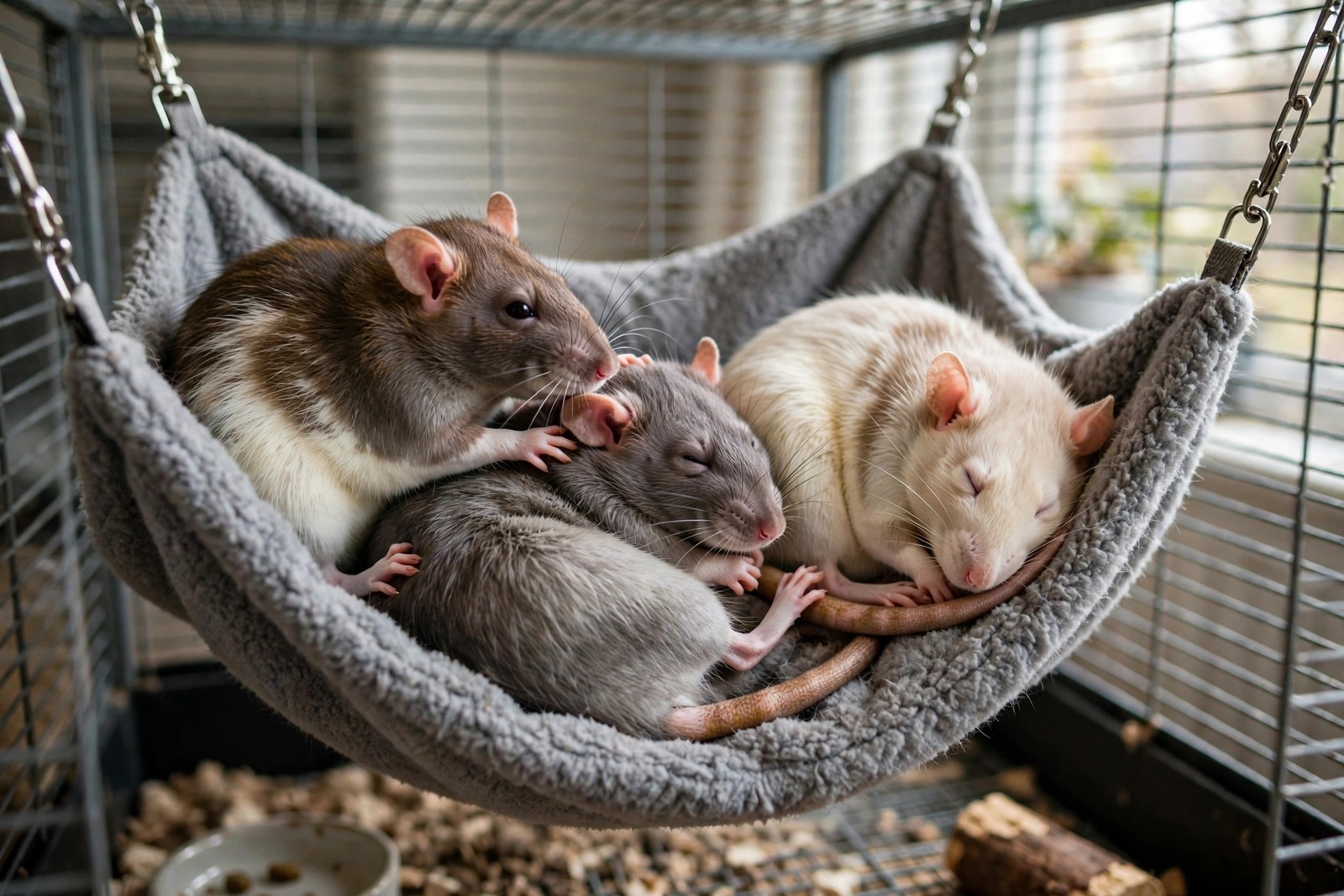
The short answer is: never one. Rats are intensely social animals who sleep tangled in a pile, groom each other, play-fight, and chatter back and forth all day. A lone rat cannot do any of that with you, however devoted you are, because you are awake at the wrong hours and you do not speak rat. Two rats is the genuine minimum, and for most first-time owners a group of three or four is actually the easier, happier setup.
Why three or four often beats two
With a pair, everything rests on one relationship: if the two fall out, or one dies, the survivor is suddenly alone and grieving at the worst moment. A trio or small group spreads the social load. There is always a grooming partner and a sleeping partner, a shy rat can choose company instead of being stuck with one bold cage-mate, and when an elderly rat eventually dies the remaining rats still have each other while you look for a new companion. Groups of females tend to stay busy and playful together; groups of males are often lazier and more cuddly, though individual temperament always varies.
Getting the mix right
Keep one sex only, unless males are neutered. Rats breed astonishingly fast — a litter can be a dozen babies, and a female can become pregnant again almost immediately — so a mixed group kept together 'just for a few days' is how accidental litters happen. Beyond the number, plan the space: each added rat needs real floor room to retreat, more than one water bottle, several hides and hammocks so nobody has to defend the only good sleeping spot, and food scattered or in more than one bowl so a confident rat cannot guard the whole supply.
Introducing new rats properly
Numbers only work if introductions are done carefully:
- Keep new arrivals separate for a couple of weeks first, washing hands between cages, so a respiratory infection does not spread to your whole group
- Let them meet on neutral ground — a bathtub or playpen none of them owns — with treats scattered to keep the mood relaxed
- Expect squeaks, sidling, and some wrestling; intervene only if blood is drawn or one rat is clearly terrified and cannot escape
- Move them into a thoroughly cleaned cage with fresh bedding only once they are choosing to sleep together in the neutral space
Budget honestly, too. Food for one extra rat costs little, but vet bills multiply by the number of rats, and rats are prone to respiratory problems and lumps in their two-to-three-year lives, so a group of four needs a vet fund four times as ready. When an old rat is left alone after a cage-mate dies, finding a companion — often a youngster of the same sex, introduced just as carefully — is a welfare task, not an optional extra.
Keeping track of who is who, who is neutered, and where each rat stands in an introduction gets confusing in a busy household, so keep your own notes on those points current as groups change. For the rats themselves, KinsLe Family Sharing is how an owner grants a chosen grandparent, parent or adult child access to a rat's profile.