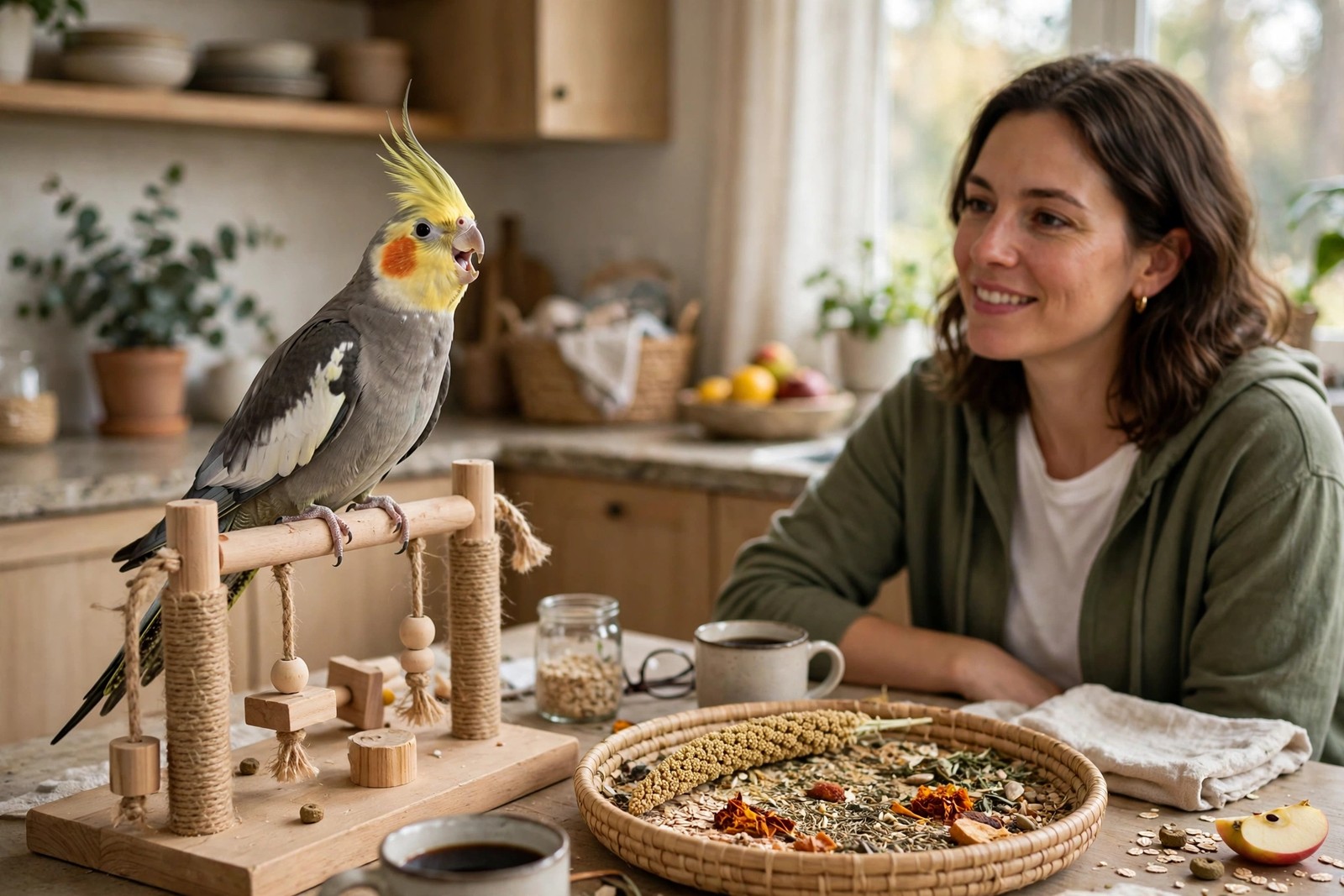
A cockatiel needs at least two to three hours a day of genuine attention: time out of the cage, direct interaction with you, and involvement in what the household is doing. That is a floor for a single bird, not a generous target. Cockatiels are flock birds from the Australian interior who, in the wild, are almost never alone, and a pet cockatiel counts you as its flock. Owners who can offer that time get a whistling, affectionate companion; owners who cannot usually get a bird who screams for contact or goes quiet and withdrawn.
What Counts as Attention
Direct interaction is the core: training in cheerful five-to-ten-minute sessions, whistling tunes back and forth, target and step-up practice, showers together, and supervised time riding on a shoulder or playing on a stand beside you. Cockatiels are ground foragers by nature, so scattering treats in a foraging tray on the table while you eat nearby counts fully, and suits them better than constant handling, which many tolerate rather than enjoy.
Ambient company is the second layer. A cockatiel in a cage in the living room, able to watch the household, hear conversation, and join the room's rhythm, is receiving real social value even when nobody is actively playing with it. The same bird in a spare room, hallway, or garage, visited twice a day, is effectively alone for twenty-two hours, and no toy compensates for that.
Sleep is the third number people forget: ten to twelve hours of darkness and quiet, usually under a cage cover in a calm spot. An under-slept cockatiel becomes hormonal, nippy, and loud, which owners often misread as needing more attention when it needs more night.
The Workday Problem
A single cockatiel left alone through a full working day, five days a week, is the classic setup for contact screaming, feather-damaging behaviour, and depression-like withdrawal. Realistic fixes exist, in order of impact: a bonded companion cockatiel, which halves the loneliness at a stroke; moving the cage into the household's busiest room; a radio or television on low during absences; and foraging toys that make the bird work an hour for breakfast. If your routine honestly offers under an hour a day, a cockatiel is not the right pet yet, and choosing two bonded birds or a different species is kinder than hoping one bird adapts.
Watch for the bird's own verdict. A contented cockatiel grinds its beak at rest, sings and whistles through the day, eats eagerly, and chooses to come to you. Persistent screaming when you leave, silence, or plucking means the attention budget, yours or a companion's, needs to grow, and a vet check rules out illness behind any sudden change.
Two to three hours daily for twenty-plus years is a household commitment, not a solo one, and it survives because it is shared. KinsLe's Care Teams lets you assign your cockatiel's morning out-of-cage session, training minutes, and bedtime cover to different family members, each marked complete with a timestamp, so the bird's social hours are genuinely delivered on workdays, not just intended.