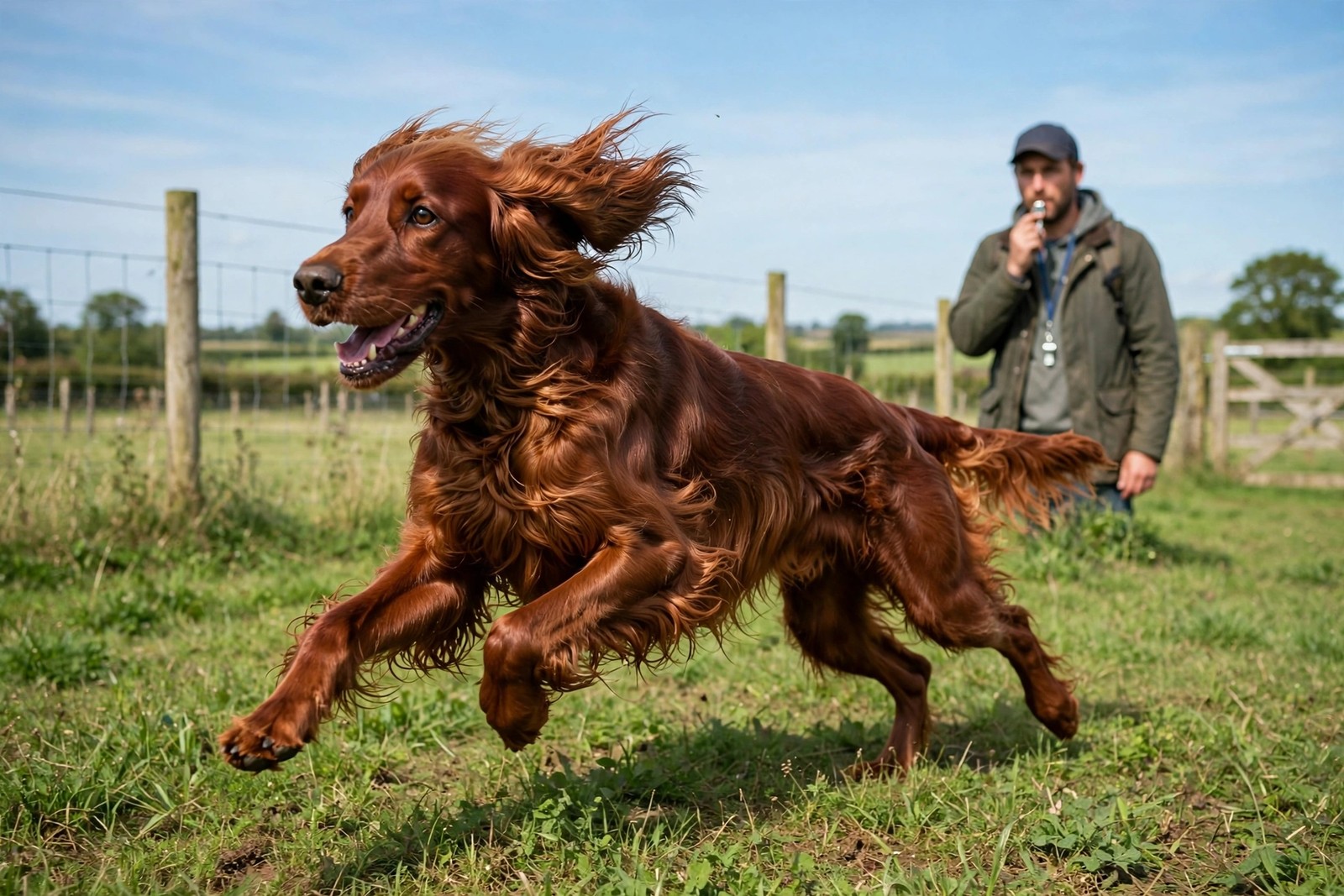
An adult Irish Setter typically needs one and a half to two hours of activity a day, and a meaningful share of it should be free running. This is a gundog bred to range over fields at a gallop for hours, and its energy system is built accordingly. Owners who picture a Setter as a decorative red dog with a flowing coat discover the truth indoors: an under-exercised Setter paces, mouths furniture, raids bins, barks at windows and invents games at midnight. The same dog, properly run, is famously sweet and sleepy at home. The difference is almost never training or character; it is whether the day's exercise included genuine running, not only walking at human pace.
What Counts Towards the Total
Lead walking is the base layer, useful for toilet breaks, manners and sniffing, but it does not tire this breed on its own. The tiring elements are free running in a secure field or other safe, permitted space, retrieving games, hill work at a trot, swimming and training that makes the dog think. A workable pattern is two outings of 45 to 60 minutes each, which together give you the one and a half to two hours: a morning session built around free running and play, and an evening session mixing a lead walk with training games and a shorter run. Scatter-feeding part of breakfast in grass, hide-and-seek with family members and gundog-style recall and steadiness games all burn energy through the brain as well as the legs. Judge the dose by the evening: a Setter that flops and sighs after dinner has had enough; a Setter still bringing you toys at ten at night has not.
Off-Lead Running Needs Recall First
Free running only works if the dog comes back. Irish Setters chase, and their recall around birds, squirrels and other dogs needs building deliberately: start on a long line in low-distraction areas, reward every check-in and every voluntary return generously and practise in the secure spaces you will later use off-lead. Choose genuinely secure ground (fenced fields and enclosed dog fields exist in many areas) until recall is proven, and keep the lead on near roads, livestock and ground-nesting birds. A whistle trained as a high-value recall cue carries further than a voice across a windy field. Build running fitness gradually too: a dog that has had a quiet fortnight should not be launched into a two-hour session, because soft condition plus Setter enthusiasm is how strains happen. In hot weather, shift the running to early morning or evening, choose shaded ground and carry water, because a Setter will keep going long after it should have stopped.
Puppies, Adolescents and Older Dogs
Puppies need far less: short play sessions, brief training and plenty of sleep, with exercise increased gradually as they grow and forced distance avoided while joints develop. Adolescence, roughly from six months to two years, is the demanding stretch: energy peaks, recall wobbles and the dog looks adult while its brain and joints are not. Hold the routine steady through it, favour frequency over marathon sessions and expect the evening madness to fade as maturity arrives. Older Setters still want their outings; shorten the run, keep the sniffing and company and watch next-day stiffness as your guide to dose. In busy homes these outings are often shared between people, and guesswork creeps in about who ran the dog and for how long. KinsLe's Care Teams lets you assign your Irish Setter's morning and evening exercise to named family members and mark each outing complete, so the dog reliably gets its full one and a half to two hours.