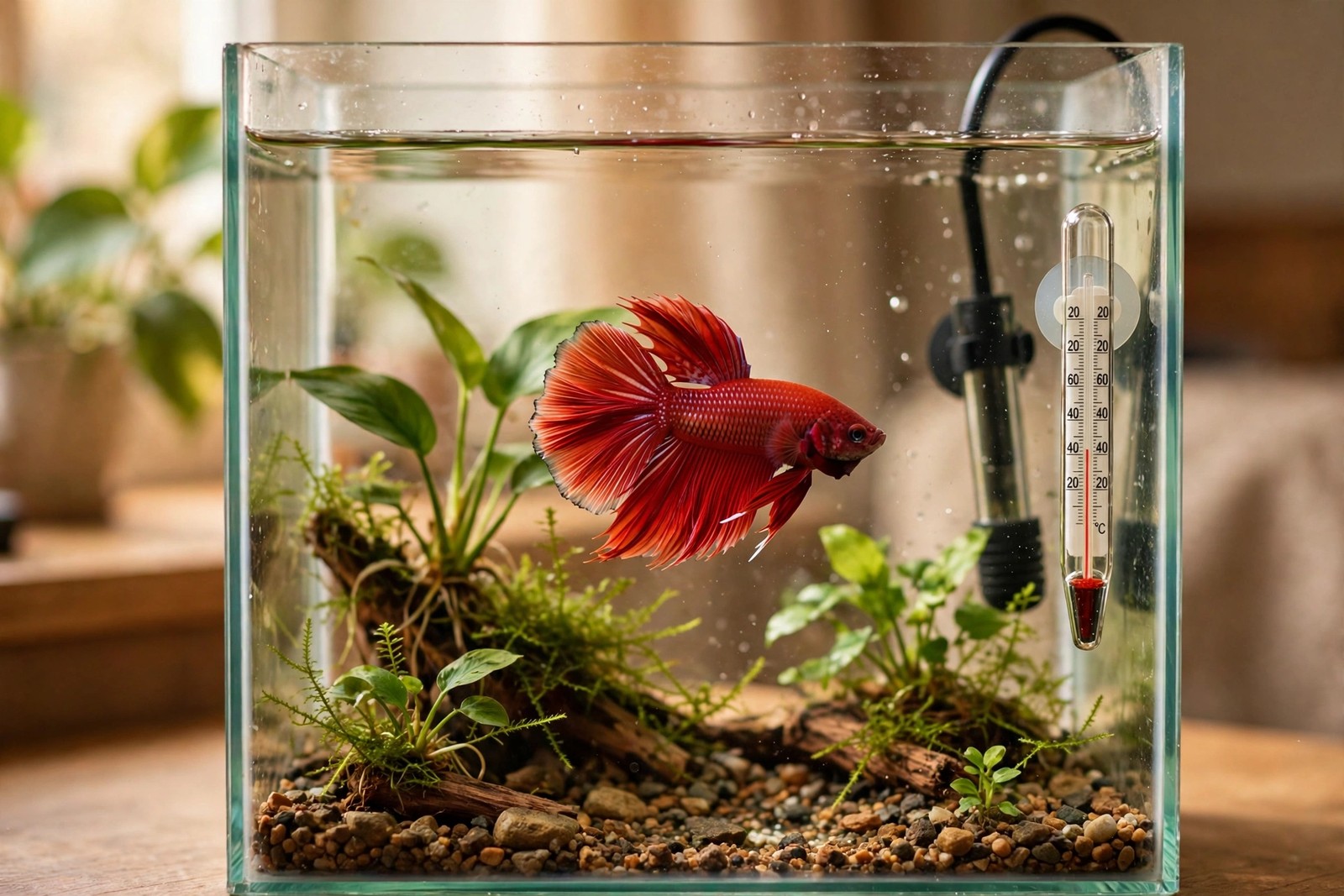
A betta is one of the cheapest fish to feed and one of the most commonly under-budgeted, because the fish itself eats almost nothing while the warm, clean water it needs costs a little every single day. For a single betta in a heated, filtered tank of roughly 20 to 40 litres, a realistic running budget is about 15 to 35 dollars a month, excluding the one-off cost of the tank and equipment.
The Monthly Lines, One by One
- Food: about 1 to 3 dollars. A betta eats a few small pellets or a pinch of frozen food once or twice a day, so a pot lasts for months. The monthly figure is tiny; the real discipline is replacing stale food rather than feeding from a pot that has sat open for a year.
- Water conditioner: about 2 to 4 dollars. You treat every litre of new water at each weekly partial change, typically a quarter to a third of the tank. Small tanks use little, but this bottle is never optional if your tap water is chlorinated.
- Electricity: about 3 to 8 dollars. A small heater is the main draw, switching on and off to hold roughly 25 to 27 degrees, alongside a low-flow filter running all day and a light on a timer for six to eight hours. A cold room raises this line noticeably because the heater works harder.
- Filter media and cleaning: about 2 to 4 dollars averaged out. Sponges last a long time and are rinsed in removed tank water, but they do eventually need replacing, as do polishing pads and any chemical media you choose to use.
- Water testing: about 2 to 4 dollars averaged out. Liquid test reagents or strips are bought occasionally rather than monthly, yet they belong in the budget, because guessing at ammonia and nitrite is how cheap fish become expensive emergencies.
- Health and replacement fund: about 5 dollars. Set a little aside for a replacement heater, which is the item most likely to fail, and for general health support. A heater that sticks on or off can cost you the fish, so a spare is genuine insurance.
What Changes the Total
Room temperature is the biggest variable: a betta in a warm room costs measurably less to heat than one in a cold hallway. Live plants add a small cost for liquid feed and longer light hours but can reduce how much testing and changing the water demands. Keeping a betta in an unheated bowl looks cheaper on paper and is a false saving, because cold, unfiltered water shortens the fish's life and turns small problems into fatal ones quickly.
Track what you actually spend for two or three months rather than trusting any estimate, including this one, because local electricity and water prices move the total more than the brand of pellet ever will. When the recurring jobs behind the spending are shared, KinsLe's Care Teams lets you assign each water change, feed and filter check to a named person, so the routine that keeps a betta cheap to keep actually happens on schedule.