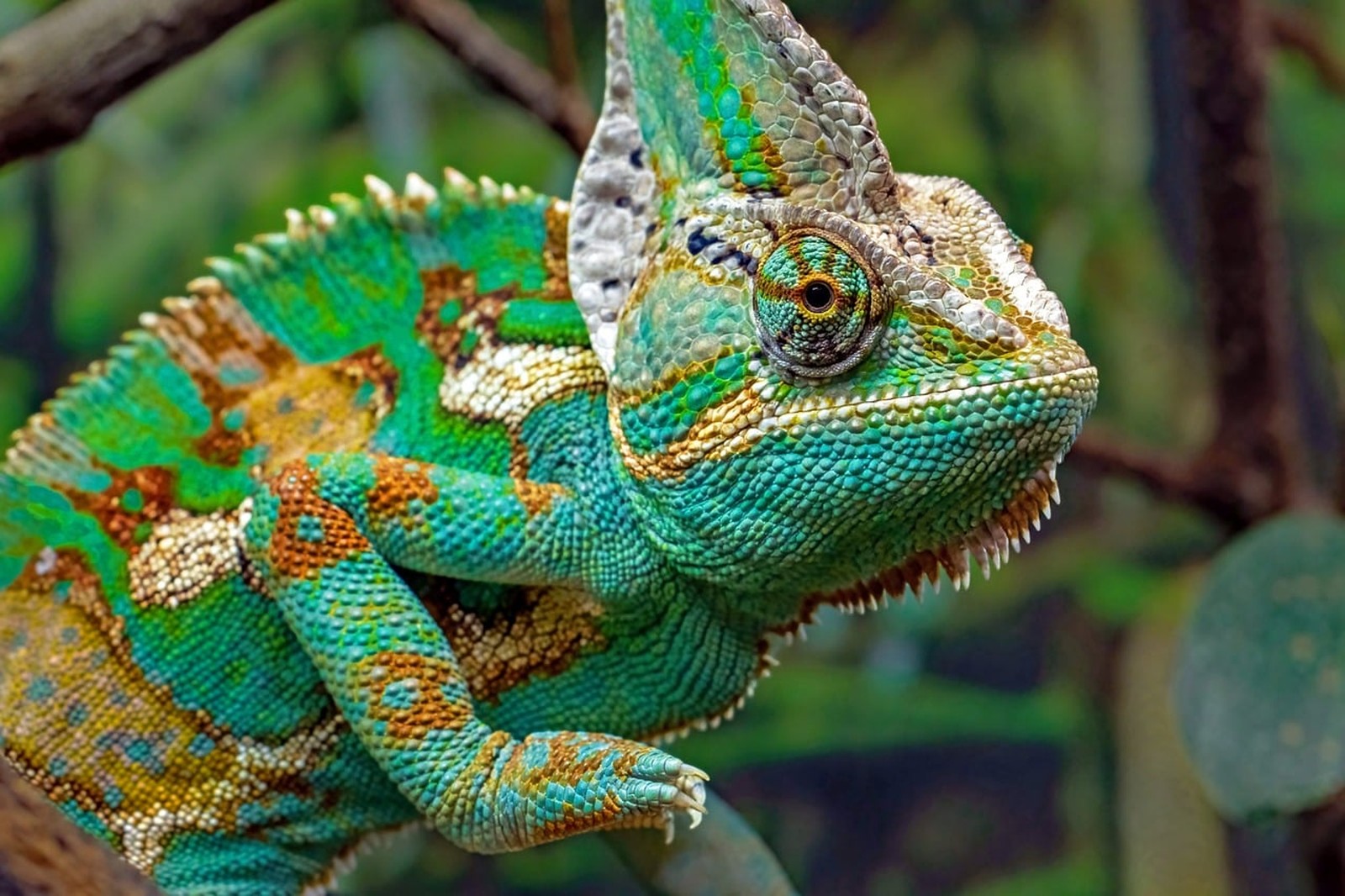
A chameleon is not an expensive animal to buy and then a cheap one to keep. The monthly cost is steady and predictable once you break it into its parts, and it is dominated by live food and by the lighting and misting equipment a chameleon depends on every day. For one chameleon, plan on $65 to $103 a month as a planning range: live feeder insects $30 to $45, electricity for lighting, heating and misting $10 to $15, ultraviolet bulb replacement spread across the months between bulbs $5 to $8, plants, substrate and water care $5 to $10, and a vet fund set aside monthly $15 to $25. Those parts add to $65 at the low end and $103 at the high end, and the sections below explain what drives each line up or down.
Live food: the largest line
Feeder insects run $30 to $45 a month because a chameleon eats live prey, and variety costs more than a single staple. Crickets, locusts, roaches and the occasional worm all need buying regularly, and the insects themselves need feeding before they are offered, so some of this line is food for the food. A growing young veiled or panther chameleon eats more each day than a settled adult, which pushes a youngster toward the top of the range, while an adult fed on alternate days in a measured routine sits lower. Breeding your own roach colony can trim this line over time, but it takes months to establish, so budget for bought feeders from the start.
Power, bulbs and the living enclosure
Electricity for lighting, heating and misting runs $10 to $15 a month: a chameleon needs a basking light, an ultraviolet tube on a daily cycle and regular misting to keep humidity up and drinking droplets available, and those run for many hours a day. Ultraviolet bulbs add $5 to $8 a month as a spread figure, because the tube must be replaced on the maker's schedule even while it still lights up, as its ultraviolet output fades before the visible light does; a $30 to $48 tube replaced every six months works out at that $5 to $8 a month. Plants, substrate and water care add $5 to $10 a month: live plants in a chameleon enclosure get climbed on, fouled and replaced, mister nozzles and water treatment need attention, and safe climbing branches wear out. Cutting any of these lines is a false saving, because a chameleon kept under weak ultraviolet light or without proper misting is a vet bill being stored up.
The vet fund, and what sits outside the monthly figure
Set aside $15 to $25 a month as a vet fund whether or not the chameleon needs a vet that month. Chameleons hide illness well and need a vet who treats reptiles, and problems such as egg-binding in females or metabolic bone disease in youngsters can need prompt, unplanned care. A monthly set-aside turns that emergency into a cost you have already planned for instead of a shock. Keep the monthly figure separate from the one-off setup: the tall mesh enclosure, lighting, misting equipment and planting are bought once, before the first month begins, and they cost considerably more than a single month's running total. If a seller cannot tell you the chameleon's feeding history, age and how it has been kept under ultraviolet light, treat that missing history as a cost risk too.
Tracking the real figure at home
Your own chameleon will settle somewhere inside the $65 to $103 range depending on its age, appetite and how your household runs the enclosure, so track the first few months rather than guessing. Keep the receipts for feeders and bulbs together and review the lines against the breakdown above. Writing the monthly lines into KinsLe Family Sharing gives the whole household one shared view of the chameleon's running cost, so the person who buys the crickets and the person who pays the power bill are looking at the same total.