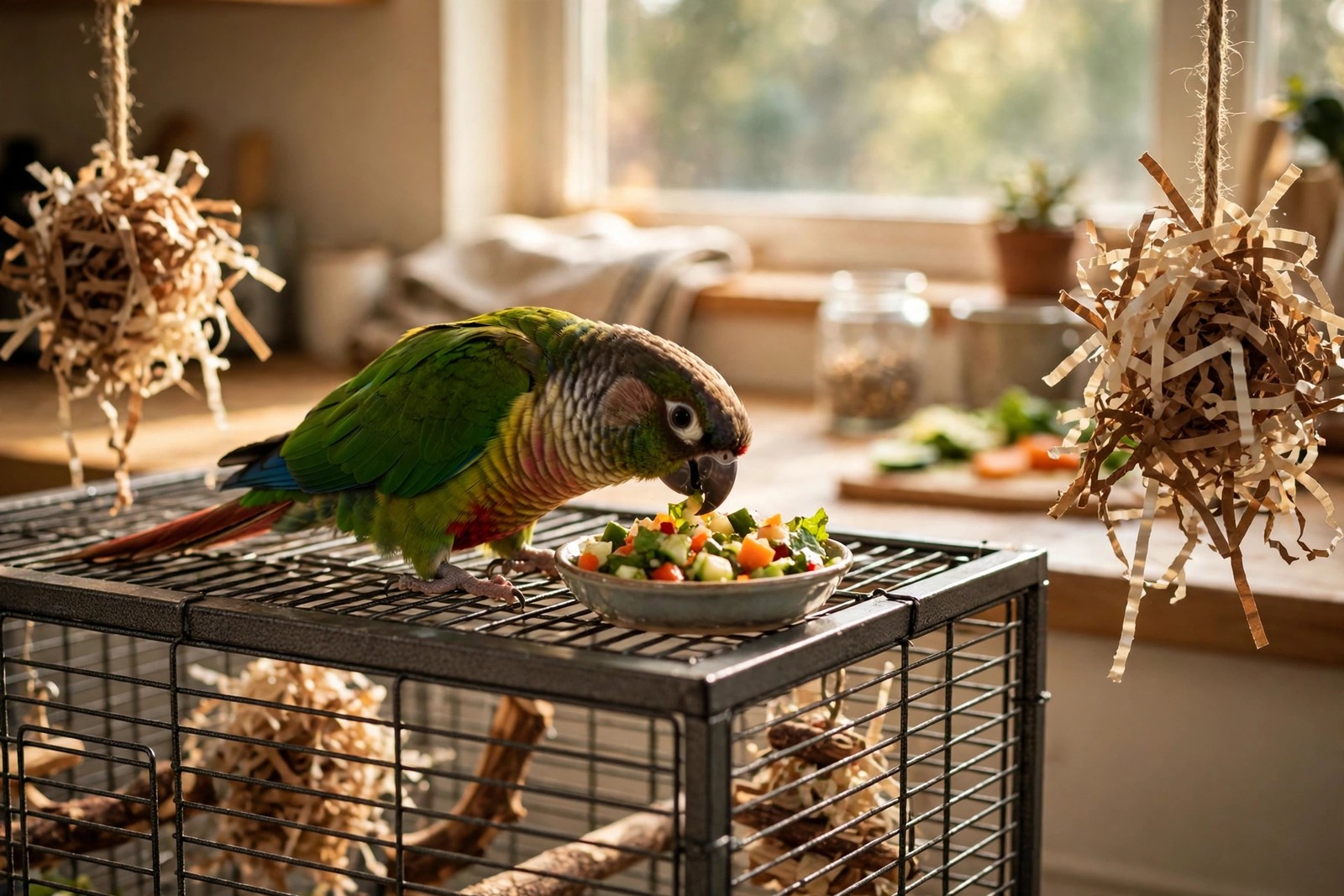
A conure sits in the middle of the parrot price range: budget roughly $75 to $130 a month, every month, for a bird who may be with you for twenty years or more. The total is lower than a large parrot's, but the shape of the spending is the same — food, things to destroy, cleaning, and a steady vet reserve.
The monthly lines
- Staple food, $20 to $35. A quality pellet, or a pellet-and-seed blend, forms the base. A green-cheeked conure eats less than a sun conure, so your bird's size moves this line within the range.
- Fresh food, $15 to $25. Daily chopped vegetables, leafy greens, a little fruit, and cooked grains. Conures are enthusiastic, messy eaters who bathe in water bowls and scatter chop widely, so you buy for waste as well as appetite.
- Toys and perches, $15 to $30. Conures chew as a way of life. Soft wood, cork, woven fibres, and foot toys are consumables, and natural perches wear and foul. Skipping replacements does not save money for long; an under-occupied conure screams more and may start damaging its own feathers.
- Liners and cleaning, $5 to $10. Cage liners, tray cleaning, and replacing food and water dishes as they wear.
- Avian vet reserve, $20 to $30. Saved monthly, not found monthly.
What sits outside that figure
The cage is a start-up cost, and conures need a roomier cage than their body size suggests because they are acrobatic and active. An initial avian health check, and an annual check after that, come out of the reserve: avian vets charge specialist fees, and a basic check for a small conure costs much the same as for a far bigger parrot, which is why the reserve line is not much smaller than a macaw's. Emergency care for a bird who has chewed something toxic or injured a blood feather can exceed several months of budget at once. Boarding or a sitter for holidays is another occasional extra worth pricing before you travel, not after you book.
Trimming without cutting corners
Make toys from safe household materials — plain cardboard, paper cups, untreated soft wood offcuts — and rotate a toy box instead of buying everything new. Buy pellets in a size you will finish while they are fresh rather than a giant bag that goes stale. Prepare chop in batches and freeze portions, so the fresh-food line stops leaking money into the bin through spoilage. What you should not trim is variety in the diet or the vet reserve; both are where cheap months turn into expensive ones.
Because so much of a conure's budget is daily fresh food and weekly toy changes, a routine everyone follows is what keeps the numbers honest, and KinsLe's Care Teams lets your household assign chop preparation, fresh water, liner changes, and toy rotation to named people, each task timestamped when finished, so nothing is bought twice or left until it is wasted.