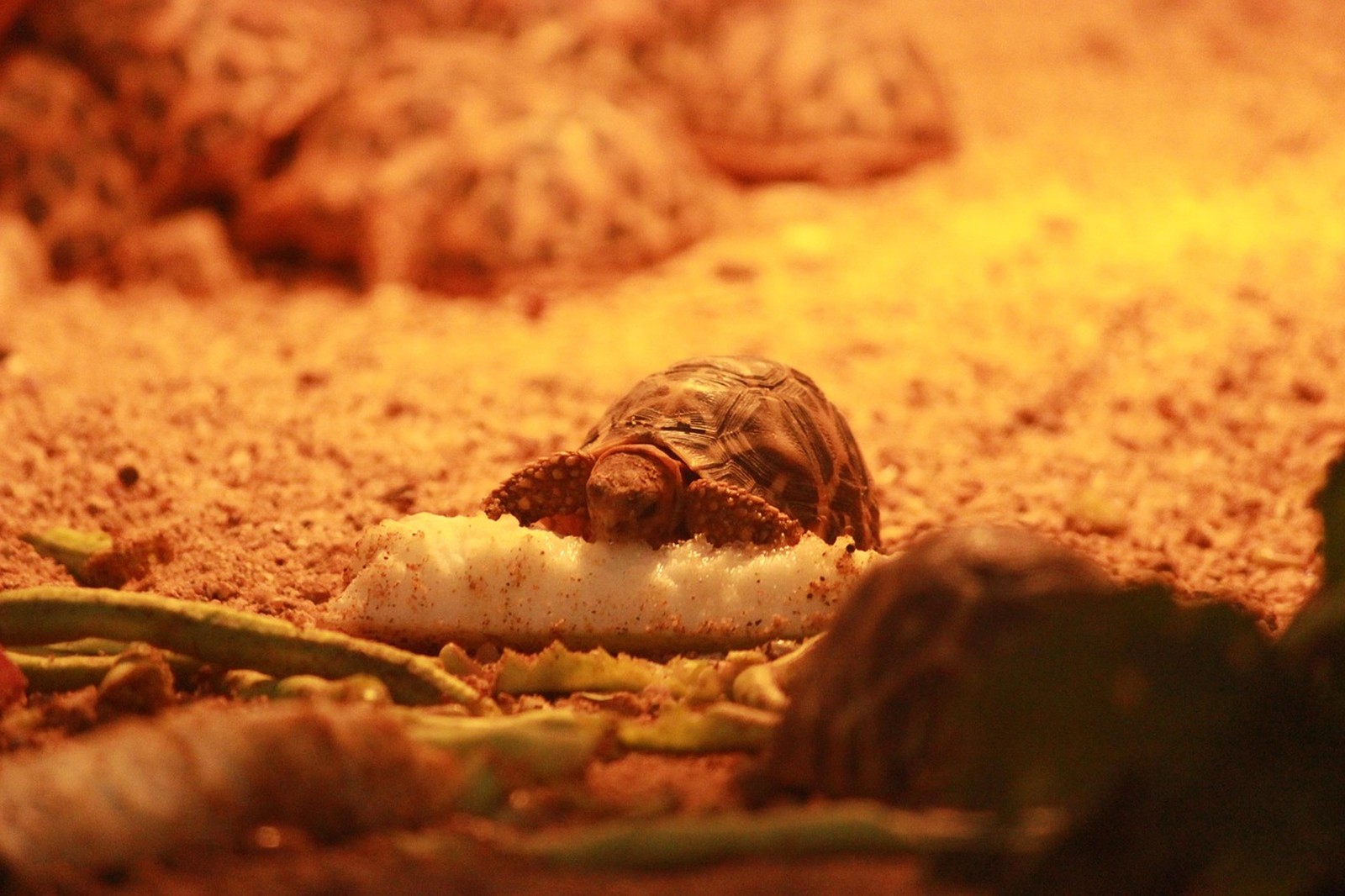
A tortoise typically costs about $30 to $60 a month indoors, and noticeably less in summer if it can graze outside. The purchase price of the tortoise is almost irrelevant to the real budget: this is an animal that may live fifty years or more, and the money goes, month after month, on fresh food, electricity for heat and ultraviolet light, and keeping its enclosure right.
Food: fresh greens every day
A Mediterranean tortoise such as a Hermann's or a Russian tortoise eats a pile of leafy weeds and greens roughly the size of its own shell each day. Bought from a shop — lamb's lettuce, rocket, romaine, and suitable salad leaves — that typically costs $15 to $25 a month. Picking safe weeds such as dandelion, plantain, and sow thistle from unsprayed ground costs nothing and is better for the tortoise, which is why many long-term keepers treat weed picking as part of the routine.
Avoid building the diet on fruit or on cheap iceberg lettuce, which is mostly water. Calcium powder sprinkled on food and a cuttlebone left in the enclosure add only a dollar or two a month averaged out, but skipping them to save money is false economy: shell and bone problems are far more expensive to deal with than the powder that helps prevent them.
Electricity: the cost owners forget
An indoor tortoise needs a basking lamp creating a hot spot and a UV tube or combined bulb on for roughly ten to twelve hours a day. Together these typically add about $8 to $15 a month to an electricity bill, depending on wattage and local prices. The UV source also expires invisibly: most keepers replace tubes every six to twelve months even though they still light up, because UV output fades first. Averaged out, that replacement adds a few dollars a month and belongs in the budget from day one.
Outdoor keeping in a secure, predator-proof pen removes most lighting cost in the warmer months and lets the tortoise graze, which is why summer months can cost half what winter months do.
Substrate, baths, and enclosure upkeep
A soil-based substrate deep enough to dig in needs topping up and partial changes, costing a few dollars a month on average. Shallow lukewarm baths several times a week cost only water and help with hydration and digestion. Hides, slate for feeding, and water dishes are occasional replacements rather than monthly spending.
Tortoises do not need vaccinations, and there is no vaccination schedule to pay for. Their routine veterinary cost is an annual or pre-hibernation check with a vet who knows reptiles, plus faecal testing for parasites, which keepers commonly arrange before hibernation. Saving $5 to $8 a month covers that check comfortably and builds a small reserve for problems such as respiratory infection or a damaged shell.
The long view
Because a tortoise's life is measured in decades, small monthly habits compound. A keeper spending $40 a month will spend thousands across the animal's life, and the tortoise will likely be passed on one day. That makes records part of the real cost picture: weights, hibernation dates, vet findings, and diet notes are what let the next keeper continue care without guesswork. KinsLe's Pet Passport keeps that lifetime health record in one packet, so fifty years of tortoise care never depends on one person's memory.