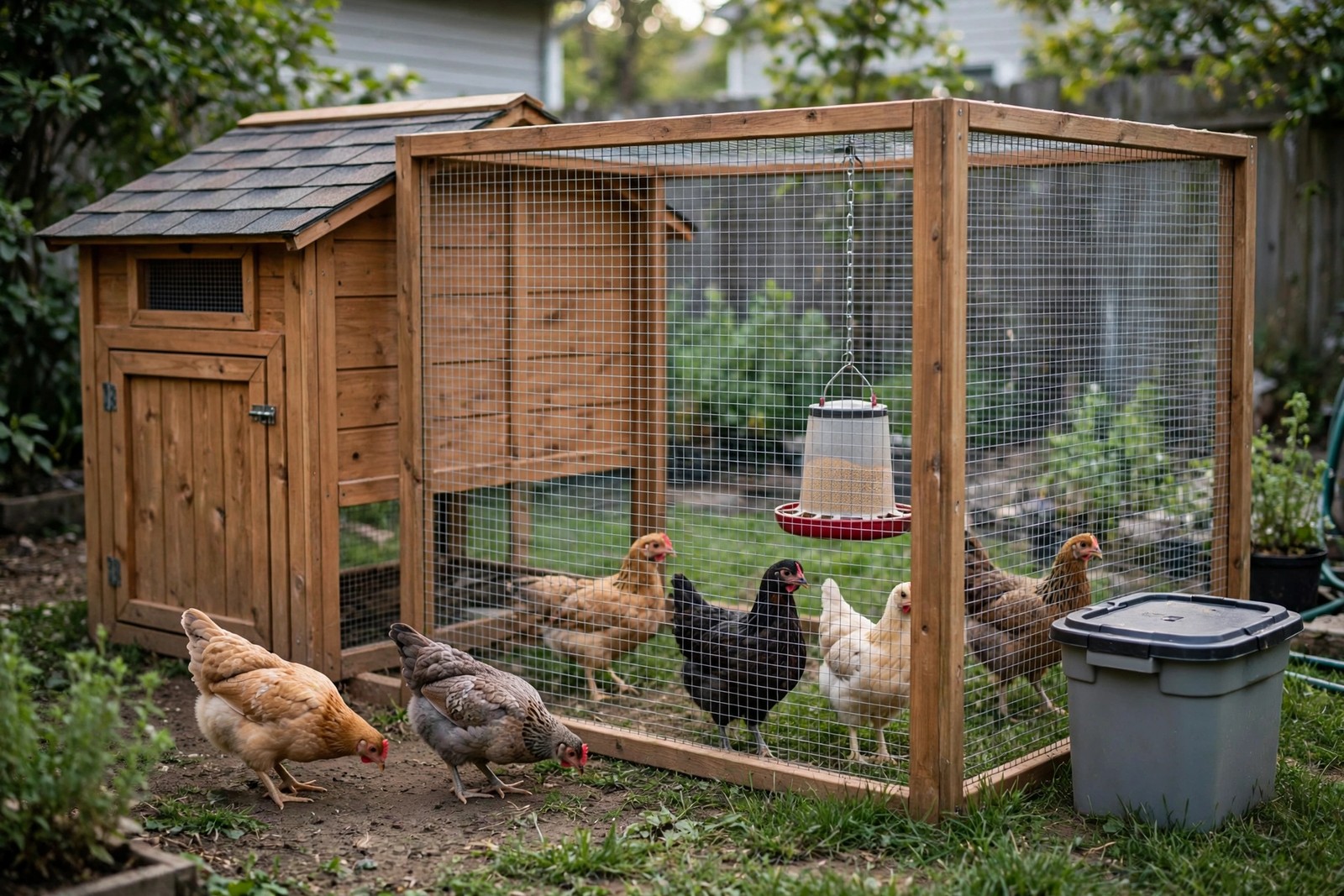
For six hens, a realistic set-up total is $570 to $1,370, and the money divides clearly. A coop costs $300 to $700, a secure run and fencing cost $150 to $350, six birds cost $30 to $120, feeders and a drinker cost $40 to $90, and the first bedding and feed cost $50 to $110. Those five ranges add to the stated total at both ends: $300 plus $150 plus $30 plus $40 plus $50 is $570, and $700 plus $350 plus $120 plus $90 plus $110 is $1,370. Where you land inside the range depends mainly on whether you build, buy flat-packed, or pay for a ready-made walk-in set-up.
The Coop: Where Most of the Budget Goes
The coop is the largest single item at $300 to $700 for housing that suits six hens. A small, well-made coop with a secure door, ventilation, perches, and nest boxes sits at the lower end when you build it yourself from new materials, while larger ready-made houses with raised floors and easy-clean trays reach the upper end. Second-hand coops can cost less, but inspect them closely for rot, gaps a predator can force, and mite harbourage in felt and corners before counting the saving as real. Allow space per hen inside and a run plan from the start, because a cheap coop that is too small creates bullying, damp litter, and health bills that erase the saving.
Run, Fencing, Birds, and Equipment
A secure run and fencing at $150 to $350 covers mesh, posts, a gate, and fixings for a run that keeps hens in and dogs and foxes out; weld mesh costs more than light chicken wire but resists chewing and tearing. Six birds at $30 to $120 reflects the spread between young chicks, which are cheaper but need heat and weeks of growing, and point-of-lay pullets, which cost more per bird and start laying sooner. Feeders and a drinker at $40 to $90 buy a hanging feeder that limits spilled feed, a drinker sized for the flock, and a spare, so a cracked drinker on a hot day is an errand rather than an emergency.
First Feed, Bedding, and the Ongoing Costs
The first bedding and feed at $50 to $110 covers bales for the coop floor and nest boxes plus the first sacks of layers feed, grit, and oyster shell for laying hens. After set-up, expect feed and bedding to become a steady monthly cost rather than a one-off, and budget separately for replacements such as a worn feeder, mite treatment for the coop, and occasional vet care for an unwell hen. Feed use rises in winter when forage is scarce and falls when hens range over a productive garden, so track your own flock's use for a season before judging whether eggs work out cheaper than buying them.
Ways to Spend Less Without Cutting Welfare
Build or adapt the coop yourself, buy sound second-hand equipment and disinfect it before use, start with point-of-lay birds if chick-rearing heat and equipment would add hidden costs, and size the run generously once rather than extending it twice. Do not economise on mesh strength, secure latches, ventilation, or dry storage for feed, because those protect the flock itself. Check local rules, tenancy terms, and any limits on hens or cockerels before spending anything, since a neighbour or council restriction discovered after the coop is built is the costliest outcome of all.
Starting chickens is affordable when the figures are faced in advance and the flock size matches the space and budget you actually have. Keep the budget, supplier notes, and set-up decisions together while you plan. Family members chosen by the owner — a spouse, for instance — may be given access to the profile for the flock under KinsLe Family Sharing.