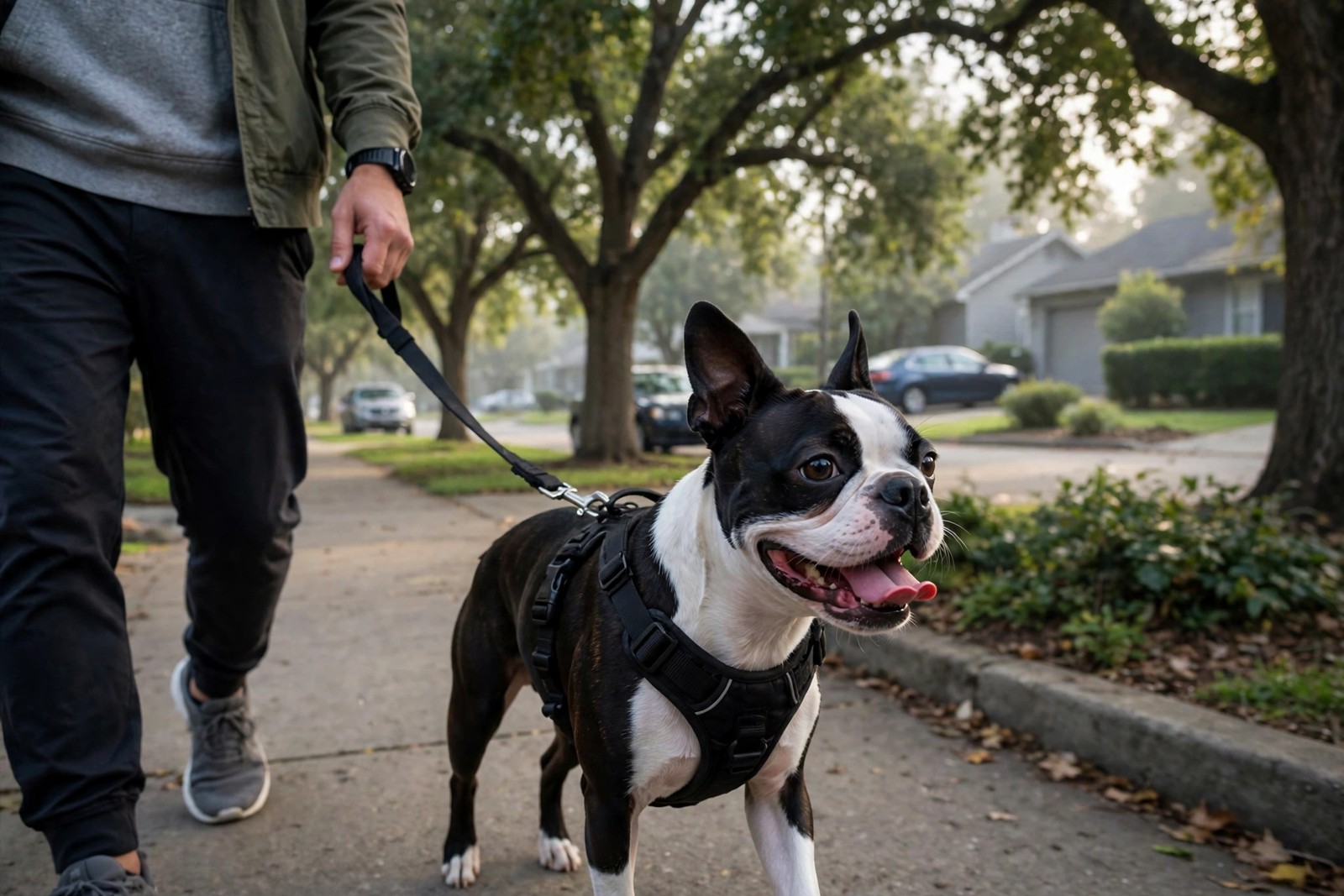
A healthy adult Boston Terrier needs roughly an hour a day of exercise, and the split matters as much as the total. Bostons are bright, people-focused companions with real energy in short bursts, not endurance athletes built for long, grinding runs. Two or three walks plus a play session usually fit the breed better than a single heroic outing, and a dog who gets that hour tends to settle beautifully at home while a dog who misses it invents jobs indoors.
How to Split the Hour
A workable day might be a morning walk of about twenty minutes, a midday toilet stroll with some sniffing, a late-day walk, and a short indoor or yard play session with a toy, adding up to roughly an hour a day in total. Sniffing counts: a slow walk where the dog investigates smells works the brain as well as the legs, and Bostons, who live to be near their people, prize that shared time. Rotate routes and add brief training games, such as recalls and sits at corners, so the hour stays interesting without getting longer or faster. On a rest day at home, puzzle feeding and gentle play can cover part of the activity, but they do not replace walks across the whole week.
The Flat-Faced Caution Comes First
Boston Terriers are a flat-faced breed, and their shorter airways make breathing during effort and heat less efficient than in a long-nosed dog. That single fact should govern every exercise decision you make. In warm weather, exercise in the cooler parts of the day, early morning and evening, choose shade, carry water, and shorten the session when humidity is high. Avoid midday pavement, hot cars, and excited play that pushes the dog to pant harder and harder without a break. A harness usually suits the breed better than pressure on the neck and throat during walks.
Know the Stop Signals
Learn your dog's normal breathing at rest so effort sounds stand out. Stop exercise at once if breathing turns loud, raspy, or strained, if the tongue and gums look unusually dark or pale, if the dog slows, staggers, vomits, or seems distressed, and move to shade and cool air while the dog calms. If breathing does not settle promptly with rest, or the dog collapses, that is an emergency and needs a veterinarian right away, not a walk home to see how it goes. After any worrying episode, tell your veterinarian what happened, how warm it was, and how long recovery took, because that history shapes future exercise limits for this individual dog.
Puppies, Seniors, and Weight
Adjust the hour by life stage rather than applying it to every Boston. Puppies need short, frequent play and walks while joints and bones are still developing, with no forced long distances and plenty of sleep between sessions. Seniors usually do best with the total broken into slower, shorter outings on forgiving surfaces, plus gentle play at home, adjusted with veterinary guidance for heart, breathing, or joint problems. Weight is the quiet multiplier at every age: extra pounds make breathing and heat tolerance worse, so pair the daily hour with measured meals and regular weigh-ins.
A Routine Worth Passing On Exactly
Write down what your Boston actually does well: the walk lengths, the cool times of day that suit this dog, the breathing signs that end a session, and any veterinary limits. That specificity protects the dog if a sitter, family member, or new owner takes over the leash. An owner rehoming a Boston can pass that exercise and heat record along in KinsLe with the Transferrable Profiles entry, so the next keeper starts with the same safe routine.