
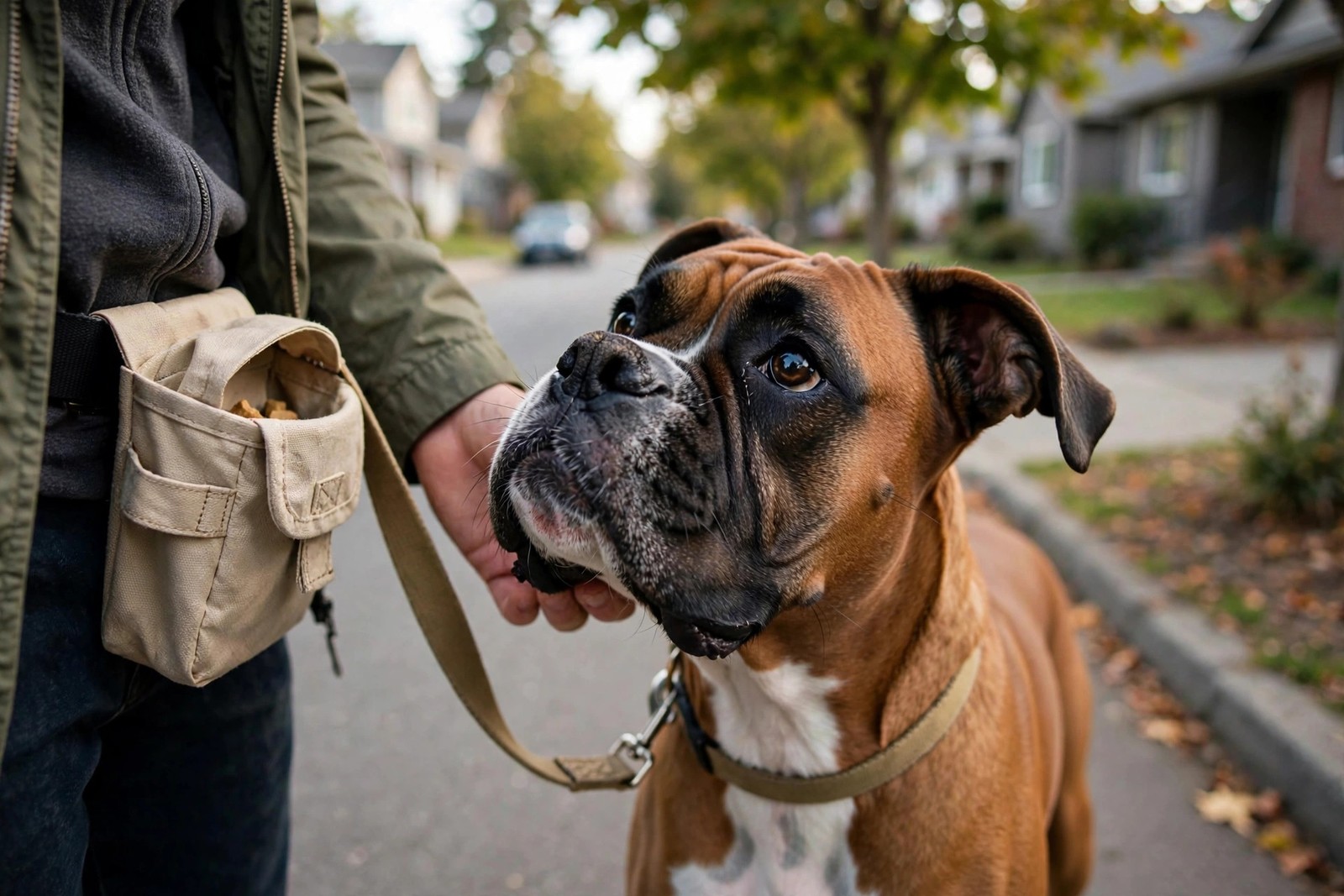
An adult Boxer needs about 1.5 to 2 hours of exercise a day. This is a big, muscular, exuberant working breed, and owners who plan for a gentle hour of lead walking discover the shortfall at home, usually in the form of a Boxer bouncing off the furniture at nine in the evening. The exercise also has to contain genuine exertion: free running, play, and training, not only walking at human pace.
Building the two hours
A workable pattern is a main session of 60 to 75 minutes in the morning, including 20 to 30 minutes of off-lead running or vigorous play in a secure area, followed by a 30 to 40 minute evening walk, with short training or tug games filling the gap. Boxers are people-focused and playful well into adulthood, so games with you count double: a fetch session or a round of hide-and-seek with a family member tires a Boxer in a way that solo garden access never does.
Mental work shortens the physical bill slightly. Ten minutes of focused training — holding a stay, learning a new trick, working through a food puzzle — settles a Boxer noticeably. It does not replace running, but a day with training and 90 minutes of exercise goes better than a day with two silent hours of walking.
The heat rule that overrides everything
Boxers are a short-faced breed and cannot cool themselves efficiently. Hard exercise in heat or humidity is genuinely dangerous for them, far more than for a long-nosed dog. In summer, the main session belongs before nine in the morning or after the evening cools, midday outings shrink to a short toilet walk in shade, and any sign of noisy, laboured breathing, thick saliva, or wobbling means stop, move to shade, offer water, and contact a vet promptly if breathing does not settle quickly.
Cold bothers Boxers much less than heat, though their short coat means a clipped winter walk in bitter wind can be shortened and swapped for indoor play.
Puppies and older Boxers
Boxer puppies grow fast and their joints are vulnerable while growth plates are open. Keep lead walks short — roughly five minutes per month of age, up to twice a day — let free play in a garden do most of the work, and avoid repetitive stair climbing, jumping from height, and sustained running until the dog is mature at around 18 months. The energy is real, but it must be spent in bursts with rests, not in one long forced march.
Senior Boxers, from about eight years, usually still want their outings but at reduced length and intensity: two walks of 30 to 40 minutes, softer ground where possible, and rest days after a big day. Watch for hind-leg stiffness or reluctance on stairs, both common in the breed, and adjust before the dog starts refusing walks altogether.
Getting the household to deliver it
Two hours is a team effort in most homes, and the failure mode is assumption — each person thinks someone else took the dog out properly. Splitting the main run and the evening walk between household members, and marking each one done in KinsLe's Care Teams, keeps a Boxer's two hours real rather than theoretical, and a Boxer whose exercise is real is calmer, leaner, and far easier to live with.