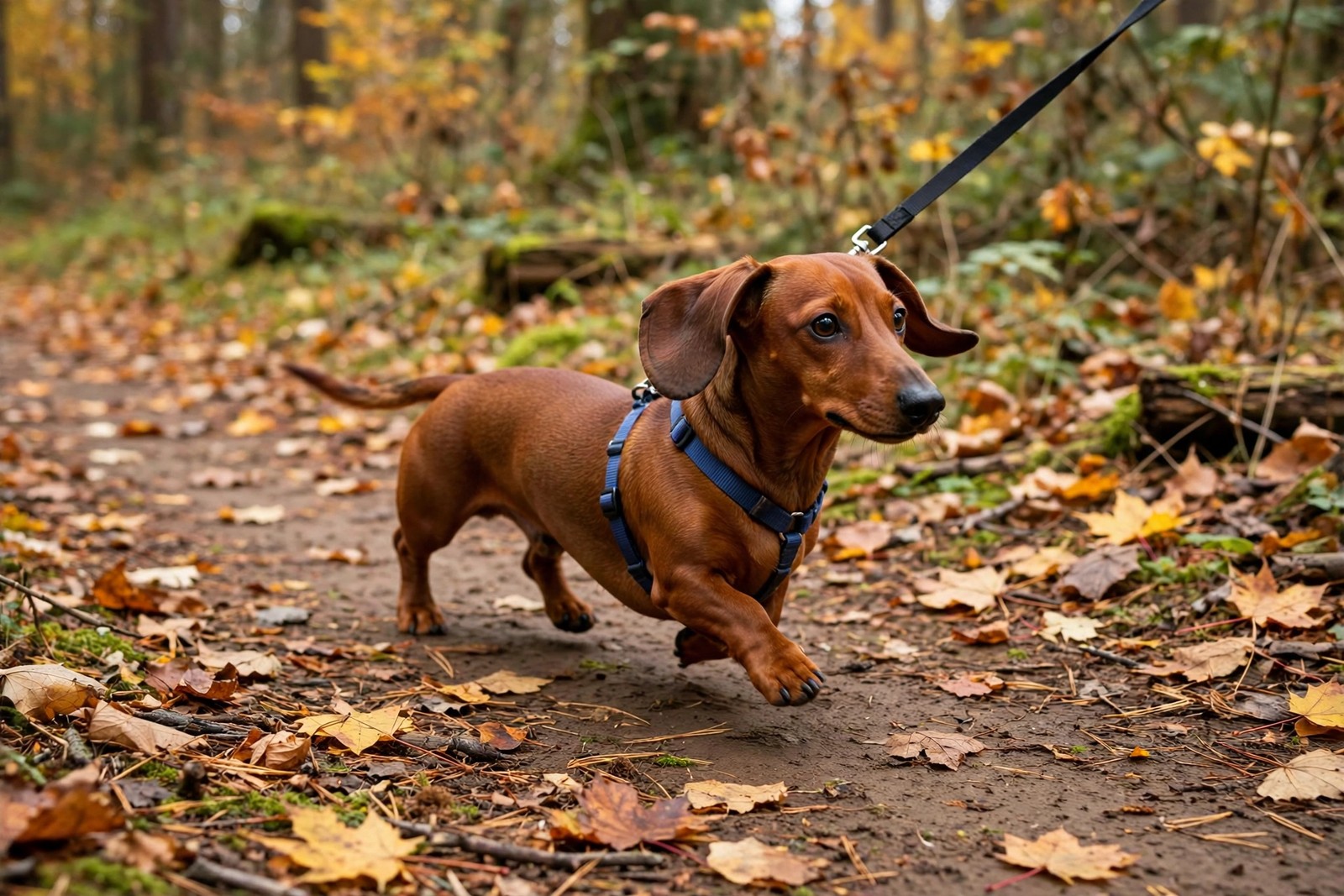
Give a healthy adult Dachshund about 60 minutes a day, and give it in the shape this breed was built for: steady, ground-level work with the nose in charge. Dachshunds were bred to track and go to ground after badgers, so a fit adult wants a proper outing, not a carry round the block. At the same time, that long spine is the breed's known vulnerability, so how the minutes are spent matters as much as how many there are.
The Adult Day, Back-Safely Divided
Two walks of 20 to 30 minutes on fairly even ground make a good base, with time built in for sniffing, digging in permitted spots, and exploring. Add short play sessions at home, a scent game, or a food puzzle to finish the hour. Build fitness gradually over weeks if your dog is starting from the sofa: a Dachshund who is fit and lean is supporting their back with muscle, while a sudden weekend mountain hike after months of inactivity is exactly the load pattern to avoid.
Choose steady over explosive. Repeated leaping catches, twisting mid-air for a ball, and constant jumping on and off high furniture load the spine in ways walking never does, so keep games low, let retrieves roll along the ground, and provide ramps or steps to the sofa and bed instead of launching points.
Stairs, Puppies and Weight
Occasional stairs at a calm pace are a normal part of most homes, but endless stair climbing as exercise, or racing up and down them in play, is poor Dachshund policy; carry a puppy on stairs and consider a gate for an unsupervised adult. Puppies themselves need the gradual rule, roughly five minutes of structured exercise per month of age once or twice daily, growing into the adult hour by around a year, because the bones of that long frame are still developing.
Weight is the other half of back care. A Dachshund should have a visible waist from above and ribs you can feel under a thin cover; every extra kilo hangs off that spine all day, not just on walks. Measure food, count the treats, and resist the breed's considerable theatrical begging.
When Exercise Stops Being the Answer
Stop and see a vet promptly if a Dachshund cries out, hunches, refuses to walk or jump, wobbles on the back legs, or loses bladder control. Back problems in this breed can progress quickly and are a genuine same-day concern, not something to walk off. For ordinary days, consistency protects the back best, and KinsLe's Care Teams lets you assign both walks, record that the ramp was used, and mark each outing complete with a timestamp for the whole household to see.