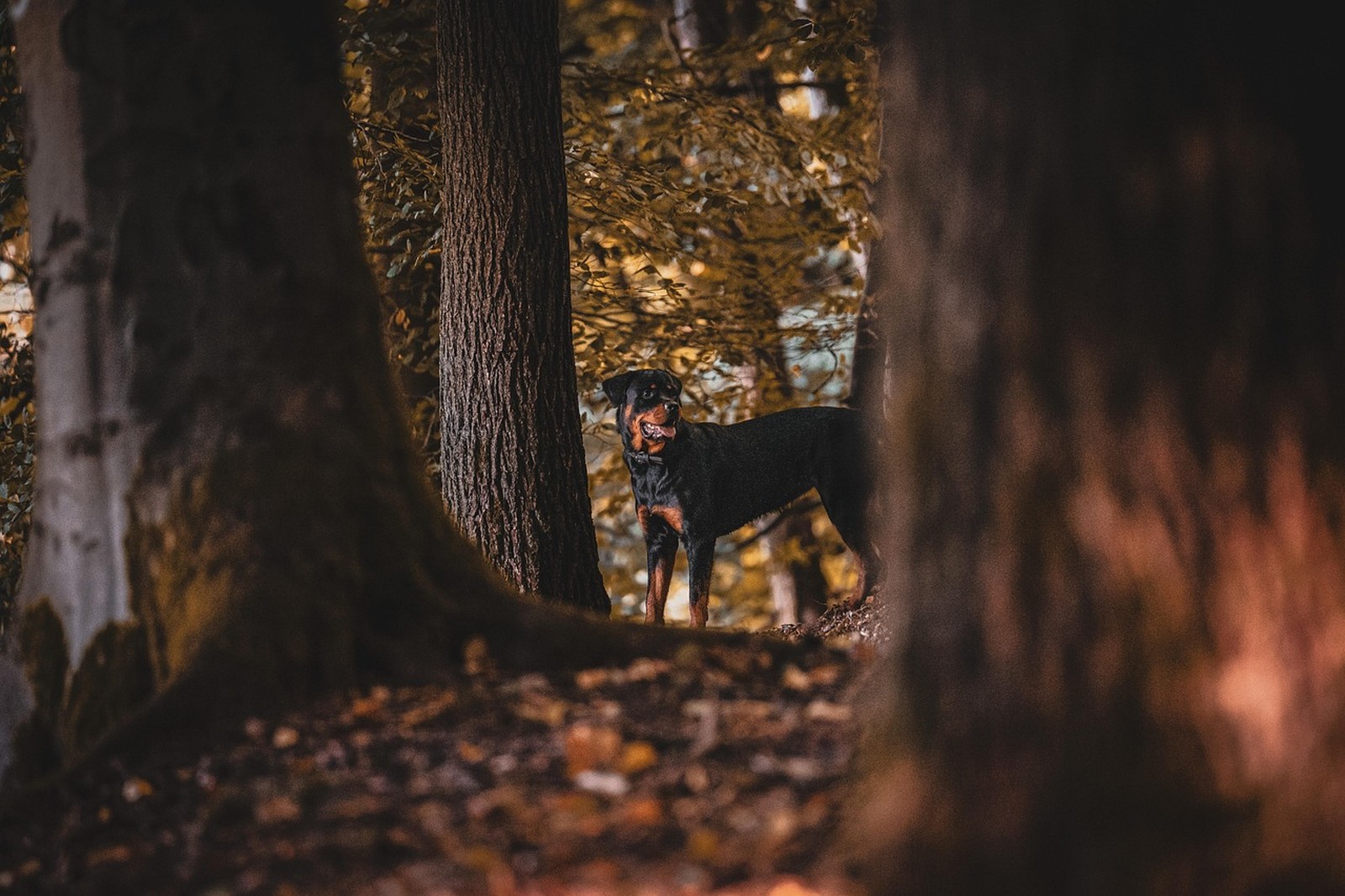
An adult Rottweiler needs roughly one to two hours of exercise every day. The number sits below a Doberman's not because Rottweilers are lazy — they are a powerful working breed — but because the exercise should be steady and purposeful rather than fast and frantic. A Rottweiler is built like a weightlifter, not a sprinter, and both the amount and the style of exercise should respect heavy joints carrying a heavy dog.
Shaping the day's exercise
- Two substantial walks totalling at least an hour. Brisk, engaged walking with ground to cover, ideally including somewhere the dog can move freely off lead where it is safe and allowed. Sniffing time is not wasted time; twenty minutes of nose-led exploring tires a Rottweiler's brain as well as its legs.
- Thirty to sixty minutes of work for the mind. Obedience training, tracking and scent games, tug played with rules, or a structured class. Rottweilers were bred to drive cattle and pull loads, and a dog given a job — carrying a backpack on a walk, learning a new routine — settles far better than one given only a run.
- Low-impact options on rotation. Swimming is excellent for this breed: full-body work with no concussion through the joints. It is a particularly good choice for a dog rebuilding fitness or carrying extra weight.
Puppies, weight, and joints
Do not apply the adult figure to a puppy. A young Rottweiler's growth plates are open while an adult frame is being built, and over-exercise, forced jogging, and repeated jumping from height are exactly the loads young joints do not need. Keep puppy exercise short, frequent, and on soft ground, and let your vet guide the build-up. The other common case is the overweight adult: a Rottweiler who has drifted heavy needs the daily total rebuilt gradually over weeks, with food measured honestly, because every extra pound is carried by the same hips and elbows you are trying to protect. A lean Rottweiler handles one to two hours comfortably; a fat one suffers doing half of it.
Heat deserves respect too. A big, dark-coated dog overheats quickly, so in warm weather walk early and late, carry water, and treat heavy panting with reluctance to move as the signal to stop and rest in shade, not to push on.
Enough, and not enough
The well-exercised Rottweiler is calm furniture at home: settled, watchful, and affectionate. The under-exercised one advertises it — restlessness, boisterous barging, chewing, digging, and demands for attention that escalate because yesterday they worked. If your dog is consistently unsettled by evening, add fifteen minutes of training-based exercise before you add raw distance; for this breed the missing piece is usually work, not speed.
Finding that work locally is easier with help, and KinsLe's Pet Services Directory lets you search for trainers, structured classes, and dog walkers in your area, so the organised sessions that suit a Rottweiler's strength and intelligence are booked into the week rather than left as a good intention.