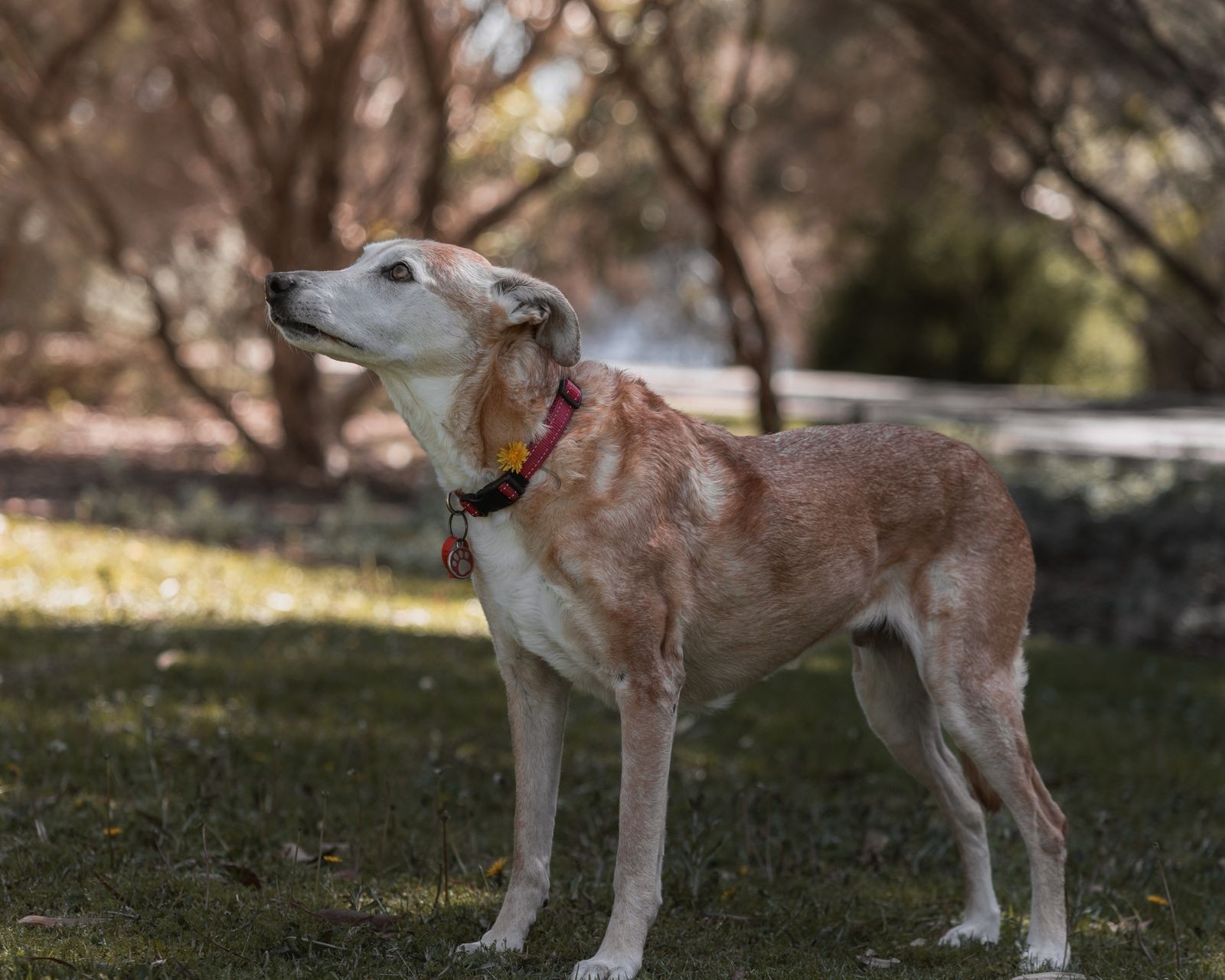
Most senior dogs still need daily exercise — but it should look different now: shorter, slower, more frequent walks rather than one long hike, pitched at whatever his joints happily tolerate that day. For an older dog, a twenty-minute sniffy amble twice a day is real exercise, excellent mental stimulation, and far kinder than an exhausting weekend expedition followed by two days of stiffness.
How Much Is Right for Your Dog?
There is no single senior prescription, because a fit twelve-year-old Border Collie and a nine-year-old Bulldog with arthritis live in different bodies. As a starting point, most seniors do well with two to three short outings totalling roughly 30 to 60 minutes a day, adjusted up or down by his response — he should come home pleasantly tired, settle happily, and be no stiffer than usual the next morning. If he is noticeably sore, lagging, or reluctant the following day, yesterday was too much: trim distance, slow the pace, and build back gradually.
Let him set the speed, and let him sniff. Sniffing is not dawdling — processing smells is serious brain work for a dog, lowers arousal, and is a huge part of why walks matter for seniors whose running days are behind them. Choose forgiving routes: flat, even ground, shade in summer, and quieter streets if crowds or bouncy young dogs overwhelm him. Avoid midday heat, icy pavements, and steep hills. A dog who has been inactive after illness or a long winter should restart in five-to-ten-minute increments, adding a little each week, ideally with your vet's nod first.
Watch his signals honestly: sitting down mid-walk, panting heavily out of proportion to the weather, bunny-hopping, or going quiet are his ways of saying enough. Turning for home early is not failure — it is information.
More Than Walks: Gentle Ways to Move
Variety keeps old bodies and brains engaged. Gentle games on soft ground, scatter-feeding treats in the grass for him to forage, short training refreshers of tricks he has known for years, and puzzle feeders all count as activity without pounding his joints. Some seniors love swimming or hydrotherapy, which exercises muscles while water carries the weight — ask your vet whether it suits your dog, and always use a proper canine facility or a safe, shallow entry, never just a deep riverbank.
At home, keep him moving in small doses: a potter around the garden, following you from room to room, a two-minute play session morning and evening. Long sedentary days stiffen arthritic dogs far more than gentle, regular motion does. Never give pain medication before a walk to get him through it unless your vet has specifically prescribed that plan — masking pain invites overdoing it.
Sharing the Walking Routine With Care Teams
Daily walks only stay daily if they do not rest on one person. KinsLe's Care Teams let your family assign those gentle walks across the household — morning amble to one person, evening sniff-walk to another — with timestamped completions so everyone can see he has been out, how long for, and whether anyone already went. That log also becomes a useful record: if his comfortable distance shrinks over a season, you and your vet can see the trend clearly and adjust his care. Consistency, shared fairly, is what keeps a senior active without wearing out either the dog or his favourite human. His comfort trend stays clearer when your household follows the Care Teams log on KinsLe, with the morning amble and evening sniff-walk assigned to different family members and marked done with timestamps.