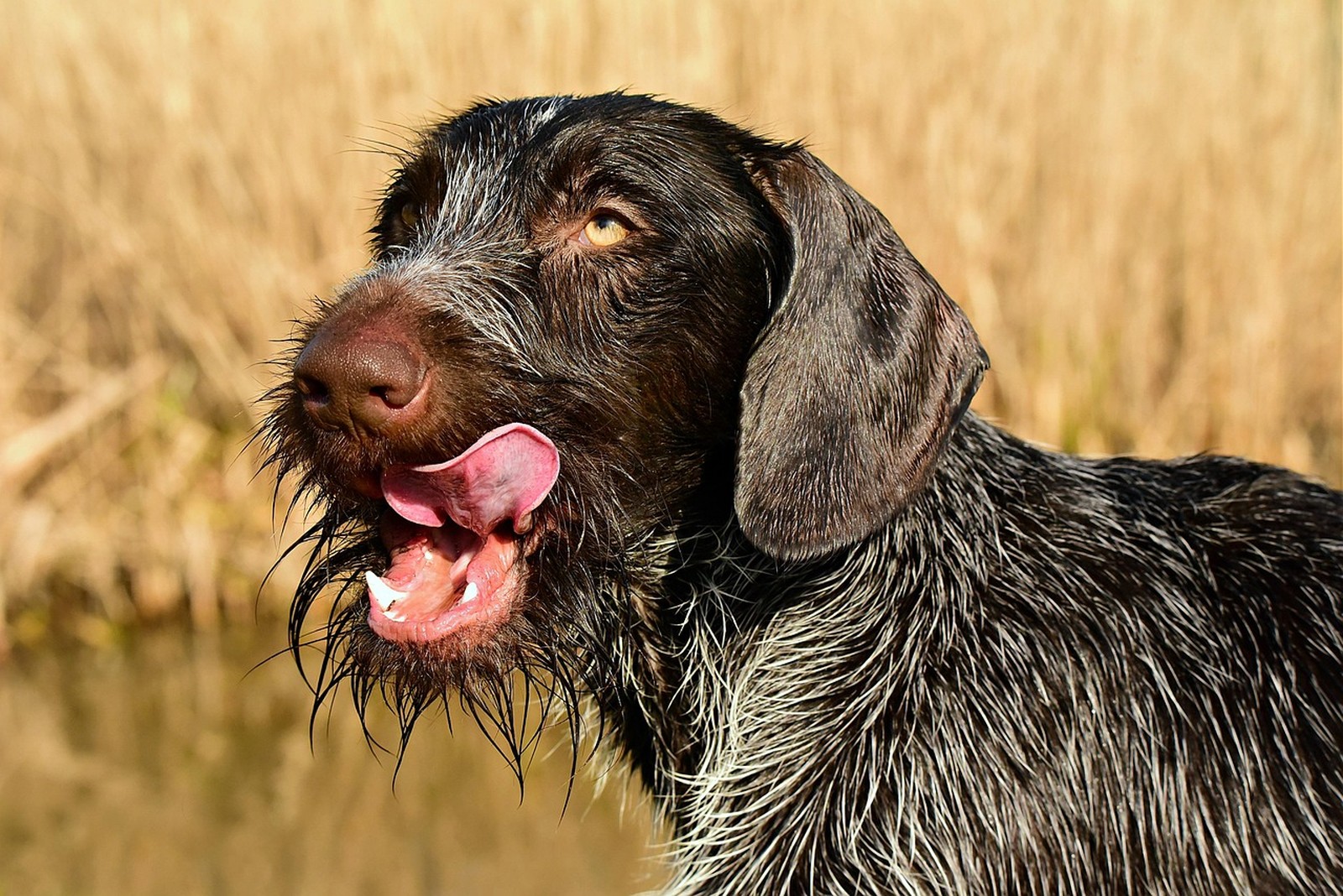
The daily total for a Wirehaired Pointing Griffon
Plan on at least ninety minutes a day for a healthy adult Wirehaired Pointing Griffon, and do not be surprised if yours thrives nearer two hours. The Griffon was developed as an all-purpose gundog for hunters on foot, expected to point, retrieve on land and from water, and keep going over rough, wet ground without flagging. That heritage does not switch off in a pet home. It simply looks for an outlet, and an under-exercised Griffon will find outlets in redecorating, counter-surfing, and inventing games with household objects.
Scale the total to the individual in front of you. Puppies need frequent short sessions and should not be run hard while their joints are still developing, and an older Griffon will usually trade distance for sniffing time quite happily. Increase a young dog's workload in small weekly steps, watching how he moves the following morning, because stiffness the next day is a clearer report than enthusiasm during the outing itself.
Ranging work matters more than pavement miles
A Griffon's exercise needs to include ground-covering freedom. Lead walking alone rarely satisfies a dog whose job description involves ranging ahead of a hunter, checking scent, and freezing into a point. Where it is safe and legal, give him off-lead time in fields, woodland edges, or moorland-style terrain where he can quarter back and forth and work his nose properly. A secure field can serve the same purpose for dogs whose recall is still a work in progress.
Water is the other half of this breed's working life. Many Griffons swim enthusiastically, and a retrieving session from a pond or calm shoreline tires muscles and mind together with less joint impact than running on hard ground. Rinse and dry that harsh double coat afterwards, and check the furnishings on his face and his ears after any swim, since debris collects readily in both.
Structuring a day that actually tires him
A pattern that suits most Griffons is one substantial outing plus meaningful top-ups. Give the main session to the morning if you can: an hour or more of mixed off-lead ranging, some retrieves, and a few minutes of steadiness practice such as waiting while a dummy is thrown. Follow it with a shorter midday walk and an evening lead walk that ends with a calm searching game rather than a wild chase, so he learns evenings wind down.
Training woven through the day counts. Ten minutes practising recall away from distractions, whistle stops, or directions at distance is genuine work for a Griffon brain and deepens the partnership this people-focused breed craves. Rotate the venues too, because a dog walked on the same loop every day stops investigating it, and investigation is half the exercise.
Reading the feedback and knowing when to check with a vet
An appropriately exercised Griffon is busy but capable of settling, follows you from room to room without frantic energy, and sleeps properly between outings. Persistent pacing, shadow-chasing, excessive licking of surfaces, or destructiveness despite long walks can mean the mental side is underfed rather than the physical side, so add scent work before adding miles. Limping, repeated lagging on familiar routes, or a Griffon who suddenly refuses water he used to love should be checked by a vet promptly rather than trained through.
Because this breed's needs are large and daily, sharing the load keeps the routine honest when work, weather, or illness intervenes. With KinsLe, Care Teams lets everyone in the household see which of the Griffon's sessions are assigned, which are finished, and when they were marked complete, so a two-hour dog does not quietly become a forty-minute dog.