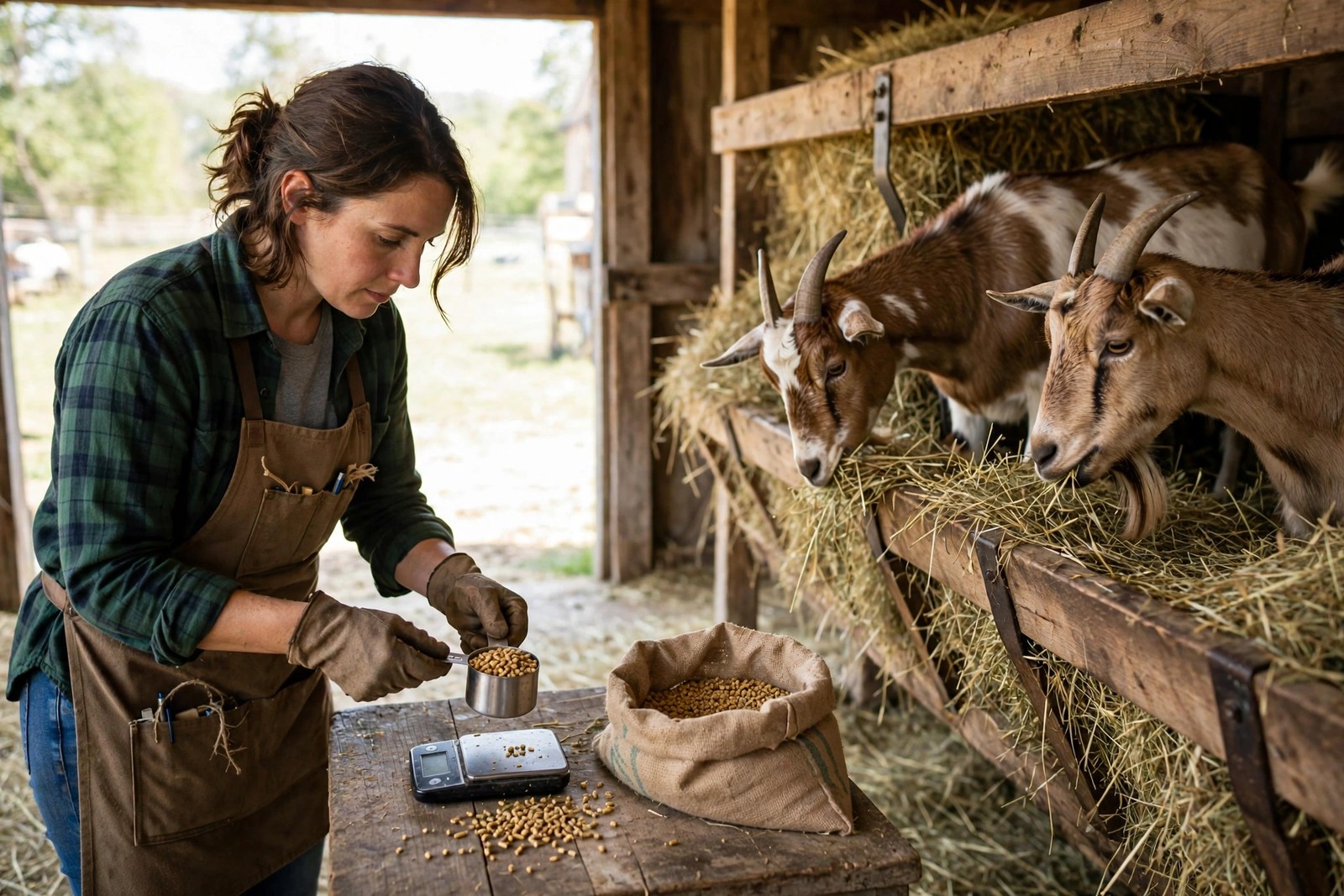
For many goats, the correct amount of grain is none. Goats are browsers built to extract nutrition from hay, browse, and rough grazing, and a healthy adult wether or a dry doe in good condition usually stays healthier on forage alone than on a daily scoop of grain. Grain is a tool for goats with extra demands, not a daily entitlement, and feeding it without a reason creates the two problems goat keepers see repeatedly: fat goats with overloaded joints and livers, and wethers suffering from urinary stones. Start from forage, then add grain only where a goat's life stage earns it.
Goats That Usually Need No Grain
A wether kept as a pet, a dry doe that is not pregnant, and any mature goat holding or gaining condition on good hay should normally receive no grain beyond an occasional small handful used for handling or training. Score body condition by feeling the spine, ribs, and sternum under the coat, because a thick winter coat hides both fat and thinness. If a forage-only goat is losing condition, check teeth, worm burden with your vet's guidance, hay quality, and competition at the hay rack before reaching for grain, since the cause is often access or health rather than a missing concentrate ration.
Goats That Do Need a Measured Ration
Does in the last weeks of pregnancy, does producing milk, growing youngsters, and goats recovering condition after illness have energy needs that forage alone may not meet. These goats typically receive a small measured ration, offered in two feeds a day rather than one large one, and built up gradually over a week or more so the rumen microbes adjust. Weigh the ration or use the same marked scoop for every feed, adjust in small steps according to body condition and milk yield, and reduce it as the demand falls, for example when a doe is dried off. Sudden large grain meals risk acidosis, bloat, and scouring, so consistency of amount and timing matters as much as the total.
Urinary Stones: the Wether Warning
Urinary calculi are mineral stones that can block a male goat's urinary tract, and a blocked wether is an emergency: straining, dribbling, calling out, and a hunched, painful stance need a vet immediately. Excess grain, especially rations heavy in phosphorus relative to calcium, raises the risk, which is why pet wethers are the group keepers should be strictest with. Plenty of clean water, forage as the diet base, salt available, and avoiding rich rations all lower risk. Do not add supplements or urinary acidifiers on guesswork; ask your vet what suits your males, and keep any plan the vet sets written down where every feeder can see it.
Making the Ration Work Day to Day
Feed goats individually or in small matched groups where you can, because bold goats steal rations meant for shy ones, and tie or separate animals at feeding if stealing is routine. Keep grain in a sealed, labelled bin that goats cannot reach, since a goat that breaks into a feed store and gorges is a veterinary emergency in the making. Change grain type or amount gradually, watch droppings and appetite for a few days after any change, and record each goat's ration, condition score, and adjustments rather than relying on memory across helpers and seasons.
Grain feeding goes wrong through generosity and inconsistency far more often than through neglect. One shared, measured plan per goat prevents both. On KinsLe, Care Teams assigns each goat's exact ration, or its forage-only rule, to the person feeding that day and timestamps the completed feed, so a wether never receives a well-meant second scoop.